
As he contemplated making his third feature film, New York-based writer/director Spike Lee had the title first. A string of high-profile police cases involving Black Americans gave him the rest. The 1986 mobbing of three Black men in the largely Italian community of Howard Beach, Queens (resulting in the death of one African-American male when he was struck by a car while attempting to evade a gang of white teenagers); the fatal 1984 Bronx shooting of elderly Eleanor Bumpurs by the NYPD; the strangulation death of graffiti artist Michael Stewart while in police custody in lower Manhattan in September of 1983; and other incidents fueled a screenplay concerned with boiling racial tensions in Manhattan and the outer boroughs during Mayor Ed Koch’s administration.
Originally titled Heat Wave for its setting during the hottest day of an explosive Brooklyn summer, Do the Right Thing (1989) was slated to be a Paramount release. That is until the studio balked at Lee's scripted ending, in which an Italian-owned pizzeria is burned to the ground in retribution for the unjustified killing of a Black man. Stepping into the breach were Universal Studios executives Sean Daniel and Tom Pollock, who were eager to put the weight of the studio behind another important and controversial film after Martin Scorsese's The Last Temptation of Christ (1988).
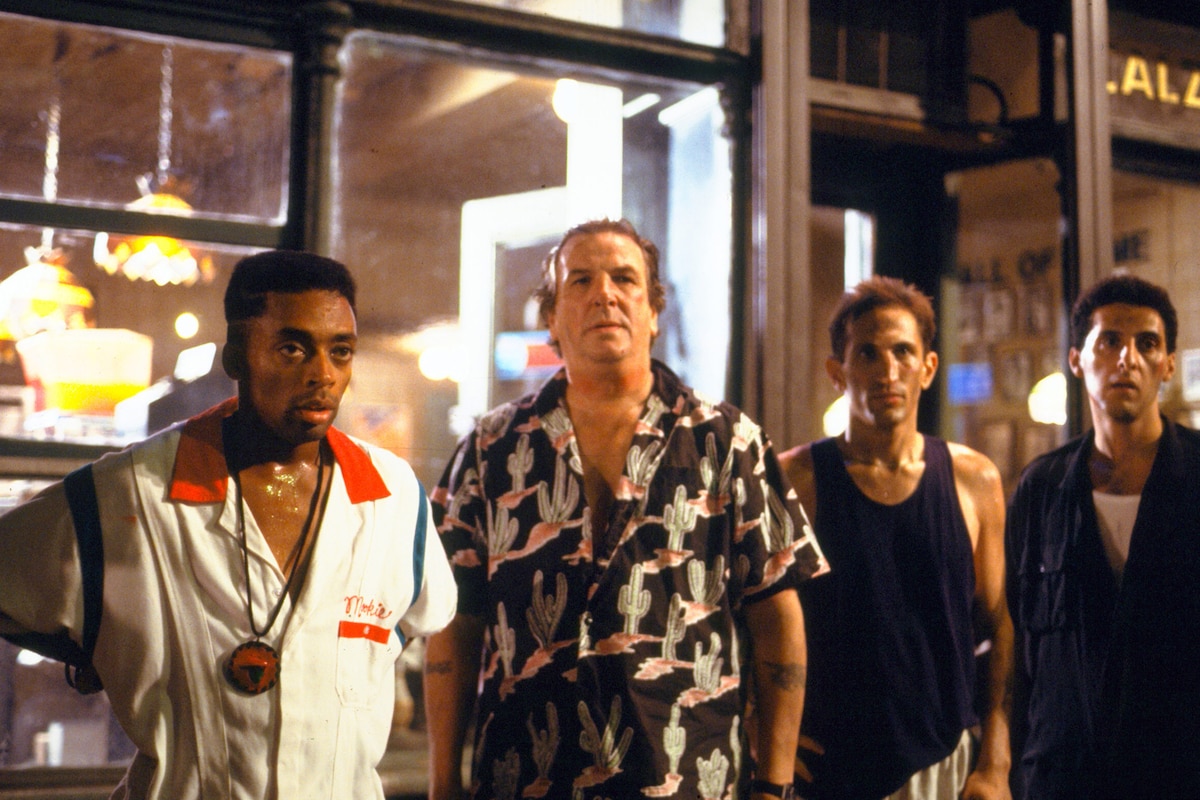
Lee was persuaded to scale back his budget from $10 million to $6.5 million with Universal's guarantee of noninterference. The filmmaker had wanted Robert De Niro for the pivotal role of Sal, the Italian owner of a pizzeria in the Black and Hispanic community of Bedford-Stuyvesant. De Niro passed but suggested Danny Aiello. A native New Yorker with early credits in John D. Hancock's Bang the Drum Slowly (1973) and Francis Ford Coppola's The Godfather: Part II (1974), Aiello had experienced a significant boost in his marquee value after playing Cher's fiancé in Norman Jewison's Moonstruck (1987) and as pop star Madonna's disapproving father in her "Papa, Don't Preach" music video, directed by James Foley. As conservative in his politics as Lee was progressive, Aiello initially turned down what he considered to be a racist depiction of Italian Americans but was persuaded to reconsider when he was given the freedom to interpret his character in his own way. Matt Dillon was approached to play the role of Sal's reactionary son Pino but opted out on the advice of his agent. Brooklyn native John Turturro stepped into the role, having previously impressed Lee with his villainous turn in Tony Bill's Bronx-set Five Corners (1987). Fellow New York filmmaker Jim Jarmush suggested Richard Edson for the role of Sal's younger son Vito while Lee cast himself as Mookie, the pizzeria's sole Black employee who clashes with Sal and his sons, setting the tone for Do the Right Thing's literal incendiary conclusion.
As Lee and casting director Robi Reed filled their large roster of speaking parts, many actors cast in one role wound up playing another. Lee had wanted Laurence Fishburne, the star of his earlier School Daze (1988), to play Radio Raheem, an oracular figure with a boombox whose fate at the hands of NYPD officers sparks a fully loaded third act. When Fishburne demurred (claiming Do the Right Thing was a movie for white people rather than Black), Lee replaced him with relative newcomer Bill Nunn, whose vacated role of community deejay Senor Love Daddy went to Samuel L. Jackson. Jackson had originally been picked to play one of the film's "Corner Men," a trio of sidewalk commentators who serve as a prescient Greek chorus throughout Do the Right Thing and provide much-needed comic relief. Comedian Robin Harris and actors Frankie Faison and Paul Benjamin instead round out the trio.
Lee's vision for the production was to provide inroads for Black actors and technicians. In addition to creating opportunities for people of color within the largely Caucasian trade unions servicing Do the Right Thing, Lee cast up-and-coming talents Martin Lawrence, Harris and Rosie Perez in supporting roles opposite veteran actors Ossie Davis and Ruby Dee. The role of Smiley (played by New York stage actor Roger Guenveur Smith) did not exist even as late as the shooting script and was improvised on location during principal photography through July and August 1988. Do the Right Thing was also another family affair for Lee, whose father Bill composed the original score, brother David served as still photographer and sister Joie played Mookie's sister, Jade.
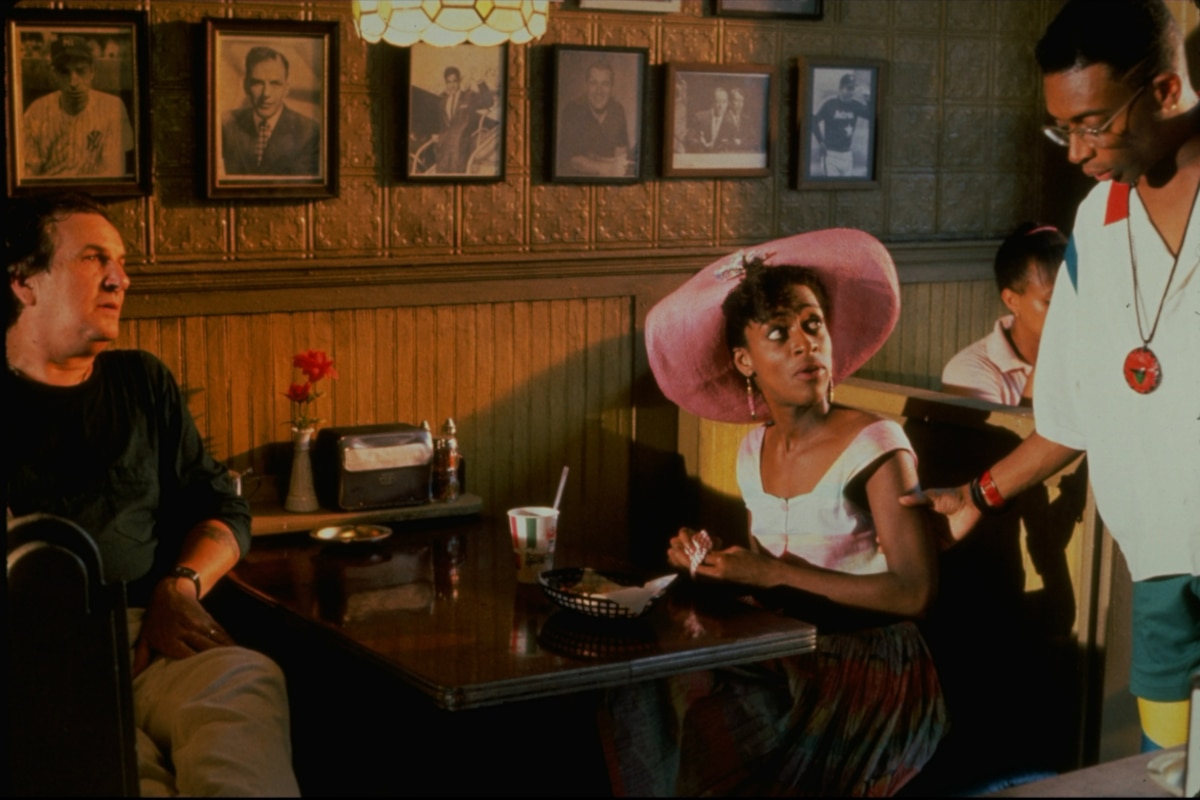
While Universal preferred having Do the Right Thing shot in climate-controlled Los Angeles, Lee insisted on Brooklyn for authenticity. The production took up residence in an area of Bed-Stuy devastated by the crack trade, on a blighted stretch of Stuyvesant Avenue between Lexington Avenue and Quincy Street. The preponderance of vacant lots allowed Lee to construct Sal's Famous Pizzeria and a Korean grocery down to the minutest detail. (Photographs of Italian celebrities adorning the restaurant's walls were copied from the private collection of John Turturro.) Because of the modest budget, actors went without standard Hollywood amenities; there were no trailers and the cast instead stayed in the gymnasium of a local school. Because Lee wanted his principal players to appear in background shots, many of the actors remained on the set even when they had no speaking scenes, which forged a fraternity among a film crew divided by race and gender.
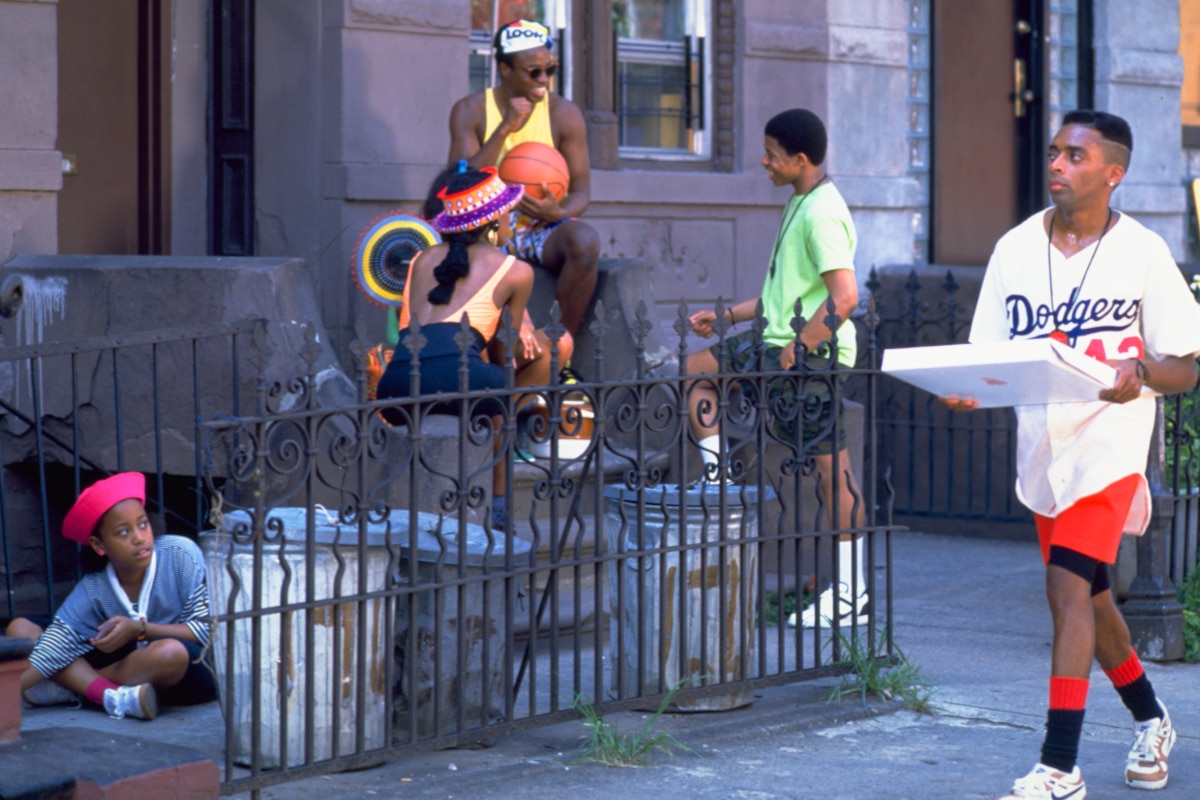
Visitors to the set included heavyweight-boxing champion Mike Tyson and recording artist Stevie Wonder. Midway through shooting, Lee brought his cast and crew to a lavish pool party and barbecue at the New Jersey estate of Eddie Murphy. The getaway proved to be a respite from the tensions mounting as production progressed towards the film's climactic riot scene, which stretched through the night into the dawn of the following day and left several of the actors with real injuries. Filming inside the burning structure of the imitation pizzeria, and protected only by a blanket, cinematographer Ernest Dickerson was nearly crushed by a falling cash register as the walls came down around him.
It premiered at the Cannes Film Festival in May 1989 to strong praise but lost the coveted Palme d'Or to Steven Soderbergh's sex, lies and videotape (1989). Upon its wide release in June of 1989, Do the Right Thing polarized film critics who identified in its controversial ending both unflinchingly acute social criticism and artistic naiveté bordering on reckless disregard. While Roger Ebert was a vocal champion, others (among them New York magazine writers David Denby and Joe Klein) theorized that the film would set off actual race riots. That didn't happen, but nonetheless, Do the Right Thing was given the cold shoulder at Oscar time the following year. It was nominated only for Best Actor in a Supporting Role for Aiello (the statue went to Denzel Washington in Edward Zwick's Glory) and Best Writing for Lee (Tom Schulman won for Peter Weir's Dead Poets Society). Regardless, the film remains more relevant and apropos to modern-day conversations than either sex, lies and videotape or the 1990 Oscar-winning Best Picture, Bruce Beresford's Driving Miss Daisy (1989).
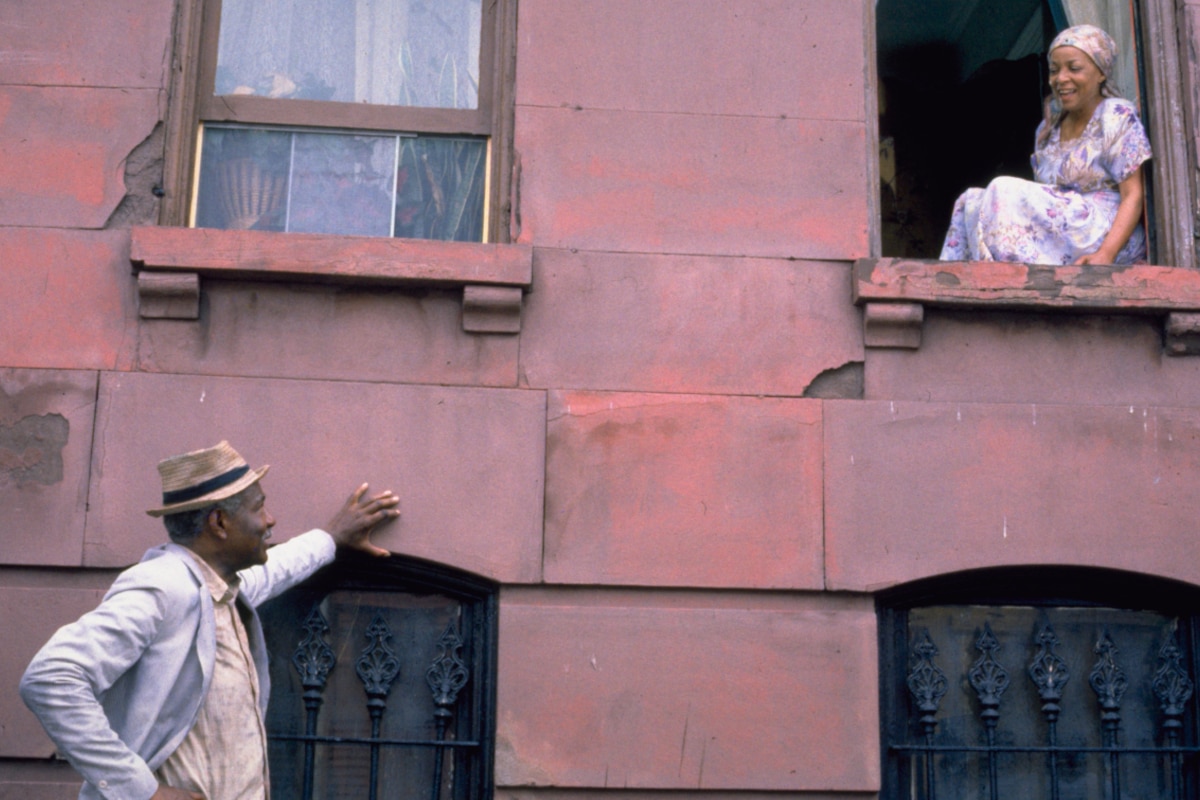
At the 62nd Academy Awards presentation in March 1990, actress Kim Basinger used her brief on-camera time as a presenter to chastise the American Academy of Motion Picture Arts and Sciences for not recognizing Do the Right Thing as a Best Picture contender, while The New York Times opined that the film's loss of a Best Original Screenplay statue represented "Oscar voting at its most irrational." In 1999, the film was included by the U.S. Library of Congress in the National Film Registry for its designation as a "culturally significant" work. In 2007, the American Film Institute included Do the Right Thing among its roster of 100 films of 100 years of cinema.
Producer: Spike Lee
Director: Spike Lee
Screenplay: Spike Lee
Cinematography: Ernest Dickerson
Music: Bill Lee
Film Editing: Barry Alexander Brown
Cast: Danny Aiello (Salvatore 'Sal' Fragione), Ossie Davis (Da Mayor), Ruby Dee (Mother Sister), Richard Edson (Vito), Giancarlo Esposito (Buggin Out), Spike Lee (Mookie), Bill Nunn (Radio Raheem), John Turturro (Pino), Paul Benjamin (ML), Frankie Faison (Coconut Sid).
C-120m. Letterboxed. Closed Captioning. Descriptive Video.