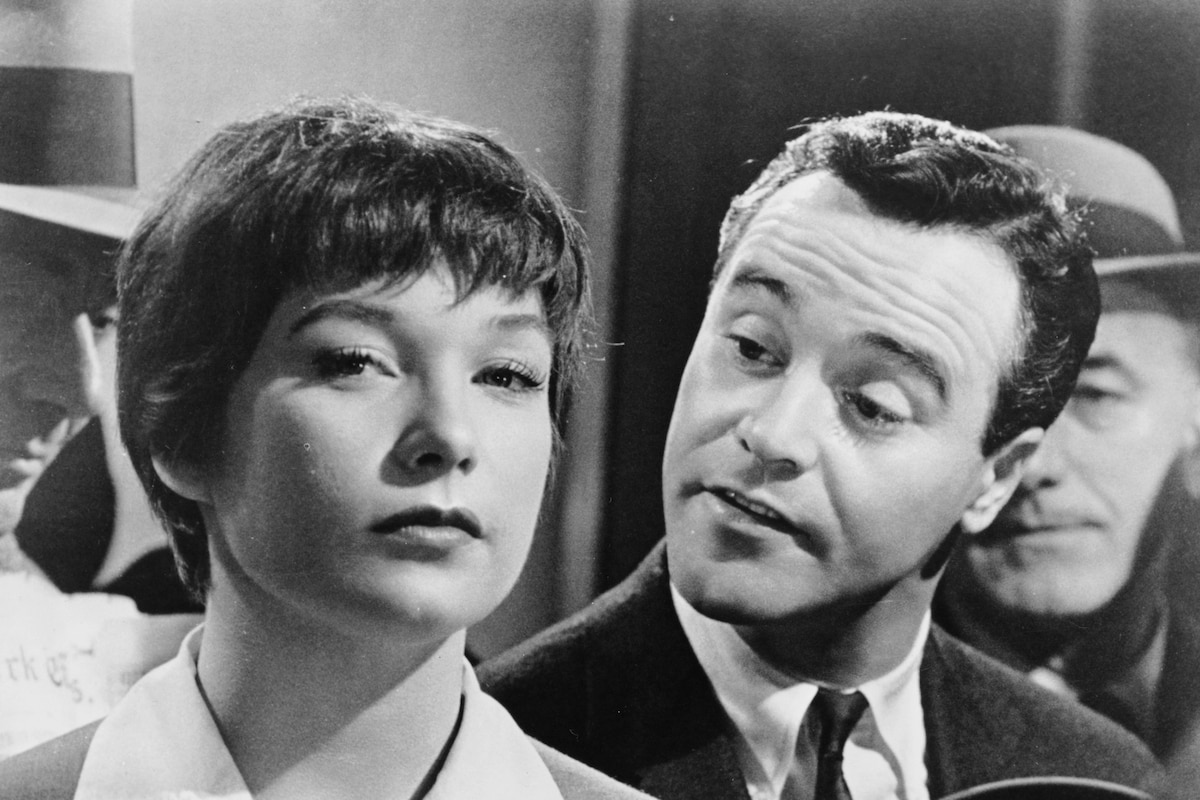

While it may be hard to imagine now, The Apartment (1960) shocked some moviegoers upon its initial release. The problem wasn't the central premise – an ambitious office worker performs dubious favors in exchange for career advancement – but the actual treatment of it. In the hands of writer/director Billy Wilder and his collaborator, scenarist I.A.L. Diamond, The Apartment became a razor-sharp farce that equated corporate success with immortality. Filmmakers in communist Russia viewed it as an indictment against capitalism.
The central character, "Bud" Baxter (Jack Lemmon), acts as a middleman who allows his bosses to use his Upper West Side apartment for their extramarital affairs. Meanwhile, the girl of his dreams, elevator operator Fran Kubelik (Shirley MacLaine), is a working-class girl whose solution to a failed love affair with Baxter’s boss (Fred MacMurray) is to commit suicide. Though not the typical choices for Hollywood protagonists, Lemmon and MacLaine as Bud and Fran win the audience's sympathy and charm them in the process. Wilder manages to keep the film’s tone light and playful, while exposing the worst aspects of wealthy, corporate life, from the drunken office parties to the casual adultery committed by married employees. Despite these controversial elements, the film earned 10 Oscar nominations and won the Academy Award for Best Picture and Best Director of 1960.
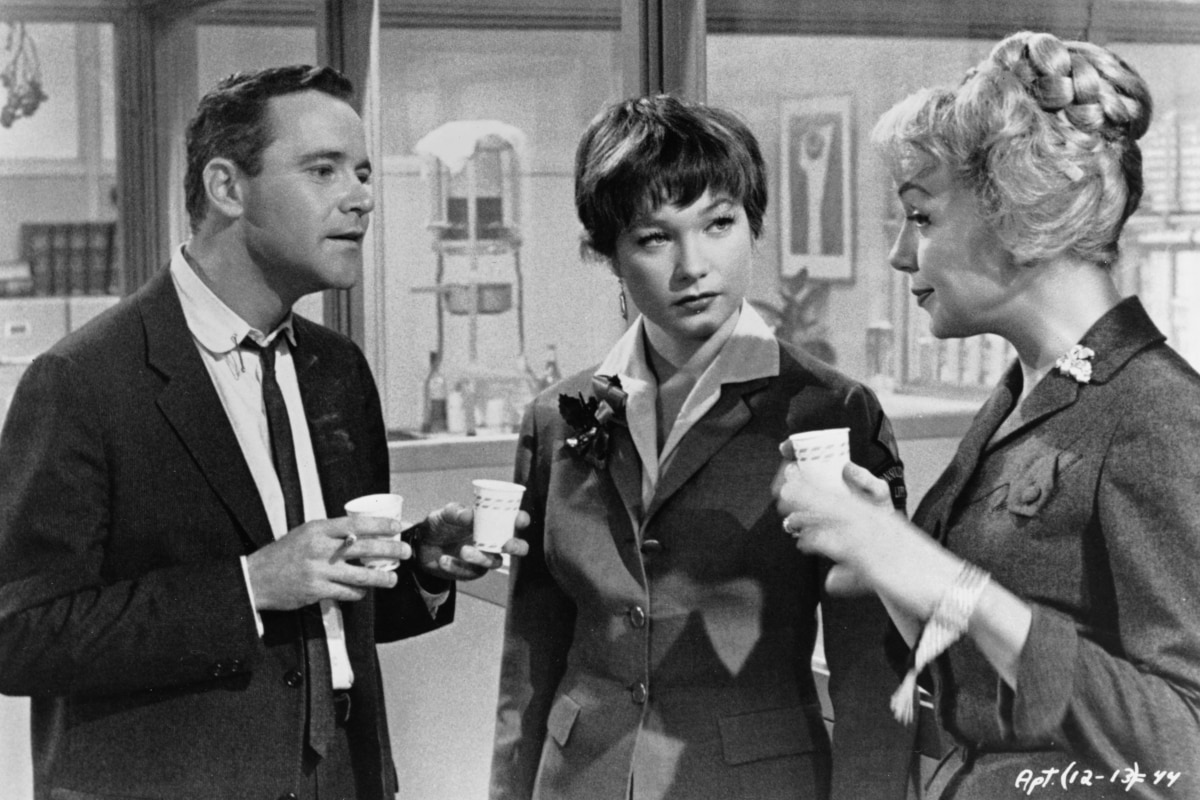
Wilder always worked best with a script collaborator. He had created several successful films in the 1930s and ‘40s with Charles Brackett before they ended their partnership. It wasn't until the mid-1950s that Wilder found another writer with mutual collaborative skills. The quiet, introverted I.A.L. Diamond had a drastically different personality from the outgoing Wilder. But they shared a common European immigrant background, the same dry sense of humor and an interest in many of the same themes and characterizations, such as the use of tangled webs of deception. They had two successful pictures under their belt when they started work on The Apartment: Love in the Afternoon (1957) and Some Like It Hot (1959). Wilder and Diamond were so impressed with Jack Lemmon's performance in Some Like It Hot, they decided in the first month of production on that picture that "this was not to be a one-shot thing with Jack. We wanted to work with him again."
Wilder developed such trust and respect for Lemmon's instinctual gifts as an actor that he allowed Lemmon to improvise certain bits like the bachelor spaghetti dinner scene, where Lemmon strains the pasta through a tennis racket. Lemmon later commented, "Working with Billy I began to understand 'hooks' – those little bits of business that an audience will remember, sometimes long after they've forgotten everything else about the picture. The key was a 'hook.' For 10 years after that film, people would still come up to me on the street and say, ‘Hey, Jack, can I have the key?’”
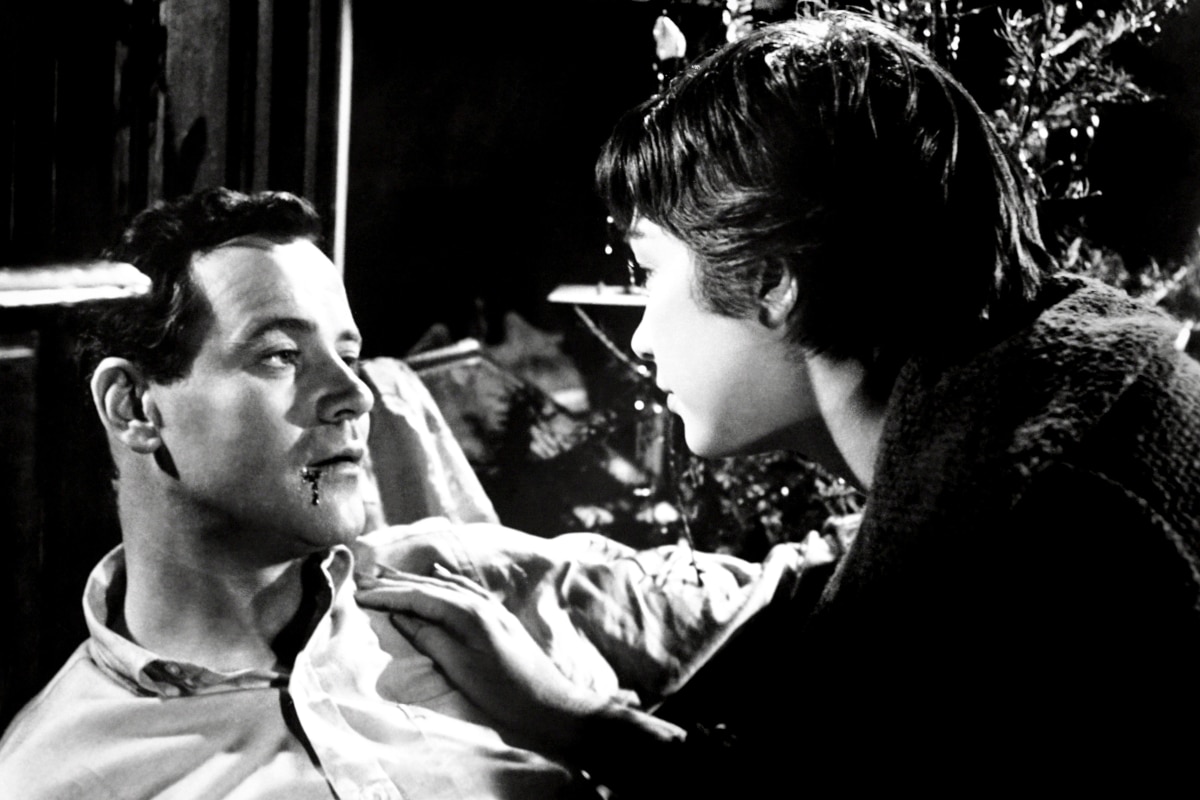
Lemmon also invented one of the funnier moments in The Apartment involving nasal spray. While playing with the nasal spray prop in his dressing room, Lemmon discovered if he gave it a sharp squeeze, it would squirt 10 feet. He filled it with milk to make the liquid visible on black-and-white film, and when MacMurray as his boss chastises him for creating a problem around the use of the apartment, Lemmon squeezed the container. The milk shot out and sailed right past MacMurray's nose. "He was beautiful; didn't say a word, just gave me a look and went right on with the scene," Lemmon said. Wilder left the take in. "With Wilder, like with Ford, the best way is to do it rather than talk about it," Lemmon explained.
The Apartment marked the first time MacLaine had worked with Wilder, and she quickly discovered that her habit of occasionally improvising or changing dialogue was not welcome in the same way as Lemmon. For example, she delivered a wonderful take of a scene set in the company elevator but it had to be re-shot five times because she had omitted one word of dialogue. Still, Wilder was sufficiently impressed with her acting and cast her in the lead role of Irma la Douce in 1963. Her performance in The Apartment also earned MacLaine her second Oscar nomination for Best Actress (the first time was for Some Came Running, 1958), which put her in competition against Deborah Kerr, Greer Garson, Melina Mercouri and Elizabeth Taylor, who won for BUtterfield 8.
Paul Douglas was originally cast as J. D. Sheldrake, the married man Fran loves and Baxter’s boss. Unfortunately, Douglas died two weeks prior to production on The Apartment. Wilder coaxed Fred MacMurray, who he had directed in Double Indemnity (1944), to step into the role. Not only was MacMurray completely convincing as the despicable company boss, but his performance was so realistic it inspired an avalanche of hate mail from female moviegoers who begged him to play sympathetic roles in the future. He did just that, signing on as the amiable father figure in the popular TV sitcom “My Three Sons” (1960-1972) and scoring leads in Walt Disney flicks like The Absent-Minded Professor (1961).
Director: Billy Wilder
Producer: I.A.L. Diamond, Doane Harrison, Billy Wilder
Screenplay: I.A.L. Diamond, Billy Wilder
Cinematography: Joseph LaShelle
Editor: Daniel Mandell
Art Direction: Alexandre Trauner
Music: Adolph Deutsch
Cast: Jack Lemmon (C.C. Baxter), Shirley MacLaine (Fran Kubelik), Fred MacMurray (Jeff D. Sheldrake), Ray Walston (Joe Dobisch), Jack Kruschen (Doctor Dreyfuss).
BW-126m. Letterboxed. Close captioning.