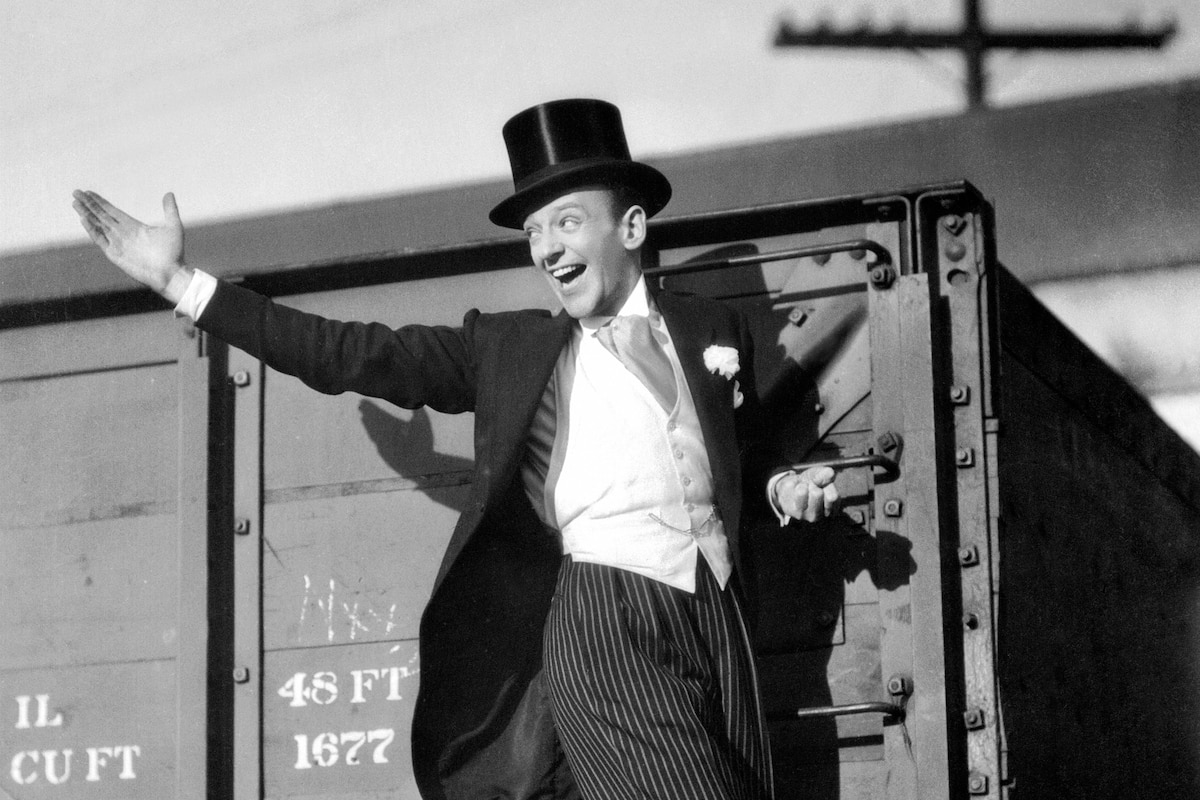

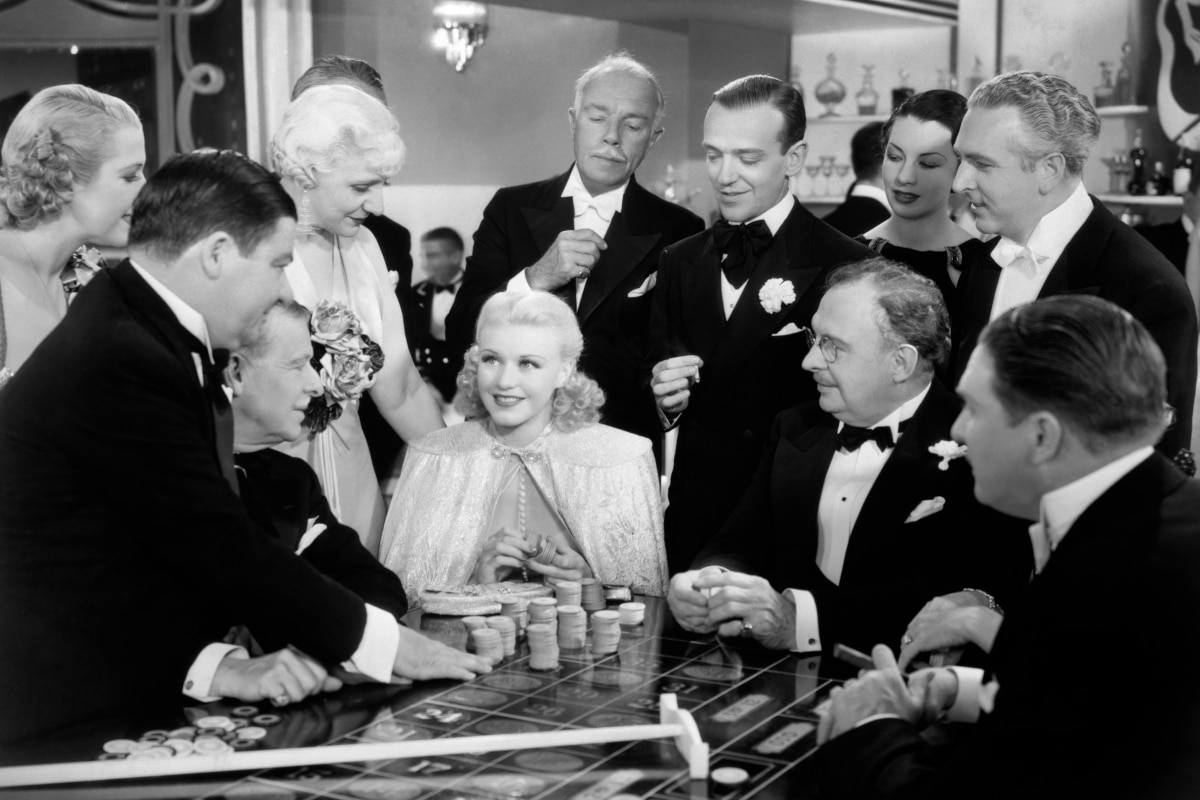
It is rare that the third film in a series is ever good. So what chances would the sixth have of being a classic? An exception has to be made, however, for the sixth pairing of Fred Astaire and Ginger Rogers in Swing Time (1936). Astaire plays John Garrett, a dancer who loves to gamble but is leaving both obsessions behind to marry fiancée Margaret (Betty Furness). When he is tricked into missing his own wedding, he is sent penniless, but elegantly dressed, to New York to earn $25,000 to win her back. His plans start to derail after he runs into dance instructor Penelope (Rogers). This leads to the first dance number, "Pick Yourself Up." With that, one classic song by composers Jerome Kern and Dorothy Fields follows another: "A Fine Romance," "Never Gonna Dance" and the Academy Award-winning "Just The Way You Look Tonight."
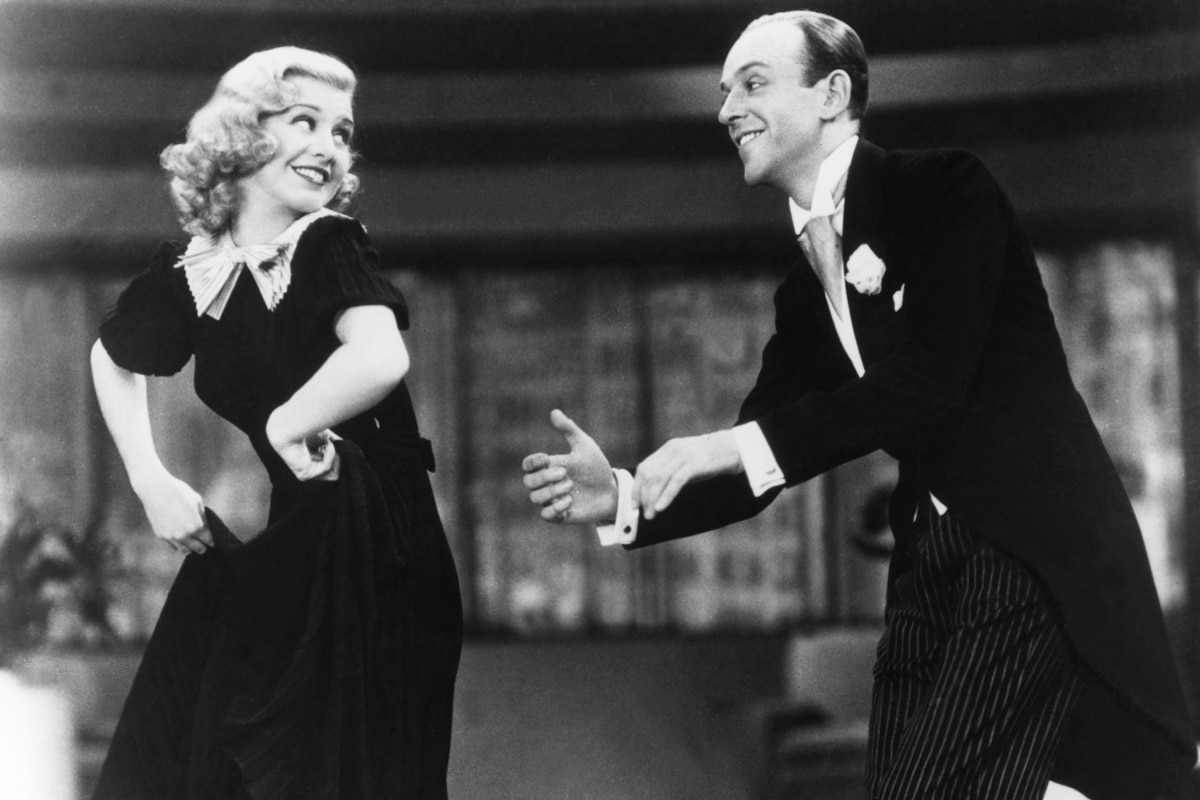
"Never Gonna Dance" was originally slated to be the title of this film, while "I Won't Dance" and "Pick Yourself Up" were also considered. Finally director George Stevens suggested Swing Time as a more upbeat title. Stevens, later to helm such masterpieces as Shane (1953) and Giant (1956), replaced Astaire and Rogers' usual director Mark Sandrich. Stevens even put in a cameo for his father who plays Astaire's fiancée's father. Rogers, then displeased with the quality of her films, was very happy to have such a well-respected director overseeing the film. Perhaps this was also due to a rumored romance between the star and director. Nevertheless, Stevens was a perfectionist and did not spare Rogers in his drive to achieve what he wanted on screen.
An early example of such problems was the shampoo that was supposed to be in Rogers' hair while Astaire sang "The Way You Look Tonight." Real shampoo would run off her head and stain her clothing. After going through take after take with different soaps and none working, shaving cream was tried, and then whipped eggs that began to cook under the hot lights. Finally whipped cream was used and it managed to cling to Rogers' hair long enough to finish the scene.
Astaire, a perfectionist in his own right, made things equally difficult for the movie's songwriters. He wanted songs that featured swing, the new sound then popularized by big bands. Kern, a composer of the old school, had some difficulty with the new idiom but eventually supplied the song "Bojangles of Harlem." Astaire turned it into a tribute to Bill Robinson, the most famous tap-dancer of the early 20th Century. The number featured another first for Astaire, a dance routine with special effects. During rehearsals for the "Bojangles of Harlem" sequence, choreographer Hermes Pan noticed that three light sources were creating a group of Astaire shadows dancing in perfect sync, and got the idea for the special effects shots in the dance. Astaire was filmed in silhouette, then tripled. The dance proper was then filmed against a process screen and combined with the shadow footage optically by RKO effects chief Vernon Walker. The effect was by no means perfect, however, as there is some "bleeding" of the image, the process screen shows through Astaire's hair at several points.
"Bojangles of Harlem" is Astaire’s first and only blackface number. The original conception was actually much more elaborate than what ended up on film. A scenario called "Hot Fields" was prepared as a loose parody of the all-Black vehicle "Green Pastures." It would have involved the Bojangles character traveling through a variety of stylized sets representing Heaven, Hell and jungle locations and would have involved many routines with that most familiar Bill Robinson setting - stairs. Thirty-three scenes would have been required. No doubt such an elaborate series of sequences was deemed to be too expensive to construct and film.
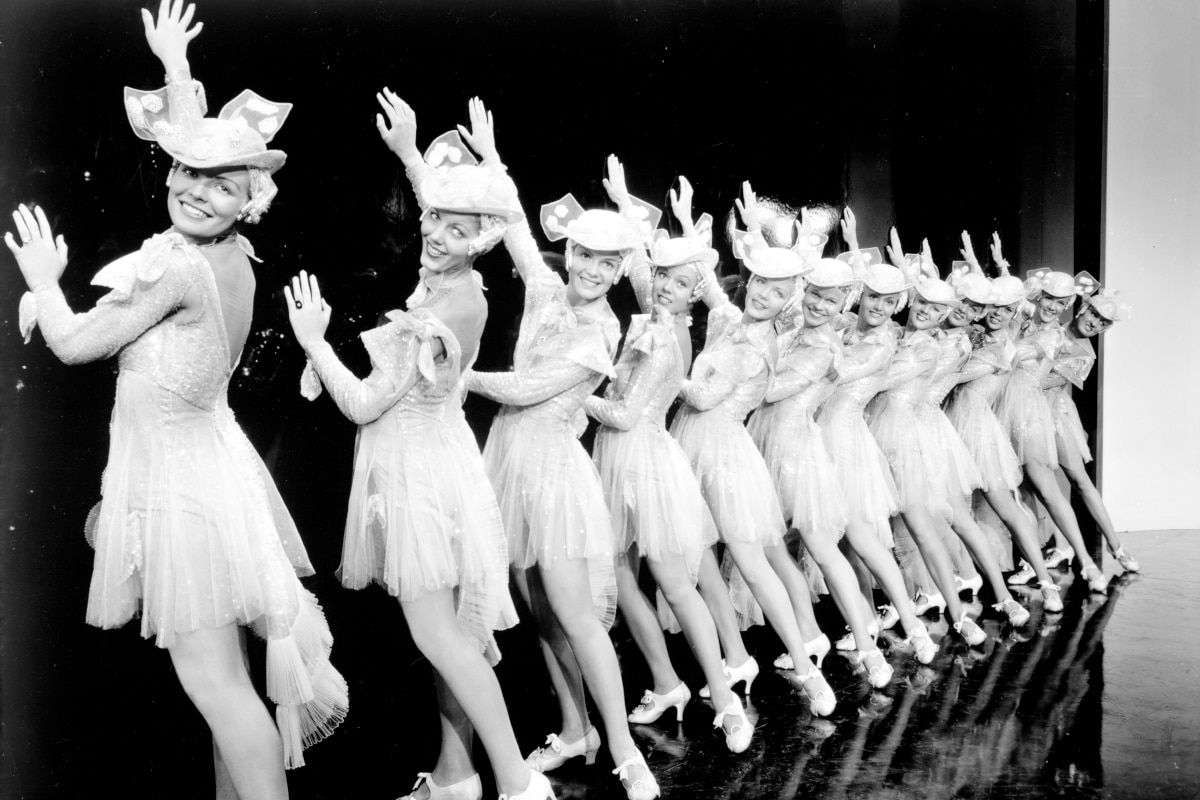
The search for perfection reached its peak in one scene that must have seemed it would never end, the conclusion of the "Never Gonna Dance" number. Rogers recalled, "We did final work on this number into the wee small hours of a Saturday night, and more than forty-eight takes were recorded. Everything that could have gone wrong did during the shooting of this number: an arc light went out; there was a noise in the camera; one of us missed a step in the dance, where Fred was supposed to catch me in the final spins; and once, right at the end of a perfect take, his toupee flipped off! I kept on dancing even though my feet really hurt. During a break, I went to the sidelines and took my shoes off; they were filled with blood. I had danced my feet raw. Hermes [Pan, the choreographer] saw what had happened and offered to stop the shooting. I refused. I wanted to get the thing done. Finally, we got a good take in the can, and George said we could go home - at 4:00 a.m."
There is no argument that all the backstage headaches were worth the trouble. What is amazing is how invisible they are on screen. All that is left is some of the best music ever written for a motion picture and a couple dancing with effortless grace.
Producer: Pandro S. Berman
Director: George Stevens
Screenplay: Howard Lindsay, Allan Scott, story by Erwin S. Gelsey
Cinematography: David Abel
Film Editing: Henry Berman
Art Direction: Van Nest Polglase
Music: Jerome Kern
Cast: Fred Astaire (John Garnett), Ginger Rogers (Penelope Carroll), Victor Moore (Pop Everett), Helen Broderick (Mabel Anderson), Eric Blore (Gordon), Betty Furness (Margaret Watson).
BW-104m. Closed captioning. Descriptive Video.