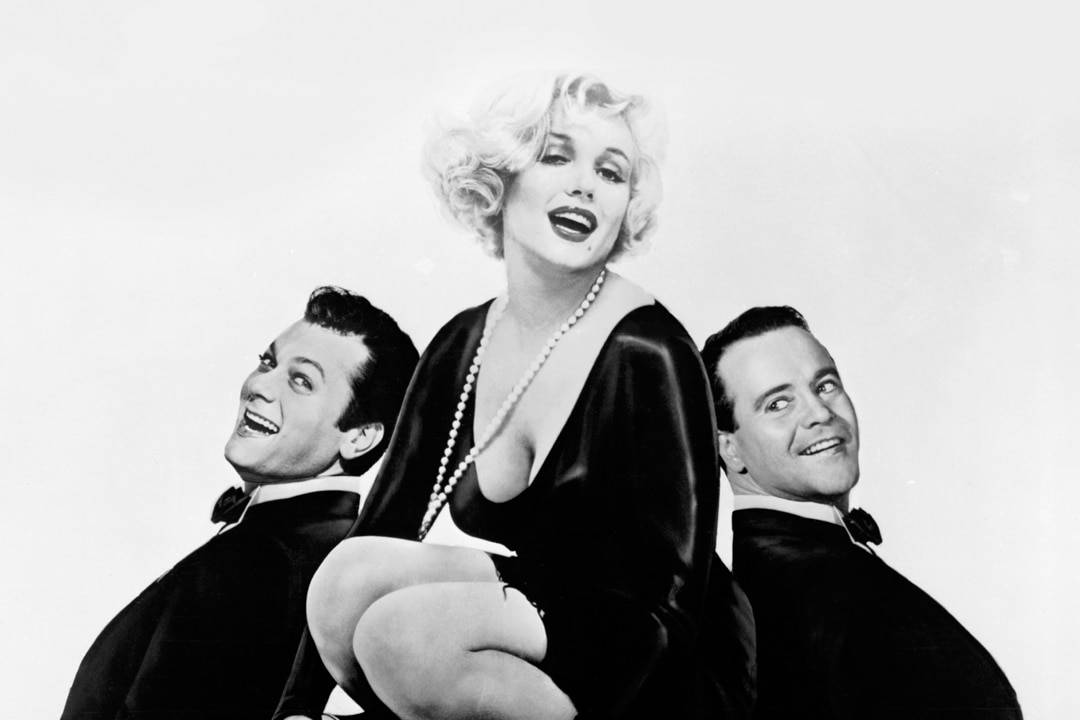

It's hard to imagine a more perfect movie than Some Like It Hot (1959). The ideal script, director, and cast came together at the right time and place to create an enduring comedy classic. Yet, Some Like It Hot came dangerously close to being a totally different movie. The inspiration for the film was a German movie musical entitled Fanfares of Love (1951) in which two unemployed musicians constantly change costumes in order to get work with different types of bands. In one sequence, the two musicians dress up as girls to play in a women's orchestra, and it was this scene which writer/director Billy Wilder lifted as his central premise with co-writer I. A. L. Diamond, adding a gangster subplot which keeps the two musicians on the run. (They accidentally witness the St. Valentine's Day Massacre and are stalked by the killers.)
Initially, Wilder envisioned Danny Kaye and Bob Hope as the two male leads. Over time, he dropped this casting idea and toyed with the idea of using two lesser-known but promising young actors: Jack Lemmon and Tony Curtis. Wilder had just seen Lemmon, a relative newcomer, in the comedy, Operation Mad Ball (1957), and thought he would make a great Jerry/Daphne. Curtis, on the other hand, had been acting in films since 1949, but finally proved he was a real actor in Sweet Smell of Success (1957). Wilder thought Curtis might be just right for Joe/Josephine, and Curtis jumped at the opportunity to work with the director. Then, Frank Sinatra expressed an interest in playing the Jerry/Daphne role and the Lemmon-Curtis teaming was put on hold. Wilder needed a major star for box-office insurance and Sinatra was his ace in the hole. At the same time, Mitzi Gaynor was being pursued for the role of Sugar, the female band leader, until Marilyn Monroe began campaigning for the part. As luck would have it, Sinatra passed on the project but Monroe officially signed on for the film, giving Wilder the superstar he needed for studio financing and clearing the way for Lemmon and Curtis as the male leads.
As soon as the contracts were signed, doubts and problems arose. Lemmon said, "A lot of people thought Billy was crazy to attempt such a film. Friends told me I could be ruined because the audience would think I was faggy or had a yen to be a transvestite. There was no getting around one thing; the picture was a minefield for actors. I finally decided the real trap was to ever think of the trap. If one began to worry about that fine line, to fret over audience reaction, it could be disastrous. The only way to play it was to let it all hang out and just go, trusting that Wilder would say, 'Cut,' if it got out of bounds. I saw this character I was to play as a nut from the moon who never really stopped to think once in his life...How else was it possible to justify a guy who, because he's dressed like a woman, delivers a line like: 'If those gangsters come in here and kill us, and we're taken to the morgue dressed like this I'll die of embarrassment.'"
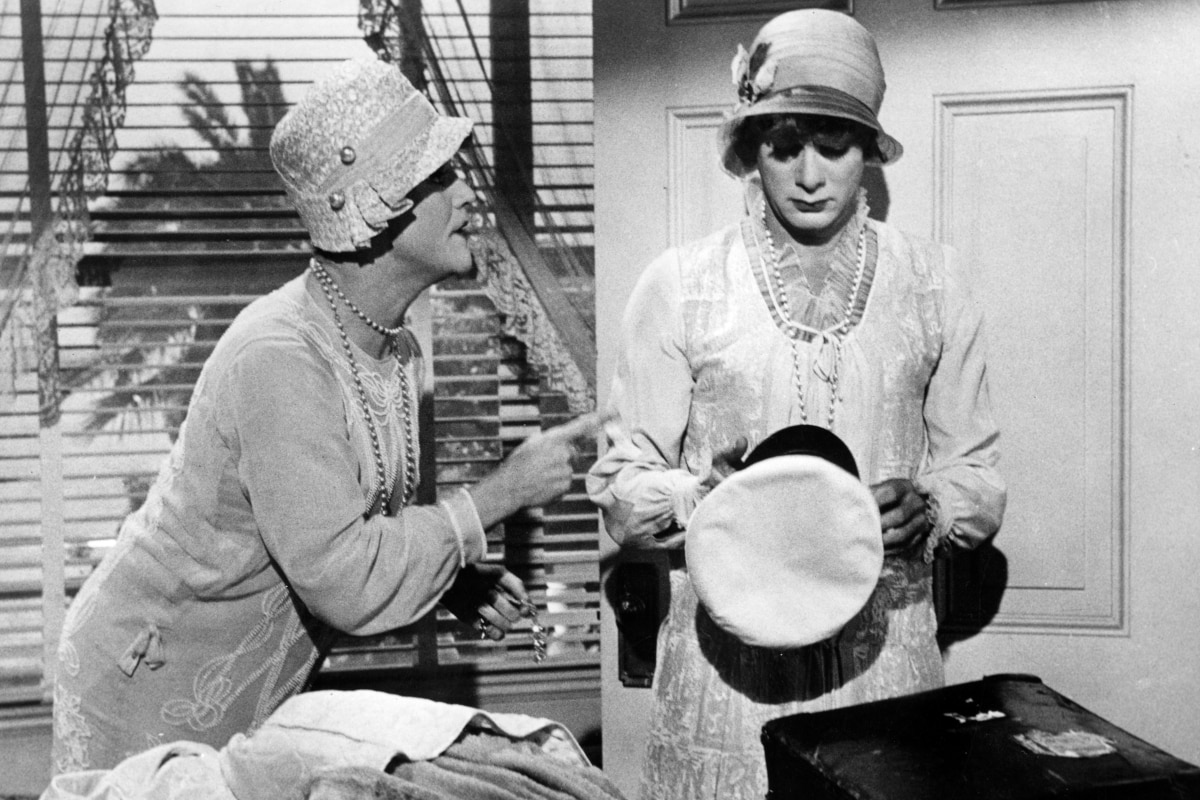
Curtis had a much more difficult time adjusting to the cross-dressing aspect of his character. According to Wilder, "When we were testing costumes and the boys got into their dresses and wigs, Jack came out of his room floating ten feet high, completely normal and natural. Tony didn't dare to come out, he was so embarrassed by the whole thing. Lemmon had to take him by the hand and drag him out. It was natural to the one; there were inhibitions in the other." But whatever reservations either actor may have had about their roles, they are both hilarious and unforgettable in the film.
The real stumbling block to the movie's shooting schedule was Monroe. Her personal problems and doubts about her own acting abilities played havoc with the production. She fought with Wilder over creative aspects (she wanted the film to be shot in color because she didn't like the way she looked in black and white), would arrive late to the set and demanded constant retakes. Wilder said, "Sometimes this stretched out to three days something that we could have completed in an hour, because after every bad take Marilyn began to cry, and there would have to be new makeup applied." In addition, Monroe often didn't know her lines and her dialogue had to be written on cue cards or taped on props. A simple line like "Where is that bourbon?" might take as many as 40 takes.
Monroe had other things on her mind, too. She learned she was pregnant when production started, and because she had miscarriages in the past, she became extra cautious about how early she arrived on the set and how long she remained there. And she was having marital problems that would eventually lead to her divorce from third husband, playwright Arthur Miller, a frequent and some say disruptive presence on the set. She was also acutely aware that at least one of her co-stars was none too happy about working with her. Curtis hated that his own performance deteriorated over the course of the 30 or more takes often needed to get a good scene out of Monroe; as a result, Wilder ended up having to use more footage of Monroe than him. And Curtis and Lemmon, who had to kick off their shoes and soak their painful feet the second Wilder said "Cut," were usually forced to stand around in painful high heels for long periods while their co-star flubbed her lines.
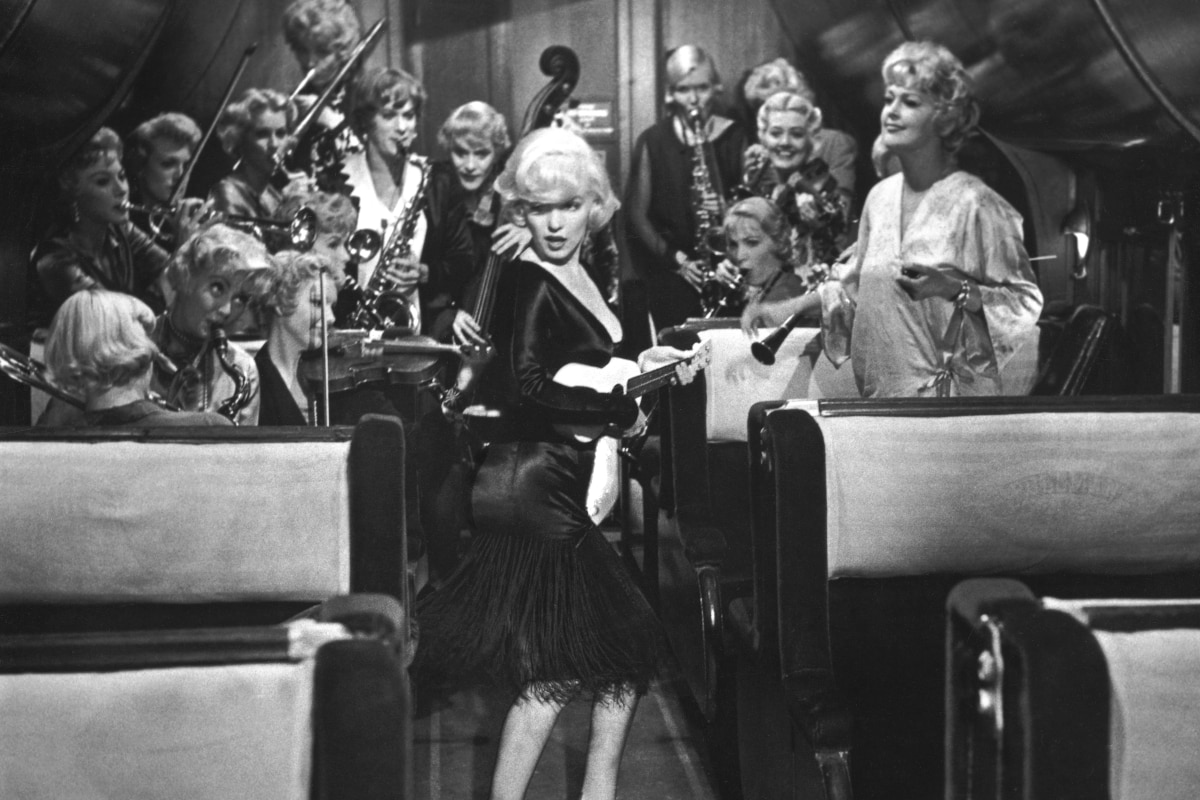
Curtis was quoted as saying Monroe was "a mean little seven-year-old" and that he would rather be kissing Hitler than her in their love scenes. "I think Marilyn was mad as a hatter," he said later. "If she hadn't had that sexy look and the 38-inch bust, she'd have been locked up for sure." Not that Curtis was a model of stability himself. He had been going to analysis as much as four times a week for several years. Yet, somehow Monroe successfully completed the film and you'd never suspect from watching her delightful performance that shooting it was a total nightmare on the set.
By all accounts, Lemmon was the bright spot in the whole mess. He even got along with Monroe and forgave her eccentricities. He believed she simply couldn't go in front of the camera until she was absolutely ready. "She knew she was limited and goddamned well knew what was right for Marilyn," he said. "She wasn't about to do anything else." He also said that although she may not have been the greatest actor or singer or comedienne, she used more of her talent, brought more of her gifts to the screen than anyone he ever knew.
As for his own performance, Lemmon totally threw himself into it, spending hours with makeup technician Harry Ray to get the right look, taking tango lessons (from co-star George Raft), frustrating the professional female impersonator brought in to teach him and Curtis how to act like women (Lemmon felt that too much regal perfection would be wrong for the character and dangerously unfunny). As filming progressed, Wilder became more and more impressed with the young actor. "His unabashed forwardness was making that preposterous situation work,” the director remarked. Wilder said he and Diamond decided right there to work with Lemmon again and began planning for the trio's next venture, The Apartment (1960). The feeling was mutual. Lemmon praised Wilder for coming up with an ingenious bit of business for the scene where Jerry/Daphne tells Joe/Josephine he has become engaged to a millionaire. To allow for the long laughs they knew would follow each of Lemmon's outrageous remarks, Wilder handed the actor a pair of maracas and had him dance around and shake them after every line.
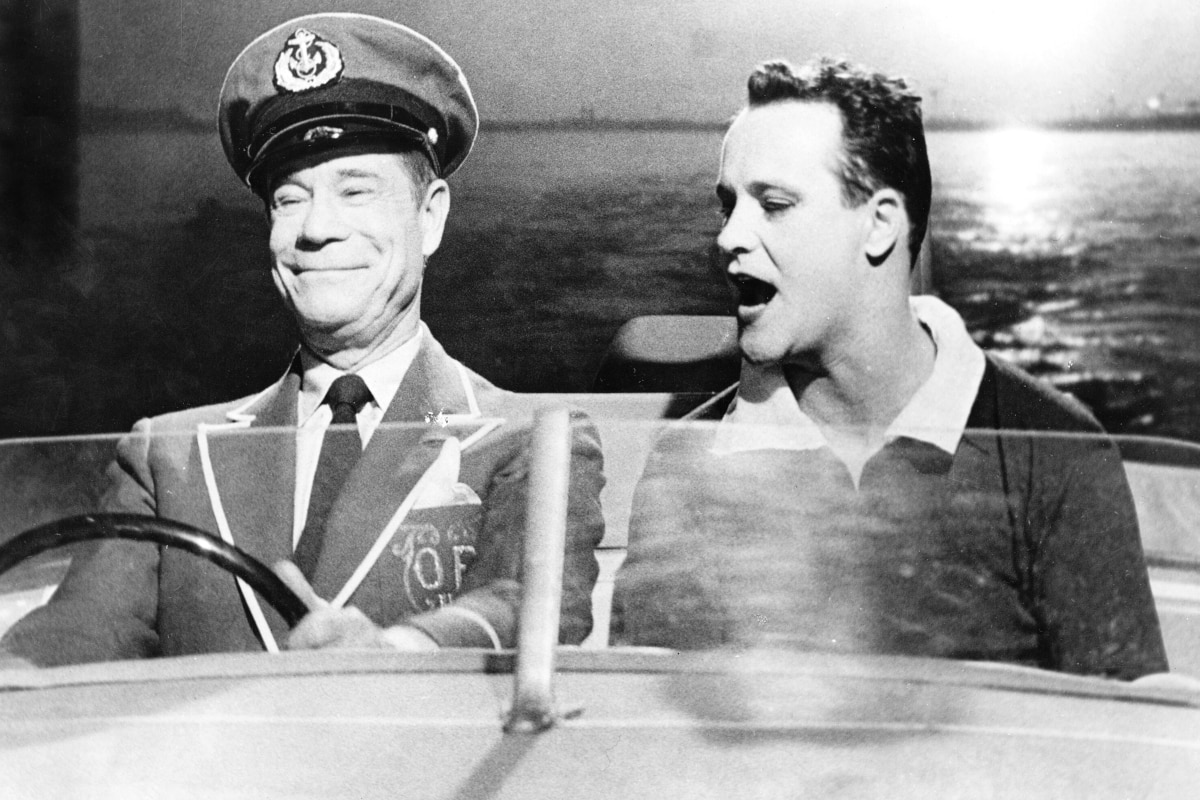
Some Like It Hot was nominated for six Academy Awards including Best Actor (Jack Lemmon - he lost to Charlton Heston in Ben-Hur), Best Director, Best Screenplay, Best Cinematography, Best Art Direction and Best Costume Design. But on the night of the Awards ceremony, it only won one Oscar - for Best Costume Design by Orry-Kelly, the famous gown fashioner who was a favorite of Bette Davis and other actresses. (He also won Best Costume Design Oscars for An American in Paris [1951] and Les Girls, [1957]). In retrospect, some of the Oscar nominations that year seem unjustified - Doris Day for Best Actress in Pillow Talk? Operation Petticoat for Best Screenplay? But time is the great leveler. Some Like It Hot has grown to become one of the quintessential comedies of Hollywood’s studio era.
Producer/Director: Billy Wilder
Screenplay: Billy Wilder, I.A.L. Diamond
Set Design: Edward Boyle
Cinematography: Charles B. Lang
Costume Design: Orry-Kelly
Film Editing: Arthur P. Schmidt
Original Music: Adolph Deutsch
Principal Cast: Marilyn Monroe (Sugar Kane); Tony Curtis (Joe/Josephine); Jack Lemmon (Jerry/Daphne); George Raft (Spats Colombo); Joe E. Brown (Osgood E. Fielding III)
BW-122m. Letterboxed. Closed captioning.