
Controversy has long swirled around the authorship of the screenplay for RKO's Citizen Kane (1941), which brought Oscars to Herman J. Mankiewicz and Orson Welles. As the film was being prepared for release, Welles attempted to claim sole credit and acknowledged the contributions of Mankiewicz only after being forced to do so by the Writers Guild. Critic Pauline Kael, in her 1971 “The Citizen Kane Book,” revived the debate with her carefully detailed argument that it was Mankiewicz who was primarily responsible for the screenplay, from the inception of the idea through the shooting script. And just what was the extent of the uncredited contribution of frequent Welles associate John Houseman? Whatever the balance of the collaboration, this much is known: When Mankiewicz and Welles began work on the script, it was titled “American,” and its central figure was an even more thinly veiled caricature of publishing magnate William Randolph Hearst than appears in the completed film.
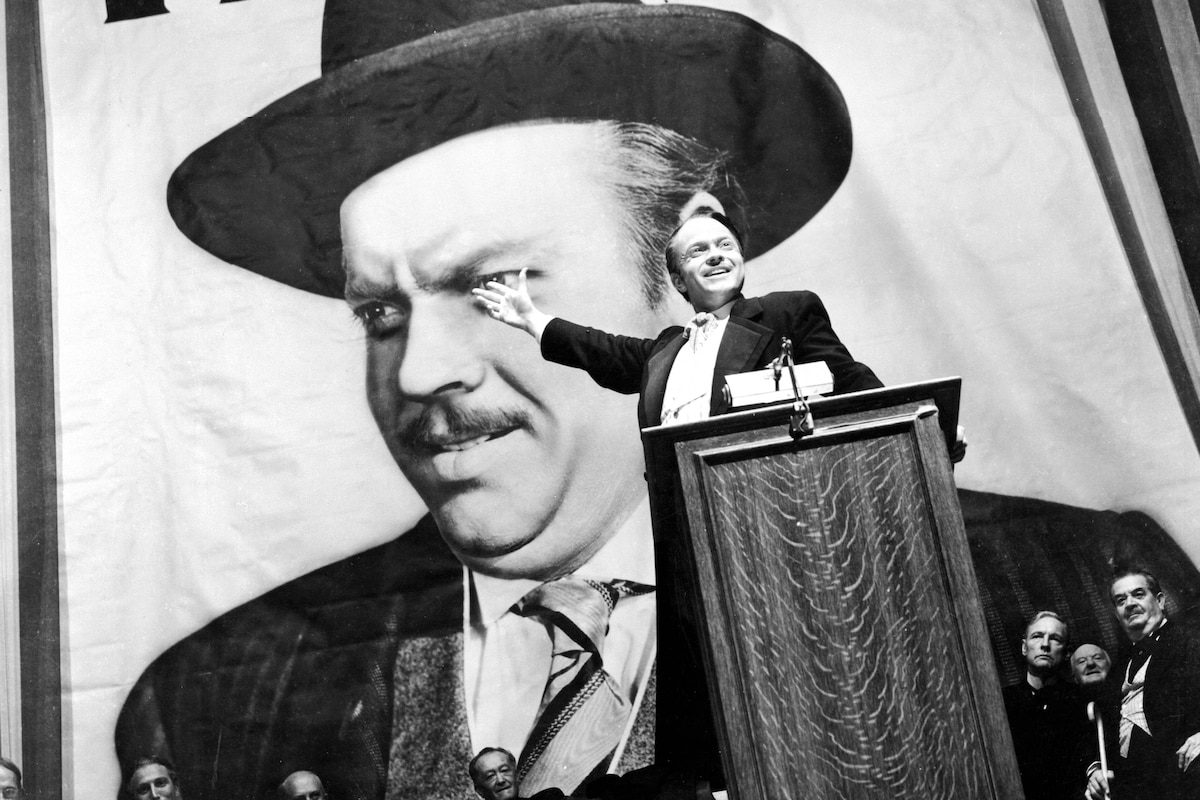
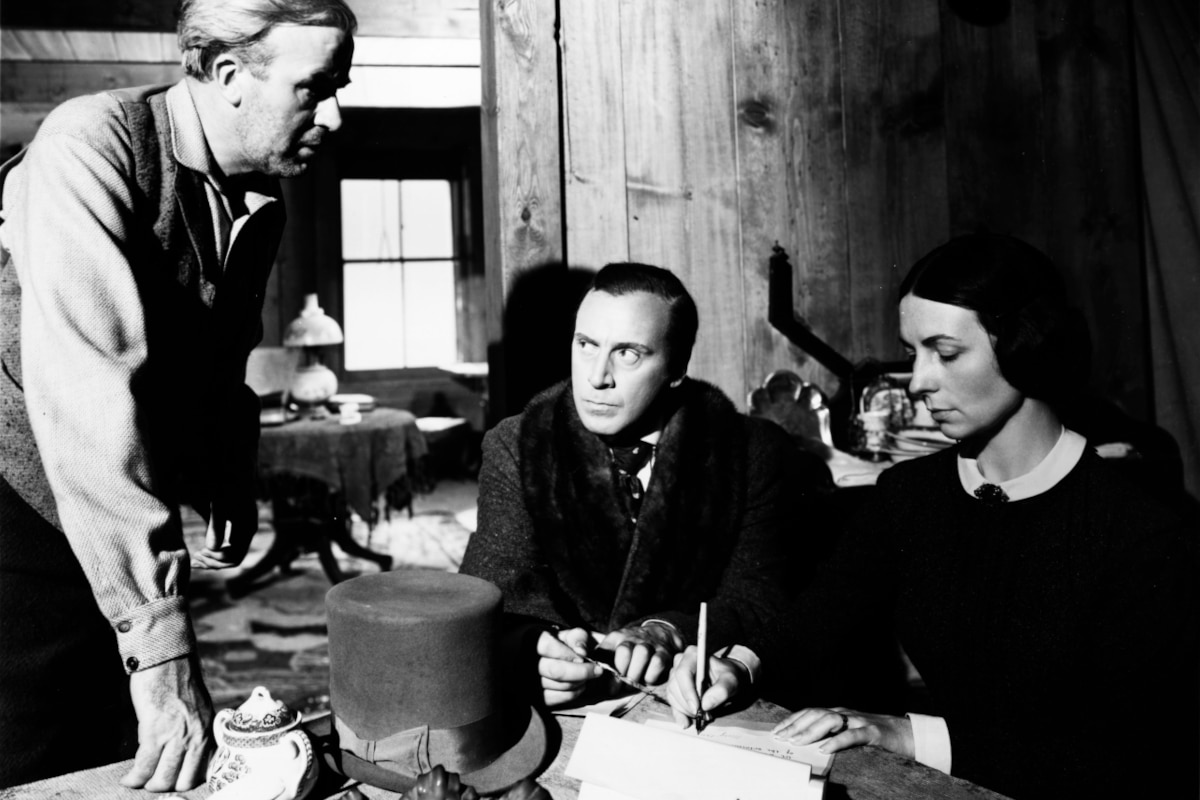
Following the death of a once powerful millionaire, a reporter begins to research his life, looking for clues to the dying man's last remark, “Rosebud.” As the reporter begins tracing the life of Charles Foster Kane (Welles) from his early years as the ward of wealthy banker Walter Parks Thatcher (George Coulouris) to his monumental career as a newspaper publisher, he interviews several of Kane's former friends and colleagues. Among them are Jedediah Leland (Joseph Cotton), the paper's drama critic; Mr. Bernstein (Everett Sloane), Kane's devoted assistant; and Susan Alexander (Dorothy Comingore), Kane's second wife. Their memories of the famous tycoon paint an often contradictory portrait of an arrogant, intelligent, sometimes generous and impulsive individual who ended up alone and unhappy in his palatial mansion known as Xanadu. The identity of "Rosebud" is revealed in the final moments of the film, but its importance to Kane remains a mystery.
Welles' imaginative storytelling style as a director was reinforced by magnificent performances, beginning with his own in the title role, and groundbreaking techniques in photography, editing and sound. But when the film's highly guarded subject matter was at last revealed at previews in February 1941, Hearst reacted with outrage, forcing repeated postponements of Citizen Kane's premiere with threats of libel and refusing to have the film mentioned in any of his newspapers. The movie finally opened on May 1, 1941, to brilliant notices. However, pressure from Hearst and his friends in the film industry kept it out of many theaters, and it proved too high-brow for the general public. The film closed its first run with a loss of some $150,000. It was only after World War II, when it resurfaced in Europe and then on American television that Citizen Kane took its place as a cinematic masterpiece.
The cast of Citizen Kane enjoyed a close camaraderie with director Orson Welles and with each other, with the exception of Dorothy Comingore (Susan Alexander Kane). Welles treated her with contempt on the set while showing only courtesy to Ruth Warrick, who played the first Mrs. Kane. Warrick objected to the shabby treatment that was obvious to everyone on the set. But Welles explained, "I treat her that way because she's got to hate my guts when we get to the later scenes. When she yells and screams and finally walks out on me, I want her to feel every bit of it in her bones." Warrick argued that an actress does not have to suffer real abuse in order to show those emotions. But Welles said, "That's just the point. She is not an actress. She is Susan Alexander, and she'll probably end up just like the woman she's playing. I'm not mistreating her. I treat her exactly as she expects to be treated. She wouldn't respect anything else." After Citizen Kane, Comingore’s career came to a grinding halt when she was blacklisted in 1951 for her affiliation with known Communist Party members. Her final film was The Big Night (1951), directed by Joseph Losey (also blacklisted).
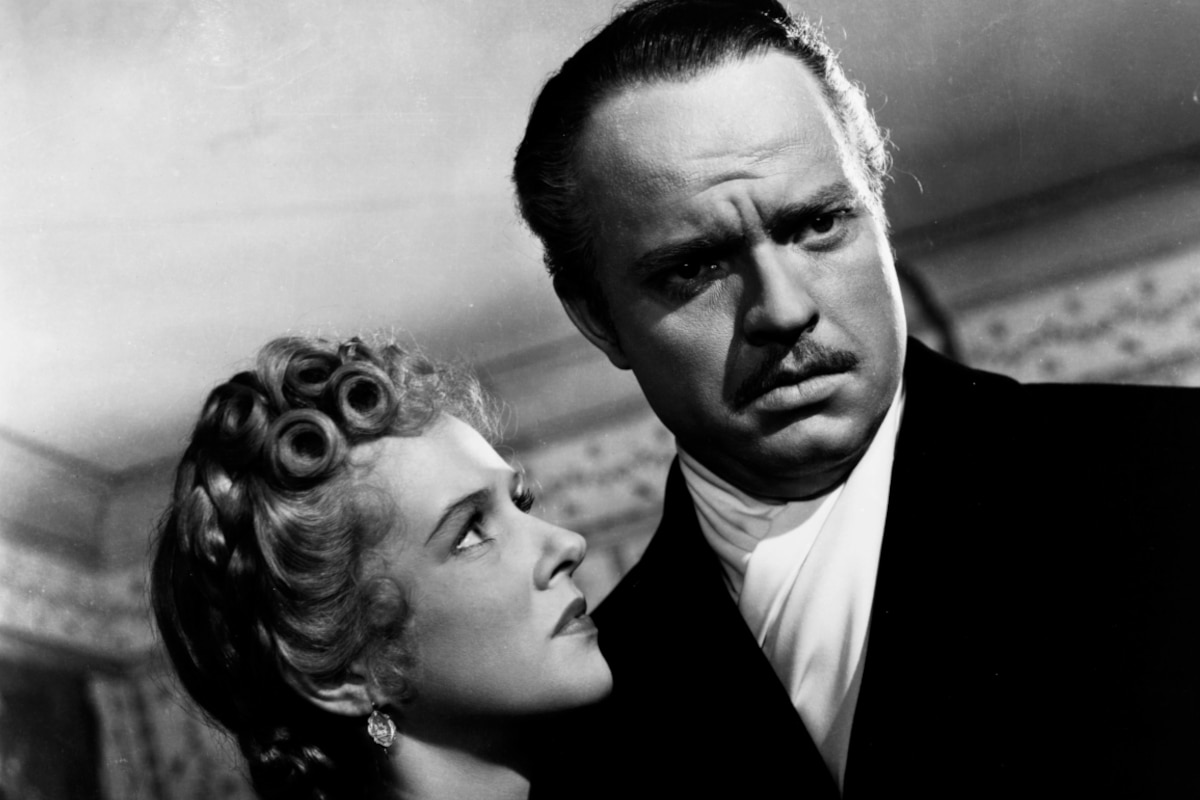
During the violent rampage through Susan Alexander's bedroom, Welles badly gashed his left hand. Luckily, the camera did not capture his injury or else expensive retakes would have been in order. Welles also spent some time in a wheelchair, due to an injured ankle sustained when he fell down the staircase in the scene between Kane and Boss Gettys (Ray Collins). This untimely accident forced Joseph Cotten to shoot his first and most important scene before he was ready: the interview between the aged Jed Leland and the reporter. Cotten had to start shooting without a finished script or any idea when he would have to report to the set in order to have the old age makeup applied, which turned out to be 4:00 A.M. Cotten shot the scene in one day but had to return a few days later to re-shoot due to an unconvincing wig. While the makeup artists were making a new wig for the scene, Cotten went to Tex's Tennis Shop and bought a tennis sun visor that his character eventually wore throughout the scene.
Many scenes in Citizen Kane were shot during all-night shoots. Many times after pulling a difficult all-nighter, Welles and the rest of the cast and crew would sit on the curb at RKO and drink cocktails at 6:30 A.M. instead of 6:30 P.M. According to Warrick, Welles was not in good shape at the beginning of production. When principal photography began, Welles was suffering from the effects of caffeine poisoning as the result of consuming 30 to 40 cups of coffee a day. Welles then switched to tea, figuring that the hassle of having to brew the beverage would naturally limit his intake. But Welles had someone on call to brew the tea for him, and within two weeks, Welles was the color of tannic acid. It was also reported that he would go for long periods without eating, then put away two or three large steaks with side items in one sitting.
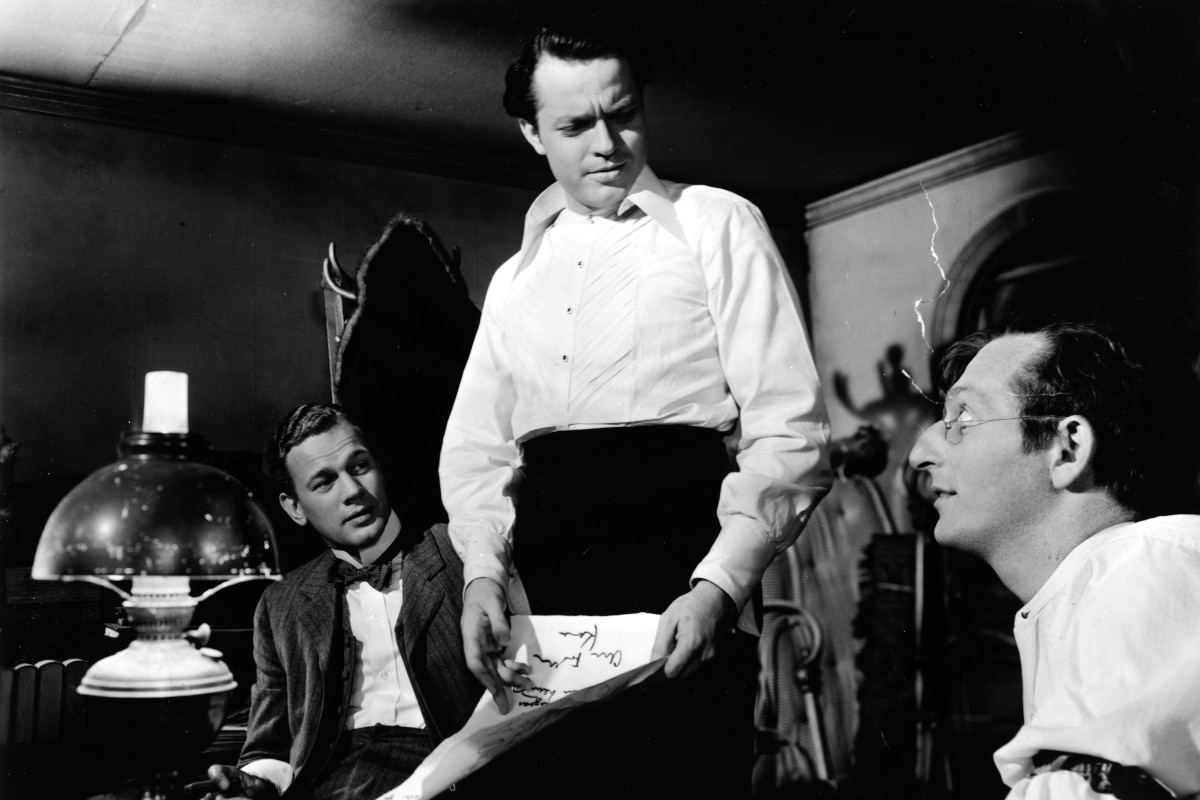
Cinematographer Gregg Toland used faster film and much more powerful lighting that made it possible to get deep-focus shots. Toland also used a self-blimped (self-muffling) camera, which meant that Welles had the freedom of greater camera movement. Some historical and critical accounts credit Welles for being the first to place ceilings prominently in shots. While Welles certainly used these extreme low-angle shots to great effect, going so far as to dig a hole in the soundstage floor to get a low enough angle, he most likely got the idea from John Ford's Stagecoach (1939). Welles has admitted that he learned filmmaking from Ford and Stagecoach in particular. He claimed to have watched the film 40 times during the production of Citizen Kane. Once asked whom he considered his influences, Welles remarked, "The old masters, by who I mean John Ford, John Ford, and John Ford."
Citizen Kane earned Oscar nominations in eight other categories: Best Picture, Actor (Welles), Director (Welles), Black-and-White Cinematography, Interior Decoration, Sound Recording, Scoring of a Dramatic Picture and Film Editing. In what now seems an irony, since the film is considered by many the greatest ever made, the screenplay award was its only Oscar; and some audience members at that year's Academy Awards ceremonies, allegedly influenced by Hearst columnist Louella Parsons, booed the announcement of that victory.
Producer/Director: Orson Welles
Screenplay: Herman J. Mankiewicz, Orson Welles, John Houseman (uncredited)
Art Direction: Van Nest Polglase, Perry Ferguson (associate)
Cinematography: Gregg Toland
Costume Design: Edward Stevenson
Editing: Robert Wise
Original Music: Bernard Herrmann
Principal Cast: Orson Welles (Charles Foster Kane), Joseph Cotton (Jedediah Leland), Dorothy Comingore (Susan Alexander), Agnes Moorehead (Mrs. Mary Kane), Ruth Warrick (Emily Norton Kane), Ray Collins (Boss James "Jim" W. Gettys), Herbert Carter (Everett Sloane)
BW-120m. Closed captioning. Descriptive video.