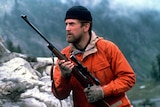

The war in Vietnam became a scar on the pride of America. Not just a loss, it was a mark of shame; tens of thousands of young American men died in a fight they didn't understand and horrific war crimes tarnished our self-image as righteous protectors of freedom. And that doesn't even account for the millions of Vietnamese civilians killed, caught between the Viet Cong and American soldiers. Hollywood steered clear of directly confronting the war for years, until three years after its end in 1975, with Coming Home (1978) and The Deer Hunter (1978), launching the first wave of films that grappled with its legacy. But it took another decade before audiences saw a film that truly portrayed the American soldier's experience in Vietnam. The movie was Platoon (1986), the first American film about Vietnam written and directed by someone who experienced the war firsthand.
Oliver Stone started writing his screenplay in 1976, but its roots go back almost a decade earlier, when Stone went to Vietnam as a member of the U.S. Infantry, a "grunt" humping through the jungles in a war where the enemy was barely seen. His screenplay, initially titled "The Platoon," was drawn from his own experiences, a view of the war through the eyes of an alter-ego he named Chris Taylor, flanked by two officers with opposing sensibilities. Both drawn from real sergeants he served with during his tour of duty, Stone named these fictionalized characters Barnes, the hard, no-nonsense career soldier with a disfiguring scar running from his forehead to his jawline, and Elias, a natural scout and an easy-going guy who liked to smoke dope with the guys in the rear. As Stone wrote in his memoir, "Chasing the Light," Barnes was his "mythic Achilles" and Elias his "Hector, nobler but doomed," archetypes in a film grounded in the mud and blood and chaos of Vietnam in 1968. "My story would be about the lies and war crimes, which were committed not just by one platoon but, in spirit, by every unit," he decided, and so Chris confronts atrocities that mirror the My Lai massacre and (like Stone himself) comes under fire in the bloody Tet Offensive. Other scenes were drawn more directly from his own experiences.
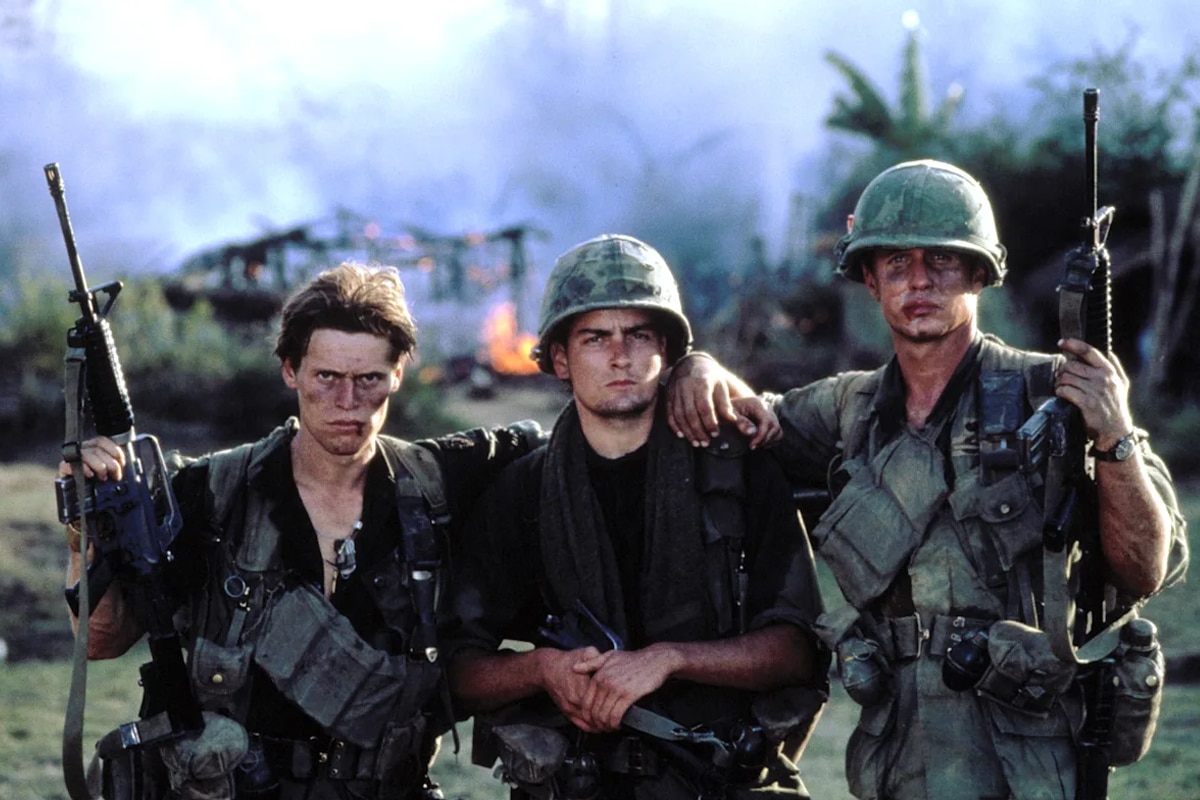
The screenplay attracted interest almost immediately, but it took years for the financing to come together. Stone had cast Emilio Estevez in the lead in the early 1980s, but the money fell through. By the time cameras finally rolled in 1986, it was Estevez's younger brother, Charlie Sheen, who donned the fatigues as Chris. It was a breakthrough role for the 21-year-old actor, but according to Stone, the producer pushed for another young talent, Keanu Reeves, for the lead. Reeves passed on the project, as did many actors approached for roles in what would be a low-budget production (like Apocalypse Now before it) shot on location in the jungles of the Philippines. Tom Berenger, a handsome leading man known for The Big Chill and Eddie and the Cruisers (both 1983), lobbied for the role of Barnes and transformed himself into the brooding, brutal soldier, complete with the disfiguring scar. Stone cast Dafoe in the role of Elias after seeing To Live and Die in L.A. (1985). The rest of the cast were largely unknown actors, among them future stars Keith David, Forest Whitaker and Johnny Depp.
Determined to capture the physical details of the soldier's experience accurately in his film, Stone hired Dale Dye, a retired U.S. Marine Corps captain and a Vietnam veteran, to put his cast through a two-week boot camp just before shooting began. They were marched into the jungle, put through weapons training and maneuvers, fed on rations, and fired upon with blanks to simulate attacks. They slept in foxholes that they dug themselves and were woken every few hours to take watch. Stone wanted to, in his own words, "get a tired, ravaged look," and he captured it on camera as they returned from the jungle, dirty and exhausted and looking every inch like real soldiers in the midst of their tour of duty.
Platoon was shot almost entirely on location in the jungle, where cast and crew had to endure insects, leeches, snakes, heat, rain and the rugged landscape itself. The lights used for night shoots attracted swarms of insects so thick that the microphones picked up their constant collisions with the enormous lights and their shadows made the light flicker. Cinematographer Robert Richardson abandoned traditional spotlights for smaller lights, reflectors and magnesium flares, which gave the night scenes a rough but realistic look.
By the time Platoon was in production, Hollywood had turned from re-examination to revision. Films like Uncommon Valor (1983), Missing in Action (1984) and Rambo: First Blood Part II (1985) gave Americans a win as soldiers symbolically refought the war to rescue POWs left behind, and Top Gun (1986), starring Tom Cruise as a hotshot fighter pilot, glorified the American military and became the number one film in America. Orion, which distributed Platoon, didn't expect much from this gritty, at times damning, look at the American involvement in Vietnam and rolled the film out in a limited release in just a few cities. Then, the reviews came in and, more importantly, audiences responded. Lines went around the block at many theaters, and Orion rushed to strike additional prints to meet the demand from exhibitors.
Platoon was the surprise hit of 1986, with box-office receipts over 20 times its budget. It earned eight Academy Award nominations and won four awards, including Best Picture and Best Director for Oliver Stone. Stone was also honored with Best Director by the Directors Guild of America and the Film Independent Spirit Awards. The film was added to the National Film Registry by the National Film Preservation Board in 2019.
More than just a hit movie, Platoon became a cultural phenomenon. In the words of Time film critic Richard Corliss, "The film does not glamourize or trivialize death with grotesque special effects. But it jolts the viewer alive to the sensuousness of danger, fear and war lust." Vietnam vets wept at what they saw on screen. Some experienced flashbacks thanks to the sensory detail of Stone's direction. Veterans’ organizations used the film as a starting point to confront and process post-traumatic and other issues. While the film sparked debates among veterans for its portrayal of drug use, for instance, and its sidelining of black soldiers to supporting roles and stereotypical portraits, most agreed that it was the most accurate portrait of the Vietnam War put on the screen. Stone's mission was to tell the truth about the war and about his experience. That truth touched a nerve in America and launched a career that continued to confront American history, culture and values for years to come.
Sources:
The Oliver Stone Experience, Matt Zoeller Seitz. Abram, 2016.
Chasing the Light, Oliver Stone. Houghton Mifflin Harcourt, 2020.
Platoon: Brothers in Arms, documentary directed by Paul Sanchez. Bravo Company Entertainment, 2018.
"Platoon: Viet Nam, the way it really was, on film," Richard Corliss. Time, January 26, 1987.
"'Platoon' Raising Veterans' Anxieties," Janet Gardner. The New York Times, June 7, 1987.
AFI Catalog of Feature Films
IMDb