
In November 1939, author Philip Van Doren Stern wrote a short story called “The Greatest Gift,” but was unable to get it published. At Christmastime 1943, he sent it to family and friends, including some in Hollywood, who passed it around until it reached Cary Grant, then under contract to RKO Studios. He thought it would be a good film for him, and he asked RKO to buy the rights. Stern was paid $10,000, and top writers Marc Connolly, Clifford Odets and Dalton Trumbo were each hired to write a screenplay. None satisfied the studio.
Director Frank Capra returned from World War II at the end of 1945 and hadn’t made a commercial film since Arsenic and Old Lace in 1941, although the film wasn’t released until 1944. He didn’t know what kind of film to make, but he was sick of war and “not very happy about the human race.” Capra heard about “The Greatest Gift” and wanted it for his new production company, Liberty Films, recently formed with fellow directors William Wyler and George Stevens and producer Samuel J. Briskin. They bought the rights from RKO (who threw in the three scripts for free) and then borrowed $1,540,000 from Bank of America to produce the film, with Capra directing. Screenwriters Albert Hackett and Frances Goodrich wrote the initial script, with Capra later adding his own signature touches, including creating the evil banker, Mr. Potter, himself.
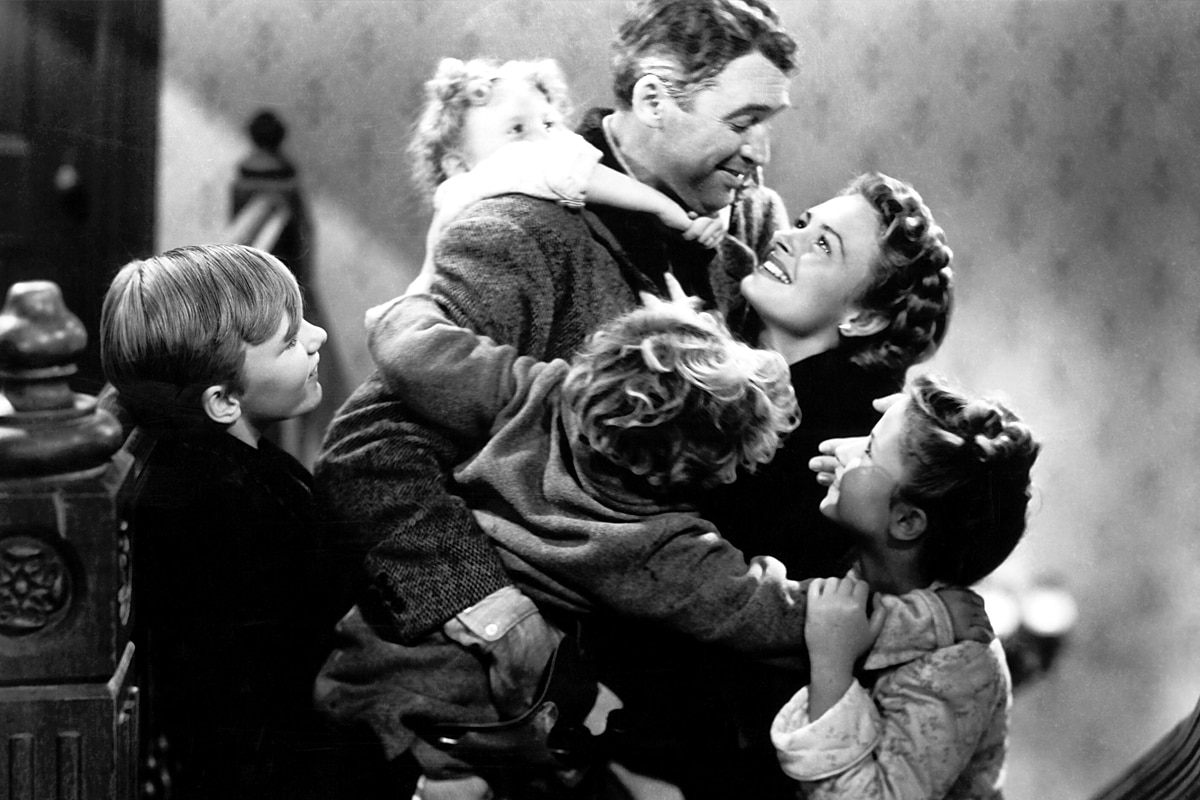
For George Bailey, a man driven to the brink of suicide and given a chance to see what his world would have been like had he never been born, Capra chose James Stewart. Despite Stewart’s typecasting as the all-American hero, Capra knew he could play George’s darker side. Stewart had also served in the war, enlisting as a pilot, and on one occasion came very close to dying. He also hadn’t worked in Hollywood for several years, so when Capra told him he had a great story, Stewart didn’t even need to hear the plot to agree to star in it.
Olivia de Havilland, Ann Dvorak and Jean Arthur were considered for George’s wife, Mary, before Capra chose MGM contract player Donna Reed. She surprised everyone during the scene in which Mary makes a wish and breaks a window by throwing a rock. Capra had hired someone to throw it for her, but Reed loved to play baseball and broke the window herself.
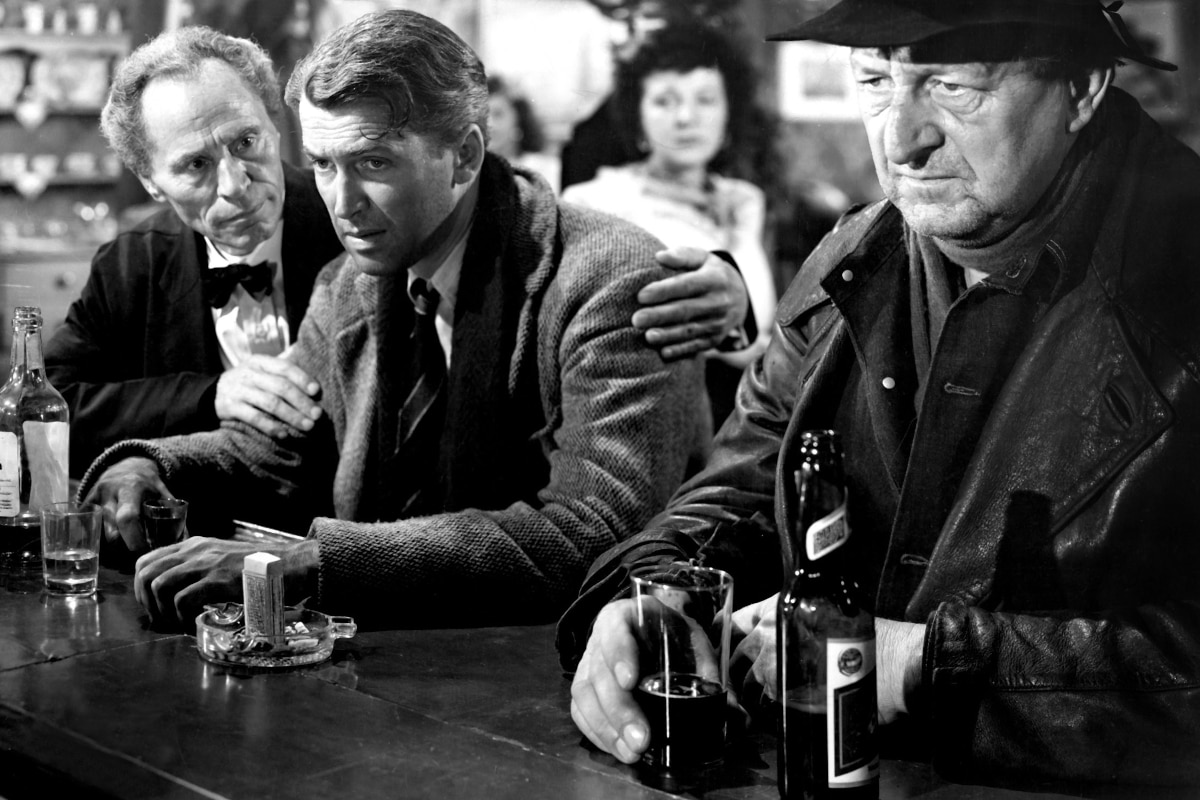
Barry Fitzgerald, Walter Brennan, Adolph Menjou and even W.C. Fields were considered for Uncle Billy until Thomas Mitchell got the part. Lionel Barrymore beat out Claude Rains, Charles Coburn and Vincent Price for Mr. Potter, and Henry Travers, once considered for George’s father, became the angel, Clarence. The most surprising choice was H.B. Warner, who had played Christ in Cecil B. DeMille’s King of Kings (1927), and found it difficult to find a variety of roles afterwards. Capra cast him as the drunken druggist, Mr. Gower, a role that delighted Warner, who said, “I’m playing the damnedest, dirtiest bum you ever saw, thanks to Capra, who used a little imagination.”
Now retitled It’s a Wonderful Life, the film began production at RKO-Pathé Studios on April 15, 1946, with exteriors shot on the RKO Ranch in Encino, where the town of Bedford Falls was built. It was one of the longest film sets constructed at the time: 300 yards long, with 75 buildings and 20 live oaks planted on its four acres. Several people fainted while shooting the winter scenes in a record-breaking July heat wave, and Capra had to give everyone a day off to recuperate. Rather than the customary cornflakes painted white for snow, Capra had his team come up with a quieter mix of shaved ice, gypsum, plaster, Ivory Flakes soap and Foamite, used in fire extinguishers. The scene in which the high school gym floor opens to reveal a swimming pool was shot on location at Beverly Hills High School. “Little Rascals” fans will spot Carl Switzer (Alfalfa) as one of the pranksters who opens the floor.
While that scene was scripted, there were a few happy accidents during filming. Uncle Billy’s drunken walk off-screen, followed by the sound of falling garbage cans, was not planned. After Mitchell walked out of frame, a technician accidentally knocked over some props and thought he was going to be fired, but Capra gave him $10 as a bonus. Ellen Corby (later famous as Grandma on “The Waltons”) played the customer who asks for $17.50 during the bank run. Capra had her change the amount, and Stewart spontaneously kissed her.
Not all kisses were easy for Stewart. Having not acted for so many years, he was nervous about filming the telephone scene in which George and Mary realize they are in love, telling Capra, “A fellow gets rusty.” Capra changed the scene so the two had to share the phone to make it more intimate and shot it in one take. Everyone was pleased with the results, except the script girl, who pointed out that the actors had left out an entire page of dialogue. Capra didn’t care. He said, “With technique like that, who needs dialogue? Print it!” And they did.
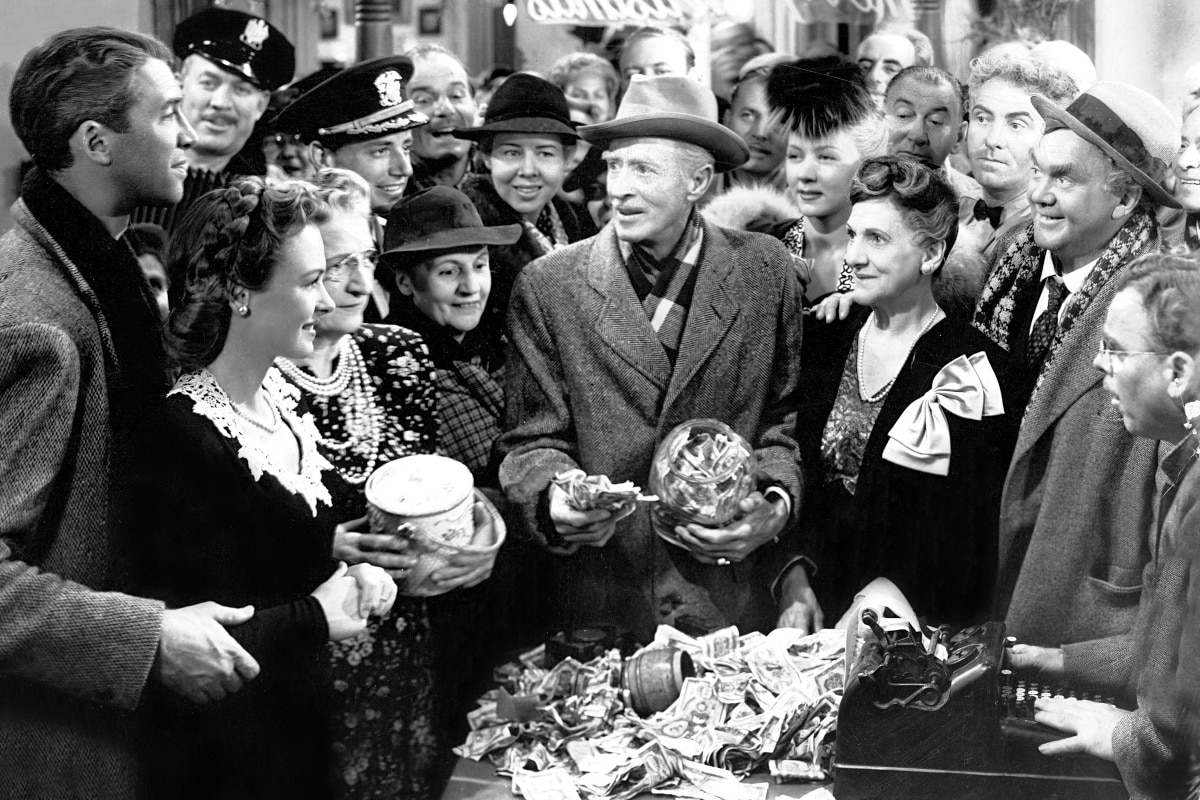
It’s surprising to learn that It’s a Wonderful Life was not a box-office smash when it was first released in December 1946. It did receive favorable reviews, like Bert Briller’s for Variety, who wrote, “Stewart touches the thespic peak of his career […] and shows a maturity and depth he seems recently to have acquired. […] In the femme lead, Donna Reed will reach full-fledged stardom with this effort. […] [N]o past Capra celluloid possessed any greater or more genuine qualities of effectiveness.” Part of the reason for its lack of box office was attributed to audiences staying home during a harsh winter on the East Coast when the film went into general release in January 1947. Despite being Academy Award-nominated for Best Picture, Best Actor for Stewart, Best Director for Capra and Sound and Editing, along with Capra winning a Golden Globe for Best Director, It’s a Wonderful Life did not make back its initial costs.
The film that Capra called “the picture I waited my whole life to make” essentially ended his career as a major director and contributed to Liberty Films being dissolved a few years later. As Frank Capra Jr. said, “It didn’t make my dad a fortune, but it enriched the lives of every person who fell under its warm joyful spell.” The film gained popularity in the 1970s, when someone forgot to renew the copyright on the film, which led to it entering the public domain, and television stations were able to run it as much as they liked for free. Capra himself said of its later success, “I think that as time goes by, it will just be more and more popular. It’s a theme that hits everybody. Everybody has gone through that thing when they’d rather die than live, so that’s why I think the picture will live on beyond our time. It is a wonderful life.”
SOURCES:
The AFI Catalog of Feature Films. “It’s a Wonderful Life.” https://catalog.afi.com/Film/27682-ITS-AWONDERFULLIFE?sid=f36395e8-6ebe-4657-a4d9-21168bf3127a&sr=59.778214&cp=1&pos=0
Briller, Bert. “It’s a Wonderful Life: Film Review.” Variety. 18 Dec 46. https://variety.com/1946/film/reviews/it-s-a-wonderful-life-1200414860/
A Cinematic Christmas Journey: It’s a Wonderful Life: The Untold stories from Behind the Cinematic Christmas Journey. (2023) https://www.youtube.com/watch?v=f02szxeffK8
The Internet Movie Database. “It’s a Wonderful Life.” https://www.imdb.com/title/tt0038650/?ref_=fn_all_ttl_1
It’s a Wonderful Life: A Personal Remembrance. (1991) https://www.youtube.com/watch?v=lhaKfDyRoH4
The Making of It’s a Wonderful Life (1990) https://www.youtube.com/watch?v=MbSv_ZTgs-M