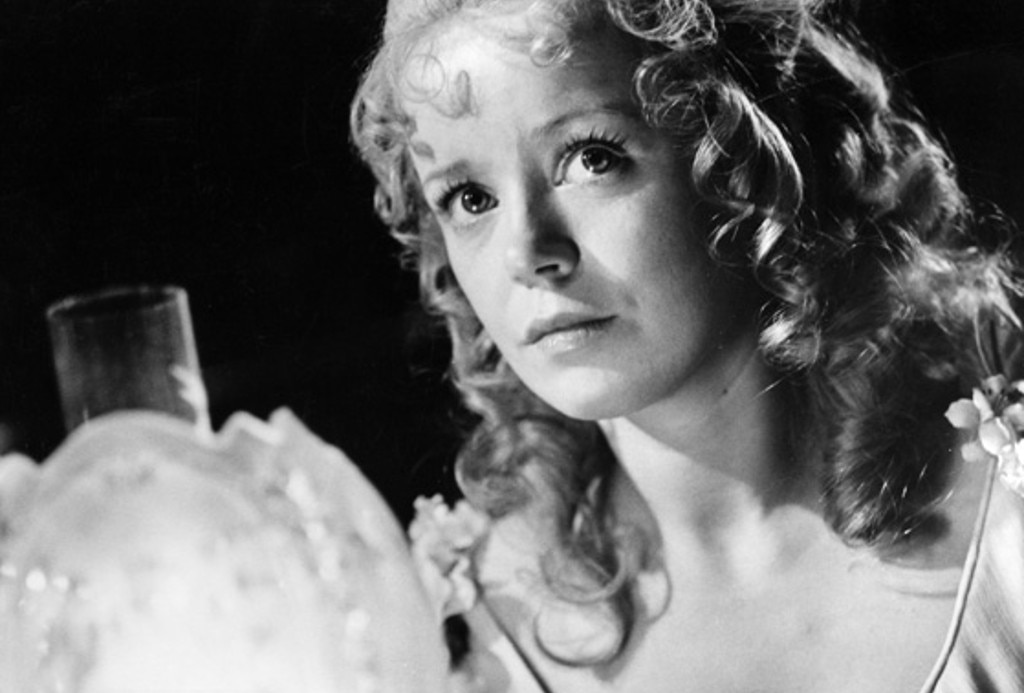
Always looking to add another monster to its repertory, Great Britain's Hammer Film Productions broached the subject of Jack the Ripper (though not for the first time) with Peter Sasdy's Hands of the Ripper (1971). This distinctly Freudian spin on the serial killer mythos focuses not on the Fiend of Whitechapel himself but on his orphaned daughter (Angharad Rees), sole heir to a legacy of violence and horror. Innovative and forward-looking, Hands of the Ripper occupies linchpin status between Alfred Hitchcock's Psycho (1960) - a genre game-changer to which Hammer paid homage via a series of nervy black-and-white psychological thrillers - and the slasher cycle kicked off by John Carpenter's Halloween (1978); there are intriguing points of comparison between the Sasdy and Carpenter films, from the image of a traumatized child shocked into a glassy-eyed fugue state to the butterfly pinning of a victim to the back of a door to the symbiotic relationship between the killer and a doctor (here played by Forsyte Saga star Eric Porter) racing to stop her before she kills again. Director Sasdy was able to recreate Edwardian England on the backlot of Pinewood Studios by reusing leftover sets from Billy Wilder's The Private Life of Sherlock Holmes (1971) - though a climactic suspense setpiece set in the domed Whispering Gallery of St. Paul's Cathedral in London was faked by placing the actors in front of frame blow-ups of the interior of the historical edifice.
By Richard Harland Smith
Hands of the Ripper
by Richard Harland Smith | May 15, 2014
SIGN UP FOR OUR NEWSLETTERS

CONNECT WITH TCM