Studio contract player (and Humphrey Bogart protégé) John Derek married Ursula Andress in 1957, when the Swedish starlet's greatest claim to fame was having been a former girlfriend of the late James Dean. With Andress' subsequent casting as the first Bond Girl in Dr. No (1962) came international recognition and leading lady roles opposite Elvis Presley in Fun in Acapulco (1963) and Frank Sinatra and Dean Martin in Four for Texas (1963). Capitalizing on his connection to a hot commodity, and long interested in making the transition from acting to directing, Derek co-produced and starred with Andress in Nightmare in the Sun (1965), a low budget neo-noir of principal interest for its supporting cast (Sammy Davis, Jr., Robert Duvall, Aldo Ray, and a pre-Cassavetes John Marley). Derek had filmed key scenes for Nightmare in the Sun without sharing credit with fellow actor-turned director Marc Lawrence. For his own directorial debut, Derek attempted something a little more ambitious.
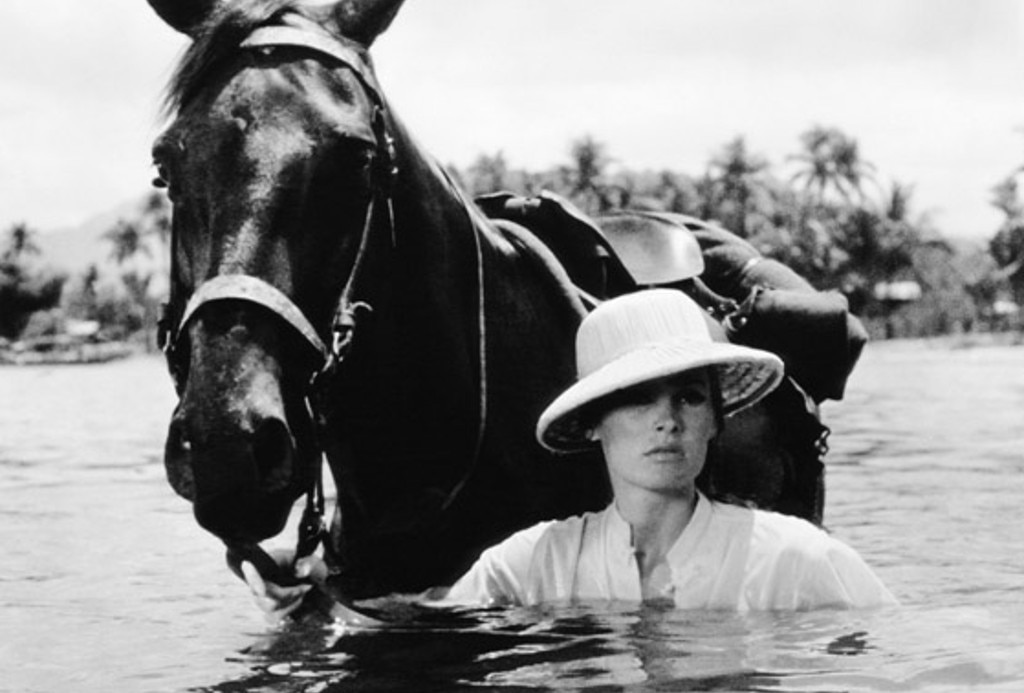
Set in the Philippines during the first days of World War II (Derek had been stationed there during his own wartime military service) , Once Before I Die (1966) was based on the 1945 novel Quit for the Next by Lt. Anthony March and concerned with the plight of American soldiers trapped behind enemy lines following the Japanese invasion of the Philippines less than ten hours after the bombing of Pearl Harbor. The Philippines was at the time fast becoming a preferred shooting location among Hollywood filmmakers, having already attracted Henry Hathaway for The Real Glory (1939), Edward Dmytryk for Back to Bataan (1945), and Samuel Fuller for Merrill's Marauders (1962), and destined to become a second home for young filmmakers getting their start under the custodianship of director-producer Roger Corman. The script by actor-writer Vance Skarstedt takes considerable liberties with Anthony March's source novel, altering character names and traits but more significantly blending with the survival narrative elements of erotica that would soon assert themselves as John Derek's stock-in-trade.
Begun in Manila in 1964 as The 26th Cavalry, the production wrapped as Once Before I Die, its complement of combat carnage and bosom heaving capped by a syrupy main title crooned by Lenny Welch, who had enjoyed a Billboard hit in 1963 with his cover of the big band standard "Since I Fell for You." Though he had enjoyed prominent roles in such prestige pictures as Nicholas Ray's Knock on Any Door (1949) and Robert Rossen's All the King's Men (1949), Derek had learned the exploitation game as a contract player for Columbia Pictures' B-unit and as such keeps Once Before I Die fleet of foot, alternating moments of tenderness/lustiness with bursts of violence - even taking the audience off-guard by killing a major character early on. Distinguishing themselves in supporting roles are Hollywood (and WWII) veteran Richard Jaeckel (a chrome-domed action hero decades ahead of Vin Diesel), TV Tarzan Ron Ely, and The Crawling Hand's (1963) Rod Lauren, who later married Filipino film star Nida Blanca. In 2001, Lauren was charged with Blanca's murder; he later fled stateside and, in 2007, committed suicide.
Once Before I Die had questionable impact on the career trajectory of Ursula Andress. Theatrical release was delayed for two years, during which time the actress divorced Derek (subsequent to a love affair with French actor Jean-Paul Belmondo) and starred in a number of high profile pictures (among them Hammer's She [1965] and the all-star James Bond spoof Casino Royale [1967]). Derek next took up with TV actress Linda Evans, then the star of the small screen western The Big Valley before finally finding a true life companion in Mary Cathleen Collins - aka Bo Derek. Dubbed by his detractors a soft core Svengali, Derek coached his fourth wife through a string of poorly-received programmers, among them Tarzan, the Ape Man (1981), Bolero (1984), and Ghosts Can't Do It (1989). Derek devoted his final years to reclusiveness, before succumbing to cardiovascular disease at his ranch in Santa Maria, California, on May 22, 1998.
By Richard Harland Smith
Sources:
Long Ago and Far Away: Hollywood and the Second World War by Robert Fyne (Scarecrow Press, 2008)
John Derek obituary, New York Times, May 24, 1998
John Derek obituary, The Independent, May 25, 1998
Rod Lauren obituary, Tracy Press, July 25, 2007
Once Before I Die
by Richard Harland Smith | April 01, 2014
SIGN UP FOR OUR NEWSLETTERS

CONNECT WITH TCM