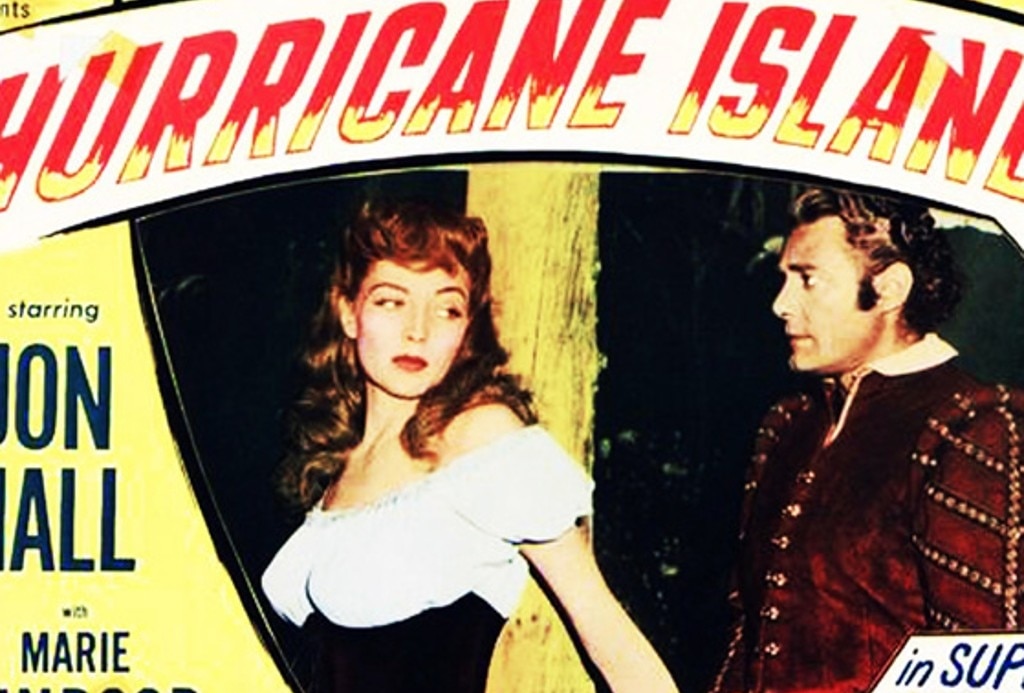
Remembered now as a prototypal femme fatale of the postwar film noir cycle and beloved as one of Hollywood's classic thinking beauties, Marie Windsor struggled early in her career to find roles worthy of her talents. Groomed to be a successor to Joan Crawford (and earning the prickly Crawford's enmity in the process), Windsor was largely warehoused at Metro-Goldwyn-Mayer, rarely getting a chance to shine until she was cast as villainess Lana Turner's calculating lady-in-waiting in The Three Musketeers (1948) - released the year Metro dropped her contract. While 20th Century-Fox dithered over a way to use the actress, Republic Pictures picked up her option and gave Windsor a plum part as a frontier schemer in The Fighting Kentuckian (1949) and as Wild West murderess Doll Brown in Hellfire (1949). Windsor had her best role yet The Narrow Margin (1950) at RKO but studio head Howard Hughes suppressed the release while he considered remaking the flinty B-film as an A picture starring Jane Russell. At Columbia, Windsor had some much needed fun in the budget swashbuckler Hurricane Island (1951), playing a lady pirate out to steal Ponce de Leon's Fountain of Youth from buccaneer Jon Hall. Shot by director Lew Landers, Hurricane Island sugared its parsimonious pill by adding Supercinecolor to the mix, while surrounding Windsor with such reliable supporting players as Lyle Talbot, Edgar Barrier, and Marc Lawrence, whose troubles with the House on Un-American Activities Committee that year would compel him to quit Hollywood for work in Europe.
By Richard Harland Smith
Hurricane Island
by Richard Harland Smith | April 01, 2014
SIGN UP FOR OUR NEWSLETTERS

CONNECT WITH TCM