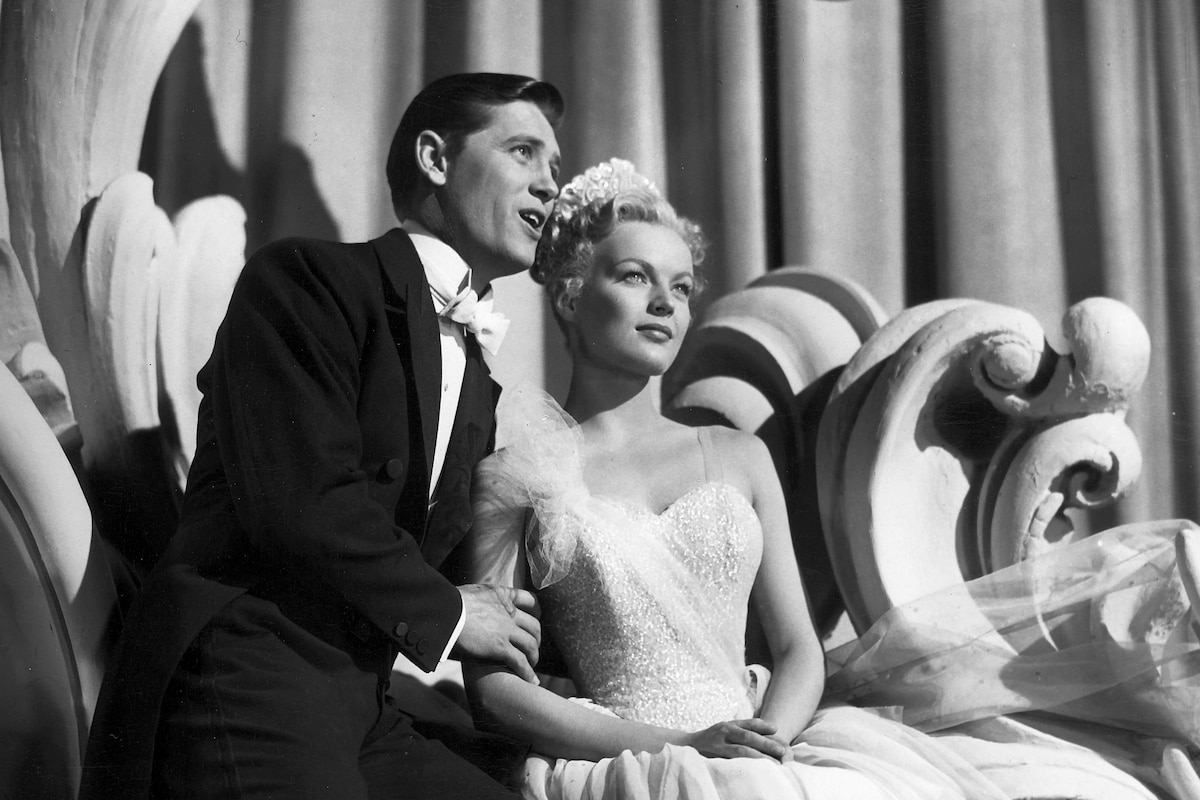
Fox contract actress June Haver went on loan-out to play the legendary Broadway star Marilyn Miller for Warners' 1949 musical biography Look for the Silver Lining. It was a big break for Haver, who had begun just five years before in bit parts in musicals like Busby Berkeley's The Gang's All Here (1943). Warners' musicals at this time definitely played second fiddle to the massive musical units at MGM, where just three years before Judy Garland had impersonated Marilyn Miller for a single song in Till the Clouds Roll By (1946). Directed by David Butler, Silver Lining took on a tough subject, as the beloved singer and dancer Miller had lived a difficult life beset with bad marriages, alcoholism and an early death from persistent health problems. As was the norm for musical biographies, the screenplay by Phoebe and Henry Ephron plays Ms. Miller's life for nostalgia, pretty music and broad comedy: although the story is framed in a flashback from Miller feeling ill in her dressing room, a typical episode makes fun of her entire family coming down with the mumps. Ms. Miller had two primary male companions. Ray Bolger is Jack Donahue, a dancing star who performs with her on and off during her career. Singer Frank Carter (Gordon MacRae) goes away to war, marries Marilyn, and then dies in an accident given a superstitious twist. Marilyn eventually marries her producer, but only she and Jack share the secret knowledge that performers would rather die on stage. The fast-paced Silver Lining rushes from one Miller song to another, including Jerome Kern's 'Who?' and 'Wild Rose': audiences in 1950 were still familiar with her signature tunes. The big musical opened at the Radio City Music Hall, to decent business but more than a few resentful reviews from critics that didn't feel June Haver was strong enough in the role. The New Yorker sniffed that Haver wasn't good enough for the chorus, and that the show barely alluded to Miller's serious problems. All agreed that veteran hoofer Ray Bolger stole the show, especially in a number where he does fancy work with a number of stage props. The Ephrons continued to write or contribute to the screenplays of several more musicals: There's No Business Like Show Business (1954), Daddy Long Legs (1955), and Carousel (1956).
By Glenn Erickson
Look for the Silver Lining
by Glenn Erickson | April 01, 2014
SIGN UP FOR OUR NEWSLETTERS

CONNECT WITH TCM