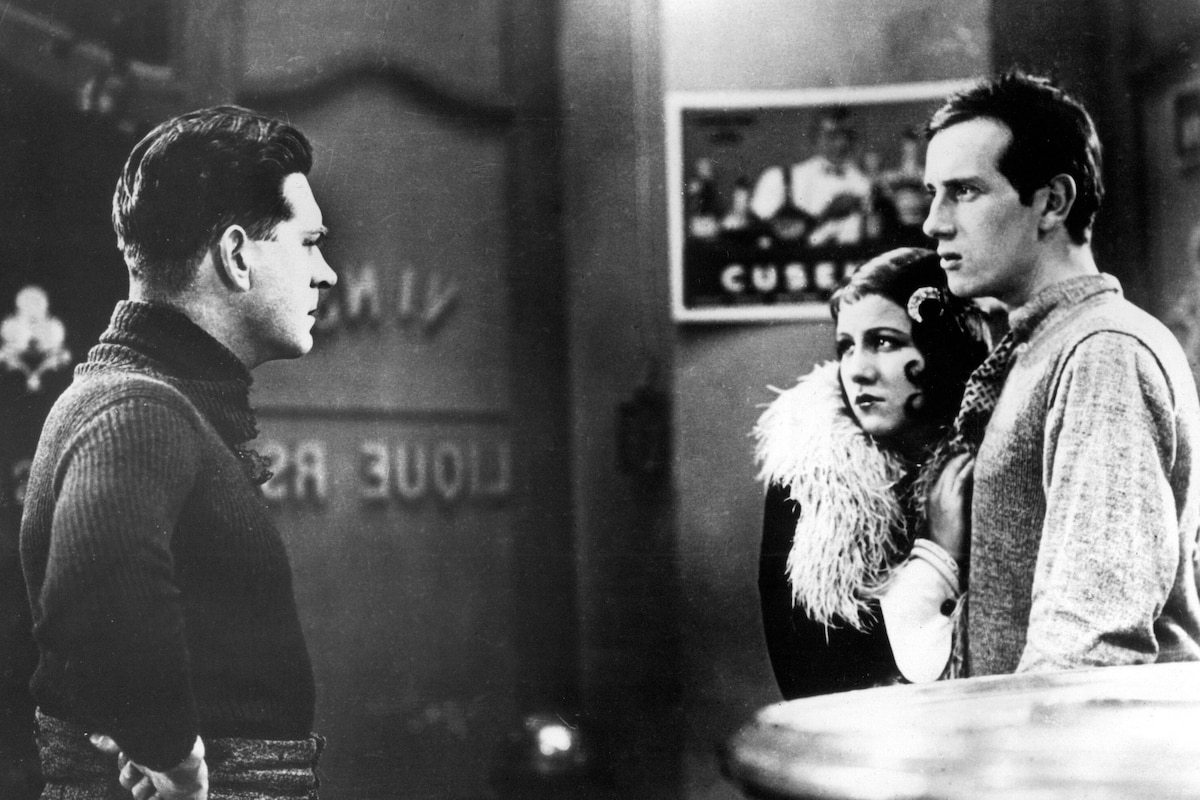
French director Rene Clair was not enthusiastic about the addition of sound to film, fearing the certain domination of "all talking" pictures in audience's hearts as a "dreadful prophecy". (The leaden dramas full of chatty actors and immobile cameras that were the staple of early American sound film only confirmed his fears.) But, upon realizing that embracing sound did not mean rejecting the rich visual language silent film had already developed, he breathed astonishing life into a simple story about a street entertainer (Albert Préjean) who falls for a Roma beauty (Pola Illéry), only to find her other suitors include a criminal (Gaston Modot, later of other French classics like L'Age d'Or (1930) and Children Of Paradise (1945)) and his own best friend (Edmond T. Gréville, who later directed Josephine Baker in Princess Tam-Tam (1935)). With plenty of street noise, Victrola music, and trains rushing by to sweeten a mostly noiseless world, Clair's camera is free to float and linger on this delicate, bittersweet story.
By Violet LeVoit
Under the Roofs of Paris
by Violet LeVoit | April 01, 2014
SIGN UP FOR OUR NEWSLETTERS

CONNECT WITH TCM