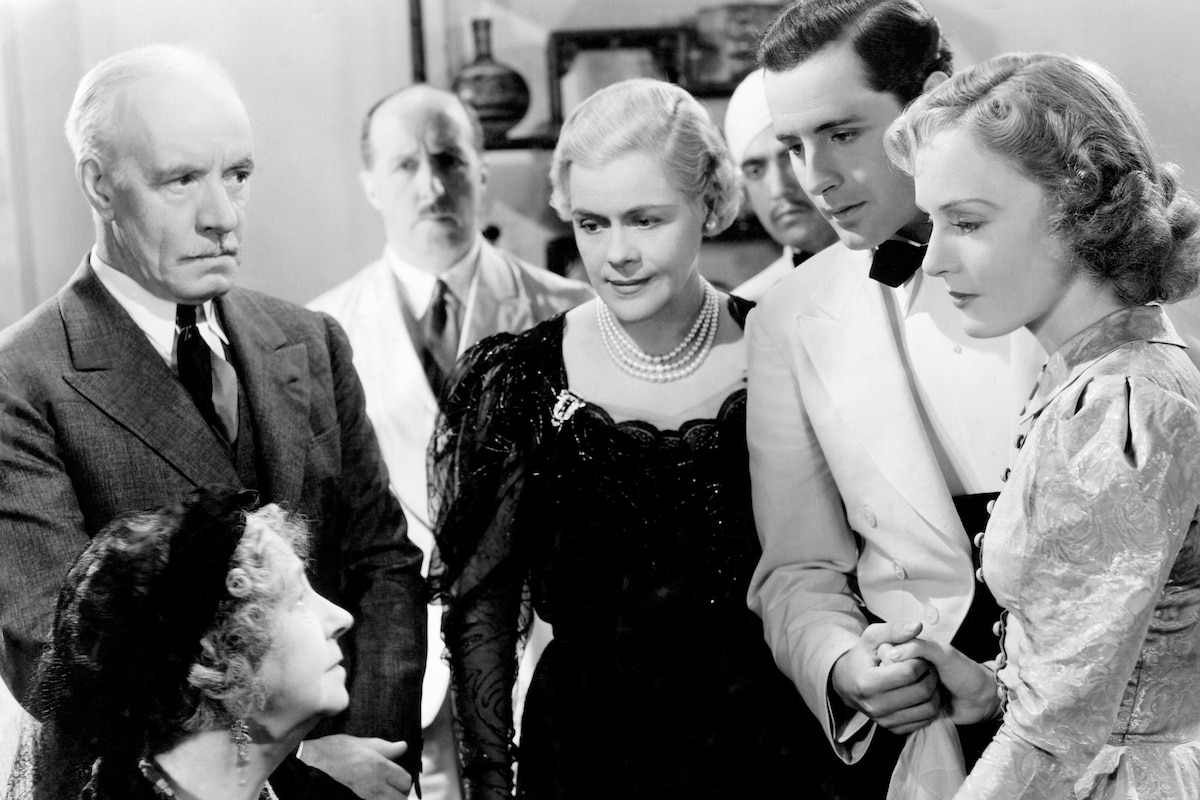
Bayard Veiller's 1916-1917 stage play The Thirteenth Chair ran for the better part of a year on Broadway and was among the first of the Old Dark House thrillers to be adapted from the Great White Way for the big screen, trailing George M. Cohan's Seven Keys to Baldpate by two seasons but getting the jump on Mary Roberts Rinehart and Avery Hopwood's The Bat, John Willard's The Cat and the Canary, and Ralph Spence's The Gorilla by several years. The first cinema adaptation of Veiller's séance-driven whodunit came from Acme Pictures in 1919 but a decade later Metro-Goldwyn-Mayer acquired the property as the studio transitioned from silent to talking pictures. Tod Browning helmed both silent and sound versions, with a pre-Dracula (1931) Bela Lugosi cast as the detective hero (and the action shifted from a Manhattan drawing room to, of all places, Calcutta). Metro retained the exotic setting for its 1937 remake, which trucked in "the distinguished English actress" (as she was billed) Dame May Whitty to play crime-busting Irish medium Madame LaGrange. The role of the inspector was handed to Lewis Stone, soon to find regular work playing Mickey Rooney's understanding jurist father in MGM's long-running "Andy Hardy" film series, whose lighthearted entries were helmed almost exclusively by The Thirteenth (1937) chair director George B. Seitz.
By Richard Harland Smith
The Thirteenth Chair
by Richard Harland Smith | April 01, 2014
SIGN UP FOR OUR NEWSLETTERS

CONNECT WITH TCM