The life of New Zealand novelist, poet and autobiographer Janet Frame is as compelling as her writings. Born into an impoverished working-class family, she was a shy and socially awkward girl whose only refuge was the journals that she kept. Frame's feelings of inadequacy were exacerbated by a series of family tragedies. While working as student teacher, she suffered a breakdown and was misdiagnosed as schizophrenic. For eight years, while continuing to write, she was in and out of mental hospitals. She endured hundreds of electroshock treatments, and was about to have a lobotomy when her doctors learned that she had won a literary prize and released her. Her first two books were actually written while she was institutionalized.
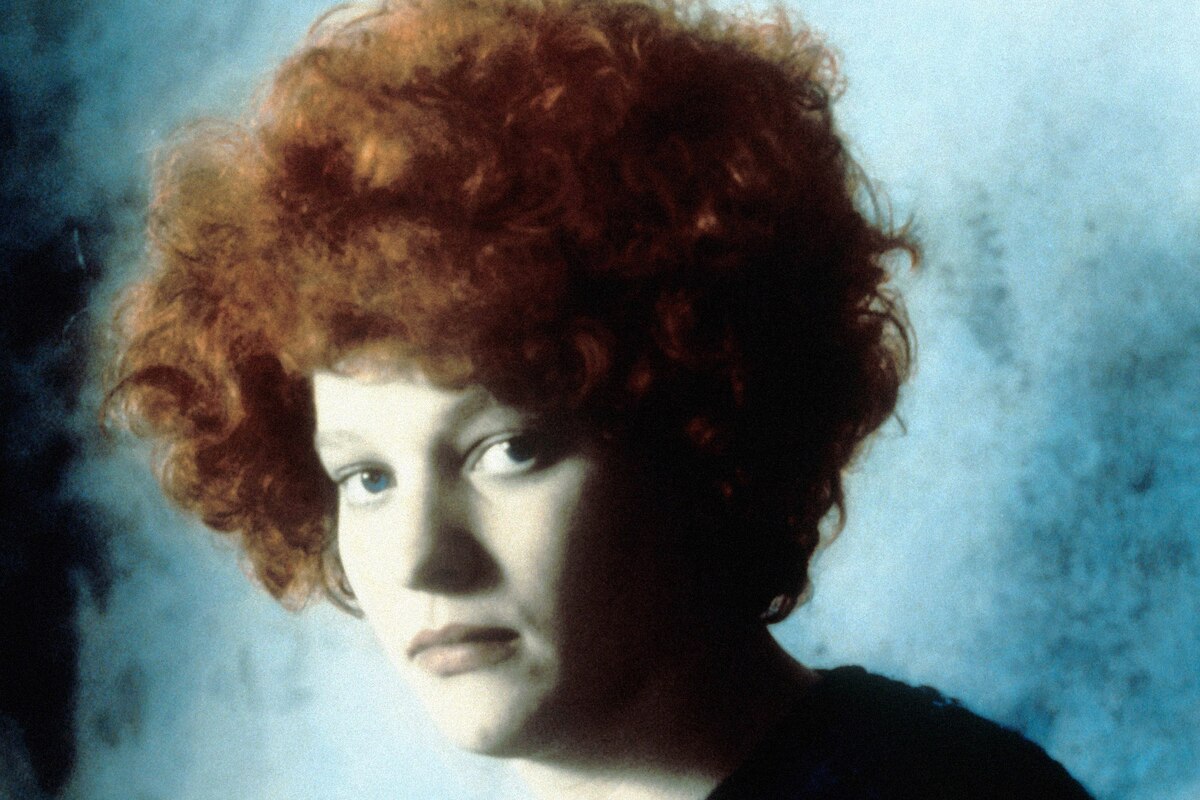
New Zealand director Jane Campion read Frame's first novel Owls Do Cry as a teenager, and identified with the main character. As she later wrote, "Frame gave Daphne this inner world of gorgeously imagined riches, but also affirmed it in me, and in countless other sensitive teenage girls: we had been given a voice - poetic, powerful and fated." When the first volume of Frame's three-part autobiography was published in 1982, Campion was attending film school in Australia. After reading it, she was decided that she wanted to adapt it for television, and determined to get the rights to the book. She sought out Frame, who agreed to let her make the film, but not until after the release of the other two volumes of her autobiography. Even though Campion only had a few short student films to her credit at the time, Frame agreed not to give the rights to the books to anyone else. After directing one feature, Sweetie (1989), Campion finally made Frame's autobiography into a three-part television miniseries in 1990. Frame made no demands, only told the director, "Do your best." Three remarkable actresses play Frame at different ages. They all seem like the same person, and they are all extraordinary.
The series was slightly re-edited and released as a feature film in 1990, under the title of the second book of the autobiography, An Angel at My Table. It was the first New Zealand film to be screened at the Venice Film Festival, where it won several prizes, but not the top award. "It was not the best film at the festival, but it was the most loved," Campion later recalled. "When it was awarded the second prize, the Silver Lion, the crowd wouldn't allow the head of the jury to announce the winner. For 10 minutes they chanted, 'Angel, Angel, Angel, Angel.'"
Critics also loved An Angel at My Table. Variety called it "A potentially painful and harrowing film is imbued with gentle humor and great compassion, which makes every character come vividly alive." Vincent Canby wrote in the New York Times, "The movie records the world as Janet sees it, sometimes incredibly beautiful and as often frightening. It remains steadfastly objective and a little puzzled, as if recognizing the impossibility of ever knowing the mind itself, except through books." And Roger Ebert of the Chicago Sun-Times found the film "Strangely engrossing from beginning to end....It is told with a clarity and simplicity that is quietly but completely absorbing....It tells its story calmly and with great attention to human detail and, watching it, I found myself drawn in with a rare intensity."
The international success of An Angel at My Table heightened interest in Frame's work, and her books were published in more than a dozen languages. Although she was able to live on her earnings as a writer for the first time, Frame remained uncomfortable with the worldwide acclaim and continued to live a simple, solitary life devoted to writing until her death in 2004, at the age of 79.
Director: Jane Campion
Producer: Bridget Ikin, John Maynard
Screenplay: Laura Jones, based on Janet Frame's autobiographies To the Is-Land, An Angel at My Table and The Envoy from Mirror City
Cinematography: Stuart Dryburgh
Editor: Veronika Haussler
Costume Design: Glenys Jackson
Art Direction: Jackie Gilmore, Grant Major
Music: Don McGlashan
Principal Cast: Kerry Fox (Janet Frame), Karen Fergusson (Janet Frame as a teenager), Alexia Keogh (Janet Frame as a child), Iris Churn (Mum), KJ Wilson (Dad), Melina Bernecker (Myrtle Frame), Glynis Angell (Isabel Frame), Sarah Smuts-Kennedy (June Frame)
157 minutes
by Margarita Landazuri
An Angel At My Table
by Margarita Landazuri | March 08, 2014
SIGN UP FOR OUR NEWSLETTERS

CONNECT WITH TCM