The Australian New Wave that brought the continent to cinematic prominence in the early 1970s was a watershed period in film history, with unique perspectives on issues like sexuality, adolescence, and man's relationship with nature. Those elements coalesced perfectly in one of the period's undisputed classics, Picnic at Hanging Rock (1975), which concerned a rift in the daily existence of students and teachers at a Victoria girls' school.
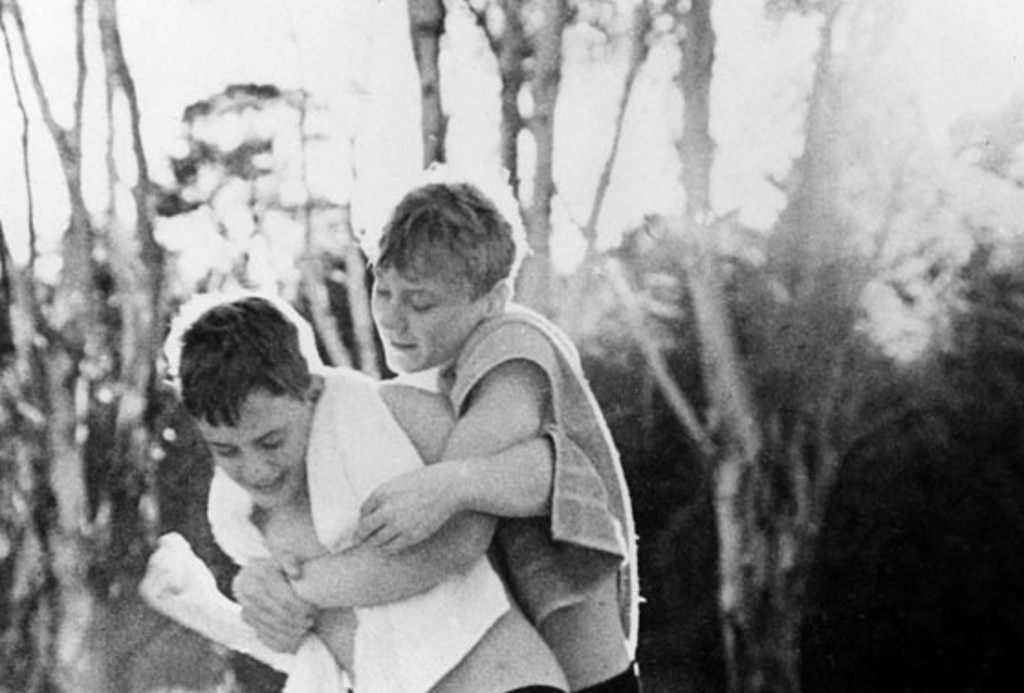
Released less than a year later, The Devil's Playground (1976) plays like the male flipside of that film as it explores the multitudes of tensions and psychological conflicts at a Catholic seminary school in the early 1950s. An early moment in which one adolescent is reprimanded for showering without a bathing suit sets the tone for the film as it analyzes the numerous consequences of the Catholic policies against any kind of sexual growth or indulgence, with both the boys and young men channeling their frustration in other channels ranging from visiting local bars to underground punishment sessions.
Drawing on his own coming of age experiences in a similar environment, Fred Schepisi made his debut both as director and writer with this film after cutting his teeth on commercials and documentary short subjects. Both the writing (five years) and funding (three years) were laborious undertakings, with the Australian Film Commission providing partial financial support as it did for many features of the era. The gamble paid off, locally at least, as the film went on to garner the Australian Film Institute's awards for Best Film, leading actor (a tie between Simon Burke and Nick Tate for this film), directing, cinematography, and screenplay.
However, the film proved to be a tough sell overseas with Australian films still just starting to find traction in the United States in particular. Schepisi's next film, The Chant of Jimmie Blacksmith (1978), was a more unpleasant experience as the director found himself recouping none of his investment despite the feature's warm critical and financial reception. However, it did become an art house success in America in 1980, paving the way for a belated American theatrical release for The Devil's Playground in 1981.
As with many of his peers, he was quickly lured to Hollywood and England where he enjoyed a particularly fruitful decade with films including Barbarosa (1982), Iceman (1984), Plenty (1985), Roxanne (1987), The Russia House (1990), and Six Degrees of Separation (1993). Over the years, the estimation held for The Devil's Playground continued to grow, with the National Film and Sound Archive of Australia's Kodak / Atlab Cinema Collection Restoration Project selecting it as one of fifty local films for preservation.
By Nathaniel Thompson
The Devil's Playground
by Nathaniel Thompson | March 08, 2014
SIGN UP FOR OUR NEWSLETTERS

CONNECT WITH TCM