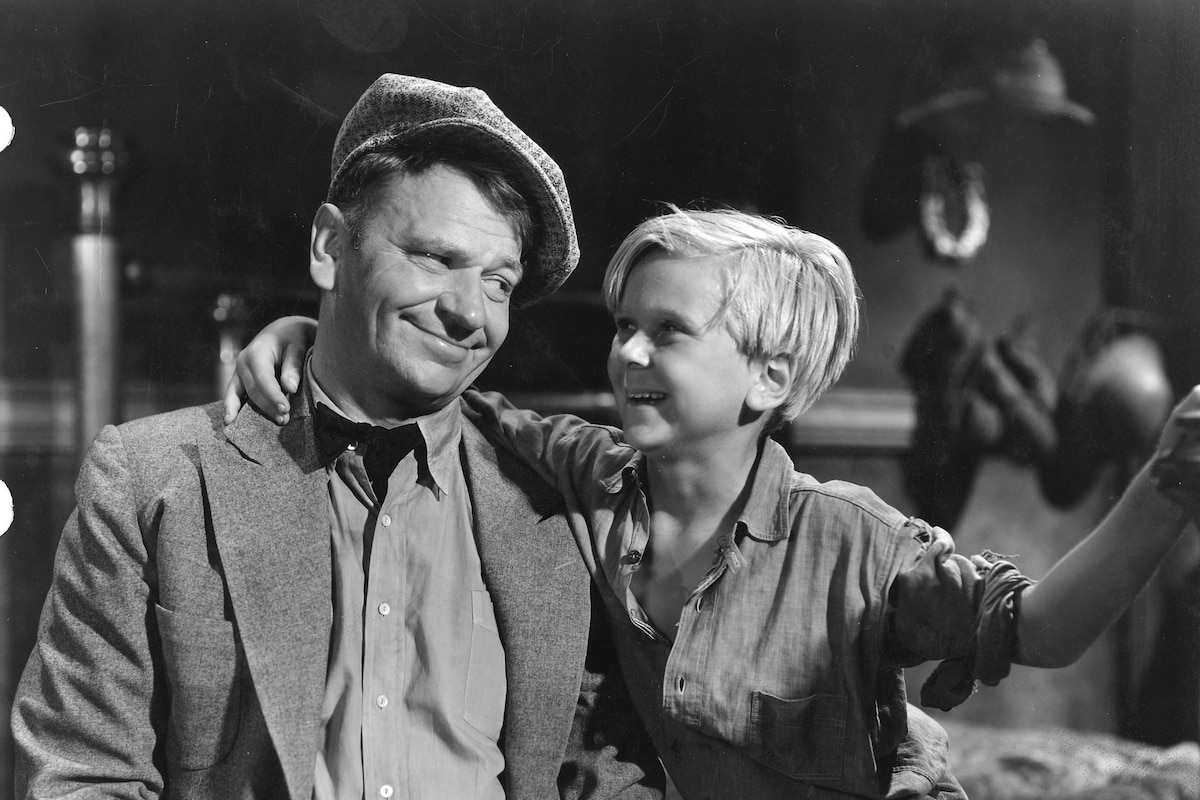
Wallace Beery had been a major star in the silent era, though his career floundered a bit with the coming of sound. He had scored a surprise hit as the child-like killer in The Big House and as Marie Dressler's on-screen sparring partner in Min and Bill (both 1930), but before long, Hollywood insiders were saying his days as a leading man were over. Determined to prove them wrong, screenwriter Frances Marion, one of the most influential writers at MGM, wrote the story of The Champ as a vehicle for him. She did this with the full support of studio head Louis B. Mayer and his production chief, Irving G. Thalberg, who had noted the audience's positive response to the actor's performance in The Big House. Beery was so pleased with the part he claimed to have turned down an offer of $500,000 to play the Buddha for independent producers in order to make the film.
Attracted by the script's depiction of family values and its optimism, King Vidor gladly accepted the chance to direct, even though the story was more sentimental and less innovative than such earlier pictures of his as The Big Parade (1925), The Crowd (1928), Hallelujah (1929) and Street Scene (1931). The experimental nature of some of his most famous films also left him feeling obligated to give MGM a more traditional film that would have a better chance at the box office than The Crowd or Hallelujah.
After scoring an Oscar® nomination at the age of nine for Paramount's Skippy (1931), directed by his uncle Norman Taurog, Jackie Cooper was the biggest child star in Hollywood. MGM borrowed him from Paramount at a cost of $1,500 a week.
By Frank Miller
The Big Idea-The Champ
by Frank Miller | March 04, 2014
SIGN UP FOR OUR NEWSLETTERS

CONNECT WITH TCM