SYNOPSIS
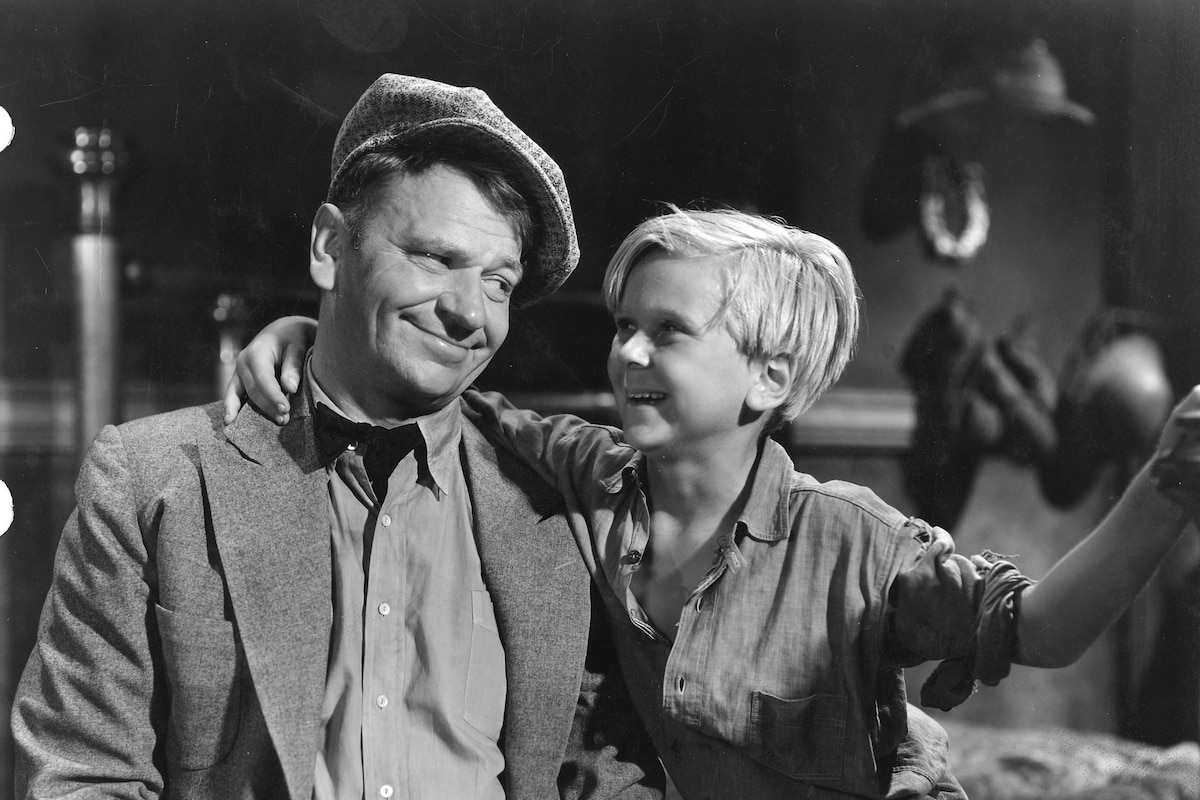
Former World Heavyweight Champion Andy "Champ" Purcell is reduced to gambling and racing horses in Tijuana because of his alcoholism. The only light in his life is his son, Dink, who keeps trying to get his father back on the wagon. At the track where his father races his only horse, Dink is spotted by Linda, a wealthy woman who realizes he is the son she left behind when she divorced the Champ. Although the Champ refuses to turn over his son to his ex-wife, his continued gambling and drinking leave him so destitute he can think of no other hope for the child, unless he can score one last fight to win back his place in the ring.
CAST AND CREW
Producer-Director: King Vidor
Screenplay: Leonard Praskins, Wanda Tuchock
Based on a story by Frances Marion
Cinematography: Gordon Avil
Editing: Hugh Wynn
Art Direction: Cedric Gibbons
Cast: Wallace Beery (Champ), Jackie Cooper (Dink), Irene Rich (Linda), Roscoe Ates (Sponge), Edward Brophy (Tim), Hale Hamilton (Tony), Jesse Scott (Jonah), Marcia Mae Jones (Mary Lou)
BW-86 m.
OVERVIEW
The Champ is an early sound example of a popular silent sub-genre, the "waif" film, depicting the trials of an economically deprived young man or woman. Earlier examples include D.W. Griffith's Broken Blossoms (1919), several of Mary Pickford's films and Charles Chaplin's The Kid (1921), the latter a clear inspiration for Frances Marion's screenplay. The genre would continue with some of the films of Shirley Temple and Margaret O'Brien.
With its depiction of an emotionally vulnerable leading man struggling to raise his son under strained economic circumstances, The Champ has been called an inverted women's film. As such, critics have discussed its treatment of masculinity in terms usually reserved for depictions of women.
With its focus on the adventures of a father and son, the film is in many ways a precursor of the buddy films that became popular in the late '60s and '70s. The deep emotional bond between the Champ and his son renders this a much deeper depiction of "bromance" than those later films.
Also ahead of its time is the depiction of Dink's multi-ethnic group of friends in Tijuana, particularly his close relationship with African-American child Jonah.
With its continuing emotional power, the film is often hailed as the definitive male weepie.
The Champ revived Wallace Beery's career and made him one of MGM's top stars. It also brought him his only Oscar® for Best Actor.
Jackie Cooper was the first of MGM's great child stars, though he was still under contract to Paramount while making The Champ. His move to MGM after completing the picture helped set into motion the studio's string of sentimental family pictures drawing on a roster of character actors and memorable juveniles to portray studio head Louis B. Mayer's dreams of American home life.
By Frank Miller
The Essentials-The Champ
by Frank Miller | March 04, 2014
SIGN UP FOR OUR NEWSLETTERS

CONNECT WITH TCM