SYNOPSIS
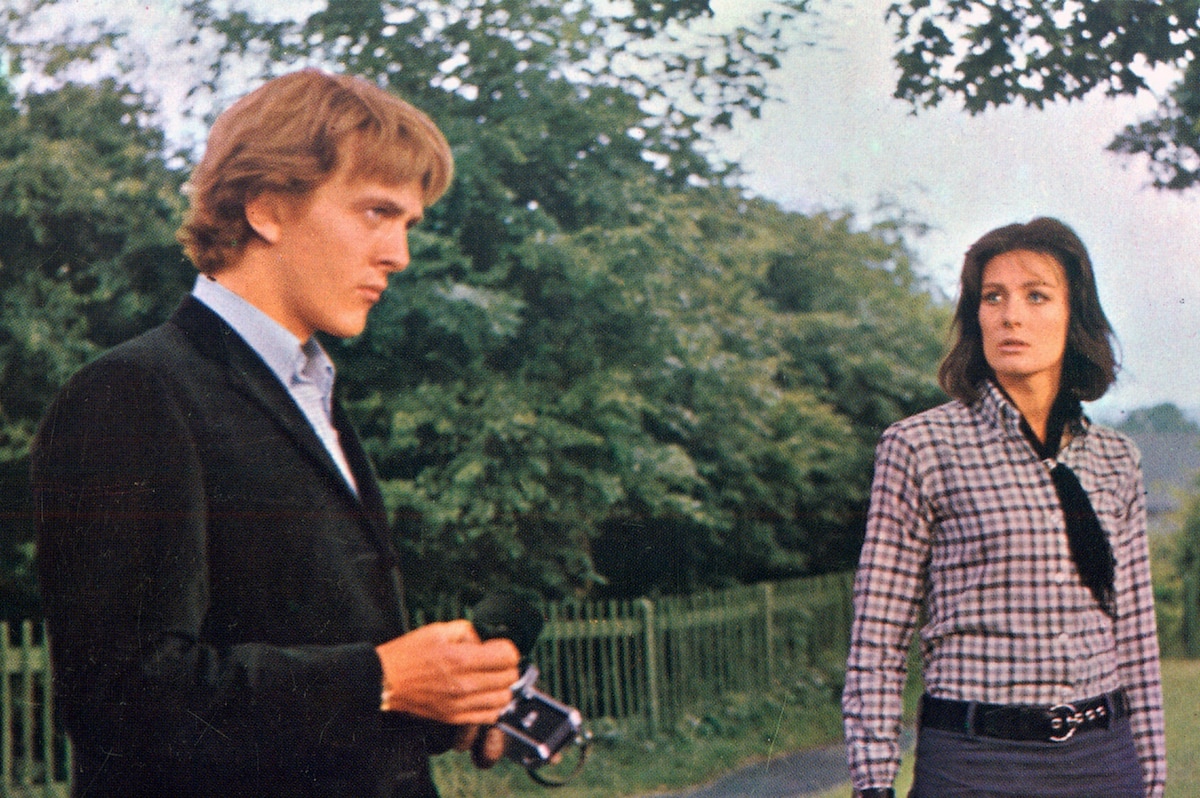
In Michelangelo Antonioni's seminal film Blow-Up, there is always more than meets the eye. David Hemmings plays Thomas, a young highly successful fashion photographer who lives a decadent free-wheeling lifestyle in swinging 1960s London ripe with sex, drugs, rock and roll and gorgeous modeling hopefuls banging on his door in hopes that he will turn his famous lens on them.
One day while taking candid pictures in a local park, Thomas comes across a young woman (Vanessa Redgrave) embracing an older man who appears to be her lover. When the woman notices him snapping pictures clandestinely of the private scene, however, she angrily demands that he hand over the film. Intrigued, Thomas instead holds on to the film and proceeds to examine the scene he witnessed more closely by blowing up the images. With each enlarged image, he comes to realize that there was something more sinister going on in the scene he witnessed. What really happened in the park that day? In this fascinating, ambiguous film that was his only commercial hit, Antonioni challenges the viewer to question the very nature of reality versus perception.
CAST AND CREW
Director: Michelangelo Antonioni
Writers: Michelangelo Antonioni, Tonino Guerra
English Dialogue: Edward Bond
Based on the Short Story "Final del juego" by Julio Cortazar
Producer: Carlo Ponti
Executive Producer: Pierre Rouve
Cinematography: Carlo Di Palma
Art Direction: Assheton Gorton
Editing: Frank Clarke
Costumes: Jocelyn Rickards
Music: Herbie Hancock
Cast: Vanessa Redgrave (Jane), Sarah Miles (Patricia), David Hemmings (Thomas/The Photographer), John Castle (Patricia's Husband), Jane Birkin (The Blonde), Gillian Hills (The Brunette), Peter Bowles (Ron), Veruschka (Herself), Julian Chagrin (Mime), Claude Chagrin (Mime), Reg Wilkins (Thomas' Assistant), Tsai Chin (Thomas' Receptionist), Susan Brodrick (Antique Shop Owner), Harry Hutchinson (Shopkeeper), Mary Khal (Fashion Editor), The Yardbirds (Themselves), Ronan O'Casey (Jane's Lover in Park)
C - 110 min.
Why BLOW-UP is Essential
Blow-Up heavily influenced a generation of up and coming filmmakers and artists of the 1960s and 70s. It became the definitive film that depicted swinging London in the 1960s.
While filmmaker Michelangelo Antonioni made numerous notable contributions to modern cinema, Blow-Up was his most commercially successful, reaching a wider audience than any of his previous films. It was his artistic breakthrough and the most famous film of his career.
Blow-Up was highly praised by critics and was honored by winning first prize at the Cannes Film Festival (the Palme d'Or). It was named Best Film of the year by the National Society of Film Critics and received Academy Award nominations for Best Director and Best Screenplay.
Even though it has been nearly 50 years since Blow-Up was released, it still continues to inspire new generations of filmmakers and artists with its challenging narrative and cutting-edge visual style. It is a film that still inspires debate and raises provocative questions about the nature of reality and the line between the real and the imaginary.
Blow-Up features a terrific early jazz score by Herbie Hancock (credited in the film as Herbert Hancock). It was the first of many film and television soundtracks to which the famed innovative jazz musician and composer would contribute throughout his illustrious career.
The success of Blow-Up both commercially and critically was a direct contributing factor in the dissolution of Hollywood's antiquated Production Code. The Production Code, which had been developed in the 1930s to prevent anything morally questionable from making it onto the big screen, had long governed the studios' body of work in America. When Blow-Up was released theatrically in the U.S. without the Production Code seal of approval, it helped usher in a new modern, freer era of creative filmmaking. Its success as a film that frankly depicted modern decadence in swinging 60s London, as Time magazine put it in a 2007 article, "helped liberate Hollywood from its puritanical prurience" and eventually gave way to the more updated MPAA ratings system.
The success of the film helped make lead actor David Hemmings a star. It was his breakthrough role and helped establish him as a major star in Britain during the 1960s. In his autobiography, he called starring in Blow-Up "probably the critical event of my professional life."
by Andrea Passafiume
The Essentials-Blow-Up
by Andrea Passafiume | March 04, 2014
SIGN UP FOR OUR NEWSLETTERS

CONNECT WITH TCM