SYNOPSIS
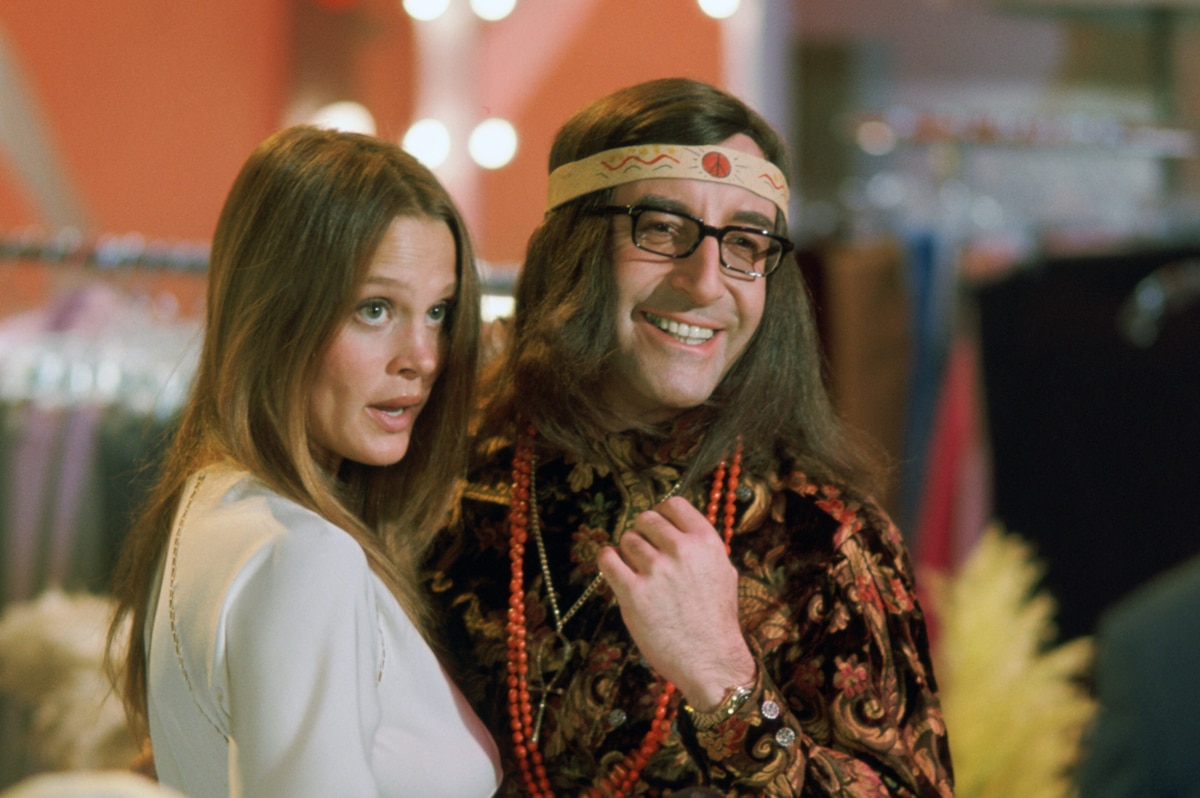
On the day Los Angeles lawyer Harold Fine finally agrees to marry his secretary Joyce, a series of accidents introduce him to sweet hippie girl Nancy. When he lets the temporarily homeless girl spend the night in his apartment, she awards him with a batch of pot-laced brownies that accidentally turn on Harold, his fiancée and his parents. As a result he walks out on his wedding, drops out of society and moves into the back of his car with Joyce. But can this old dog learn new age tricks or will he soon return to the old life that once drove him crazy?
CAST AND CREW
Director: Hy Averback
Producer: Charles H. Maguire, Paul Mazursky, Larry Tucker
Screenplay: Mazursky & Tucker
Cinematography: Philip H. Lathrop
Editing: Robert C. Jones
Art Direction: Pato Guzman
Music: Elmer Bernstein
Cast: Peter Sellers (Harold), Jo Van Fleet (Mother), Leigh Taylor-Young (Nancy), Joyce Van Patten (Joyce), David Arkin (Herbie), Herb Edelman (Murray), Grady Sutton (Funeral Director), Christian Brando (El Greco), Hy Averback (Rabbi), Paul Mazursky (Hippie), Larry Tucker (Hitch-hiker)
C-92 m.
OVERVIEW
After years of television writing, Paul Mazursky and Larry Tucker broke into film with this comic feature. It did so well for them, that when they completed their next film script, Bob & Carol & Ted & Alice (1969), Mazursky was able to make directing it a condition for selling the script. Mazursky was also motivated by his dissatisfaction with Hy Averback's direction of I Love You, Alice B. Toklas!, which he considered too grounded in television comedy. Mazursky's later films demonstrate a much more subtle approach to the material.
I Love You, Alice B. Toklas! was one of the first films to deal with the rise of the counter-culture. Despite studio interference, the film still contains elements of Mazursky and Tucker's original vision, based on their own experiences with the movement.
The script contains many elements that would recur in Mazursky's later work, including his ironic views of middle-class life, Los Angeles life, sex, marriage, promiscuity, social trends and his own Jewish heritage. Overall, it reflects a theme that runs through most of his work, the way the mind and heart respond to major cultural changes.
The film offers a rare chance to see Peter Sellers in a more restrained role. He builds the character of Harold Fine subtly in his adoption of a "professional" speaking voice and the way he observes the other actors. In many scenes, he serves as straight man to the more outrageous comedy of Jo Van Fleet as his domineering mother, Joyce Van Patten as his demanding fiancée, David Arkin as his hippie brother and Herb Edelman as his law partner.
By Frank Miller
The Essentials-I Love You, Alice B. Toklas!
by Frank Miller | March 04, 2014
SIGN UP FOR OUR NEWSLETTERS

CONNECT WITH TCM