SYNOPSIS
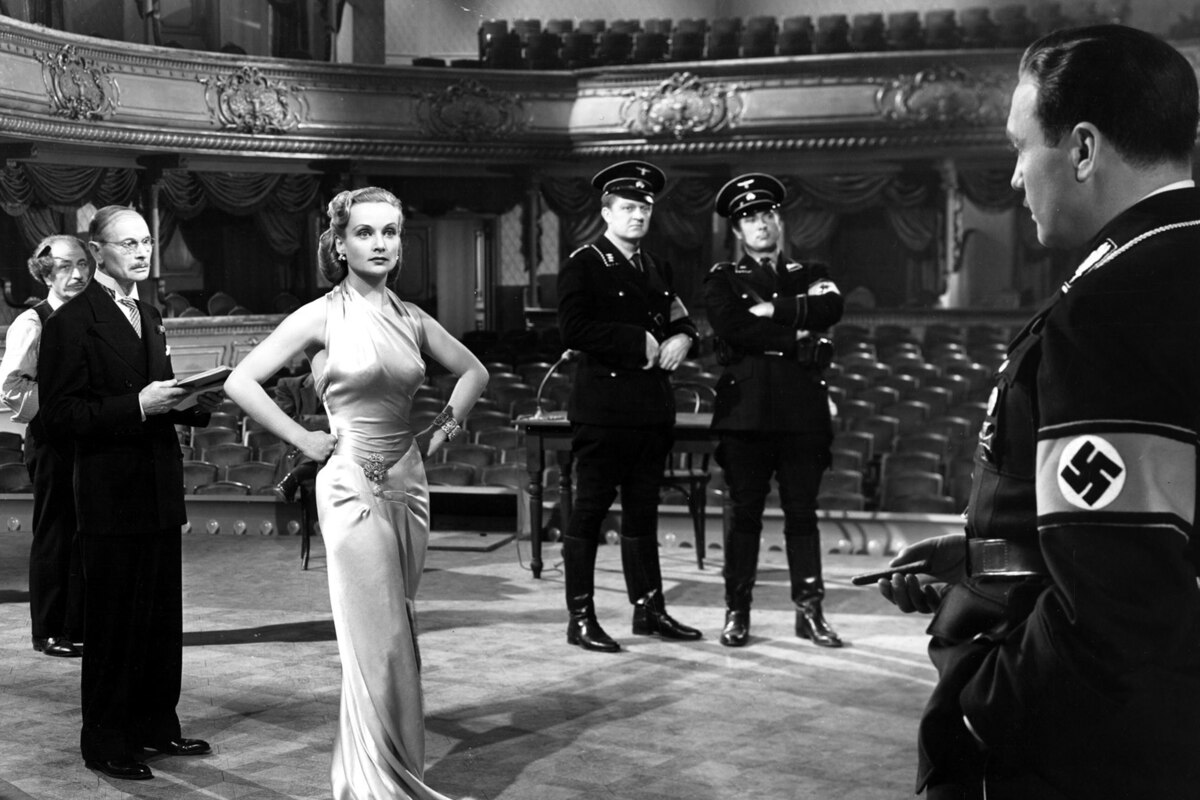
In World War II Poland, the elaborately egotistical theatrical couple Joseph and Maria Tura (Jack Benny and Carole Lombard) head a company that is forced by their occupiers to switch from anti-Nazi propaganda to Shakespeare, allowing Maria to dally backstage with the young pilot Sobinski (Robert Stack) while Joseph hams it up as Hamlet (hence the title). The Turas and their company, using their theatrical skills to create a series of impersonations including Hitler himself, work with Sobinski to foil the traitorous Professor Siletsky (Stanley Ridges) in his plan to destroy the Warsaw resistance.
Producer/Director: Ernst Lubitsch
Screenplay: Edwin Justus Mayer from original story by Ernst Lubitsch
(uncredited) and Melchior Lengyel
Cinematography: Rudolph Maté
Editing: Dorothy Spencer
Production Design: Vincent Korda
Music Composer: Werner R. Heymann
Costume Design: Irene
Cast: Carole Lombard (Maria Tura), Jack Benny (Joseph Tura), Robert Stack (Lt. Stanislav Sobinski), Felix Bressart (Greenberg), Lionel Atwill (Rawitch), Stanley Ridges (Professor Siletsky), Sig Ruman (Col. Ehrhardt), Tom Dugan (Bronski), Charles Halton (Producer Dobosh), George Lynn (Actor-Adjutant), Henry Victor (Capt. Schultz)
Why TO BE OR NOT TO BE Is Essential
One could almost say that To Be or Not to Be marked the invention of black comedy in movies; even today it seems pretty shocking that Ernst Lubitsch was bold enough to make a boisterous wartime satire set in occupied Warsaw, with a spirited cast foiling Nazis, cracking jokes about Hitler and concentration camps and careening through harrowing plot complications that include an air raid, a fatal shooting and comic bits with a corpse. It's all served up, of course, with that celebrated "Lubitsch" touch, which employed elegance and wit to create entertainments that were, above all else, exquisitely civilized - even in the grimmest of settings. One of the points this film makes, with the triumph of the theatrical company's illusions, is that art can transcend and transform life.
In his 1987 book Romantic Comedy, film historian James Harvey analyzed why To Be or Not to Be was so powerful and funny (and so alienating to some observers at the time): "The Nazis in this film are like ordinary people. They are also monsters. Evil is clearly named; but it is also brought closer to familiar feelings and situations than people expected it to be in such a film. This, finally, is what gives it its special quality of hilarity - and its force. And its combination of clarity and power makes it almost the peak of Lubitsch's work - attaining just that adversary force that had eluded him in the comedies of the late thirties."
Many film historians consider Carole Lombard the brightest and most engaging of all movie comediennes, and some regard To Be or Not to Be as her finest moment. Even Bosley Crowther, one of the movie's toughest critics, acknowledged that its leading lady was "very beautiful and comically adroit." The film also offers, along with Charley's Aunt (1941) and George Washington Slept Here (1942), ample proof that Jack Benny's comic genius transferred very effectively to movies. His success on radio and television, along with his ongoing and merciless ribbing of his own work in the supposed disaster The Horn Blows at Midnight (1945), later obscured the fact that Benny had enjoyed a successful career in film comedy - with To Be or Not to Be a particular highlight. Despite its rocky reception by most critics and some audiences, To Be or Not to Be stands as probably the most impudent and bracing comedy to arise from the WWII period.
By Roger Fristoe
The Essentials-To Be or Not to Be
by Roger Fristoe | March 03, 2014
SIGN UP FOR OUR NEWSLETTERS

CONNECT WITH TCM