Robert Aldrich (1918-1983) started in motion pictures as a production clerk at RKO in 1941. He served an early apprenticeship as assistant to a number of acclaimed directors, including Jean Renoir (The Southerner, 1945), Max Ophuls (Caught, 1949), Joseph Losey (The Prowler, 1951), and Charles Chaplin (Limelight, 1952). He was also assistant director to William Wellman on one of the greatest war films, Story of G.I. Joe (1945).
The film's financial success allowed Robert Aldrich to buy his own film studio, which opened in August 1968. His plan was to produce up to 16 films there over the next five years, but the failure of his first two productions, The Legend of Lylah Clare (1968) and The Killing of Sister George (1968), scuttled his hopes. He was soon forced into a four-picture deal with ABC-Palomar. His pictures under that contract were not hits either. The director never regained the box office status he had with The Dirty Dozen or quite the critical acclaim he enjoyed in the 1950s, although he did enjoy something of a comeback with the Burt Reynolds prison-football movie The Longest Yard (1974).
Because they all appeared frequently in the action genre, it's not surprising that the cast worked together a number of times in various combinations: Bronson and Marvin (5 films, 1 TV show), Bronson and Borgnine (4 movies), Marvin and Borgnine (6 movies), Marvin and Ryan (4 movies, including Ryan's final film, The Iceman Cometh, 1973), Ryan and Borgnine (3 movies), Ryan and Bronson (2 movies). Aldrich also directed his stars multiple times: Marvin (3 movies), Bronson (4 movies, 3 TV shows), Borgnine (6 movies), Ralph Meeker (twice, including Meeker's starring role in what is often considered Aldrich's greatest film, Kiss Me Deadly, 1955).
In the novel, the black character's name is Napoleon White. It was changed to Robert Jefferson for the movie at some point, although in the original trailer, he's called Napoleon Jefferson.
In the "Last Supper" scene, Telly Savalas as Maggott is placed in the position of Judas, signaling his eventual betrayal of the mission.
The opening credits don't occur until several minutes into the movie. Although a common practice today, it was considered unusual back in 1967.
In the German release, audiences saw Jim Brown dropping the grenades into the chateau air shafts but not the gasoline being poured in and the people inside burning up.
In Spain, the dubbed version changed the name of John Cassavetes's character from Franko to Franchi because the country's ruler at the time was Francisco Franco.
If the soundtrack occasionally sounds like TV music, remember that Frank DeVol (billed here simply as DeVol) also wrote the theme songs for the sitcoms The Brady Bunch and My Three Sons. He had worked with Robert Aldrich on three of the director's best films of the 1950s as conductor on Kiss Me Deadly, The Big Knife, and Attack. He was nominated five times for Academy Awards, including his work on the Aldrich film Hush...Hush, Sweet Charlotte and the Western comedy Cat Ballou (1965), the movie for which Lee Marvin won his Best Actor Academy Award.
Screenwriter Lukas Heller (1930-1988) won an Edgar Allan Poe Award (shared with Henry Farrell) for the script for Aldrich's gothic thriller Hush...Hush, Sweet Charlotte. He also wrote the scripts for two other earlier Aldrich films, What Ever Happened to Baby Jane? and The Flight of the Phoenix (1965), and two later pictures, The Killing of Sister George and Too Late the Hero (1970). He also wrote the screenplay for the Lee Marvin western Monte Walsh (1970).
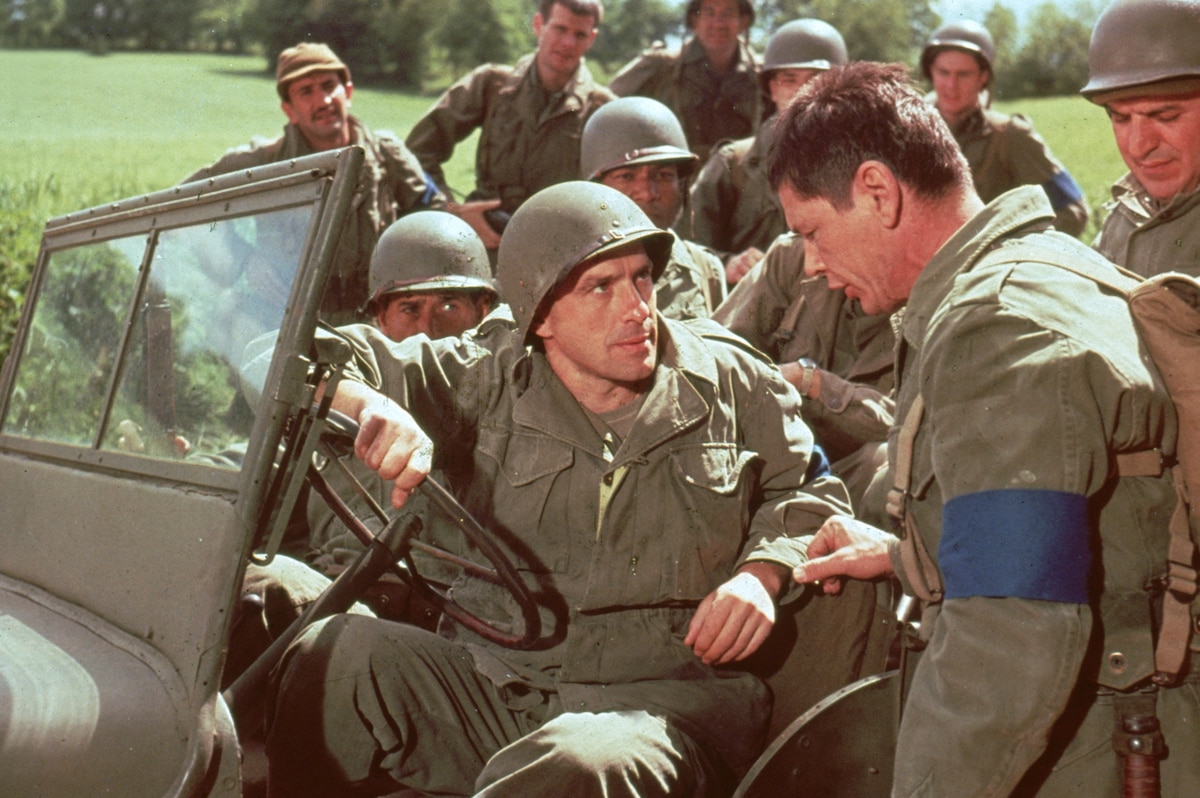
Several vehicles and military insignia that appear in the movie have been flagged as being incorrect for the period in which it's set.
By Rob Nixon
Trivia-The Dirty Dozen - Trivia & Fun Facts About THE DIRTY DOZEN
by Rob Nixon | March 03, 2014
SIGN UP FOR OUR NEWSLETTERS

CONNECT WITH TCM