In World War II, there was a sub-unit of the 101st Airborne Division that came to be known as the Filthy 13. Although unknown until many years after the war, the legendary group became famous (through a mix of rumor, myth, and fact) for their hard drinking and violent fighting skills. A photographer for the military publication Stars and Stripes saw some paratroopers stationed in England, heads shaved into Mohawks, applying paint to their faces; that look was later corroborated by one of the few surviving members of the group, Jake McNiece, one of the men who undertook a "suicide" mission, parachuting behind enemy lines just ahead of D-Day to destroy Nazi supply routes. The group, through which 30 men eventually passed as members became wounded or killed, was said to have carried out several brutal secret raids against the Nazis. They had a reputation for getting into a lot of trouble and spending significant amounts of time in the stockade. Another known survivor among the 13, Jack Agnew, later explained that he and his comrades "weren't murderers or anything, we just didn't do everything we were supposed to do in some ways and did a whole lot more than they wanted us to do in other ways."
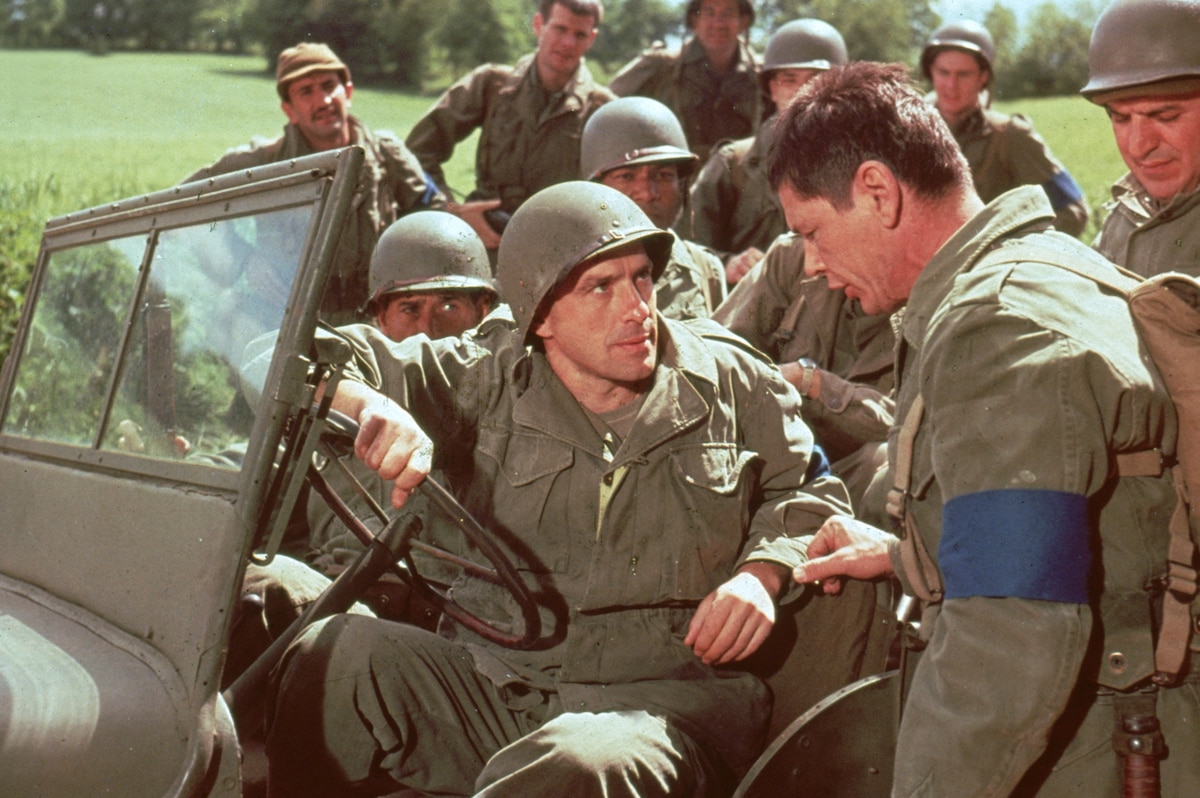
The exploits of the 13 inspired newspaper and magazine writer E.M. Nathanson to write a novel fictionalizing their story as The Dirty Dozen.
Robert Aldrich was one of the most interesting directors working in American movies in the 1950s. His baroque, highly stylized noir style in such films as Kiss Me Deadly (1955), The Big Knife (1955), and Attack (1956) made him a favorite of auteur theorists, and his two gothic melodramas of the early 60s, What Ever Happened to Baby Jane? (1962) and Hush...Hush, Sweet Charlotte (1964), garnered great commercial success. He was in a good position by the mid 1960s to expect success in his bid to purchase the rights to Nathanson's novel before it was published. MGM, however, beat him to it in 1963, two years before the book's publication date.
Aldrich was attracted to both the story's action elements and to its core irony, that the heroes were criminals and even psychopaths.
After several unsuccessful attempts by MGM to get a workable screenplay, Aldrich was brought on to the project. He was given a first pass of the script written by veteran Nunnally Johnson (The Grapes of Wrath, 1940; How to Marry a Millionaire, 1957). "This would have made a very good, very acceptable 1945 war picture," Aldrich said. "But I don't think that a 1945 war picture is necessarily a good 1967 war picture."
Aldrich brought in German-born writer Lukas Heller, with whom he had worked on What Ever Happened to Baby Jane?, Hush...Hush, Sweet Charlotte, and The Flight of the Phoenix (1965). Heller played up the anti-authoritarian tone and brought a certain black humor to the story.
Ken Hyman, the producer assigned by MGM to the project, did not like the fact that Heller had been hired by Aldrich and accused the writer of not letting him see the script. Hyman insisted on the credits reading "Screenplay by Nunnally Johnson." In the end, the Writers Guild ruled that Heller and Johnson would share screen credit.
Despite having cast approval, Aldrich was dismayed to find out that Hyman and MGM had offered the lead role of Major Reisman to John Wayne. Fortunately, Wayne dropped out due to demands on his time making The Green Berets (1968), a Vietnam war film he was directing and starring in.
Aldrich initially gave the part of the Southern bigot, Maggott, to Jack Palance, star of his scathing Hollywood drama The Big Knife. Palance thought the role failed to make a serious comment about bigotry and withdrew from the film.
By Rob Nixon
The Big Idea-The Dirty Dozen
by Rob Nixon | March 03, 2014
SIGN UP FOR OUR NEWSLETTERS

CONNECT WITH TCM