Filming of Stella Dallas began in early 1937 at the Goldwyn Studios in Santa Monica, Calif. Vidor was convinced that it was going to be a fine film: "We had a good cast, great photography and everything seemed to work well." But, early in the production, he was called into Goldwyn's office and told by his producer that he had just seen the daily rushes and was so dismayed by them that he was ready to fire everyone involved and cancel the project. Vidor went home, so shocked and upset that he couldn't eat or sleep that evening. About 1 a.m. Goldwyn phoned him to say that he had just run the rushes again and "they look wonderful." He then bade his director a good night.
Vidor, whose career had flourished in silent movies, chose to film some scenes in Stella Dallas without dialogue, such as a tender moment after Laurel has become upset with her mother for dripping cold cream on a treasured photograph of her father's new love interest, Mrs. Morrison (Barbara O'Neil). The rebuked Stella begins to touch up the dark roots of her blonde hair and Laurel, ashamed at her outburst, silently takes over the bleaching stick and proceeds to gently do the job herself. An even more moving silent sequence occurs in a train berth after both women have heard some catty girls ridiculing Stella's appearance and Laurel crawls into bed with her mother, comforting her by curling up wordlessly beside her. The famous final scene, when Stella walks away from her daughter's wedding happy in the knowledge that she has a good life ahead, also was filmed mostly without dialogue.
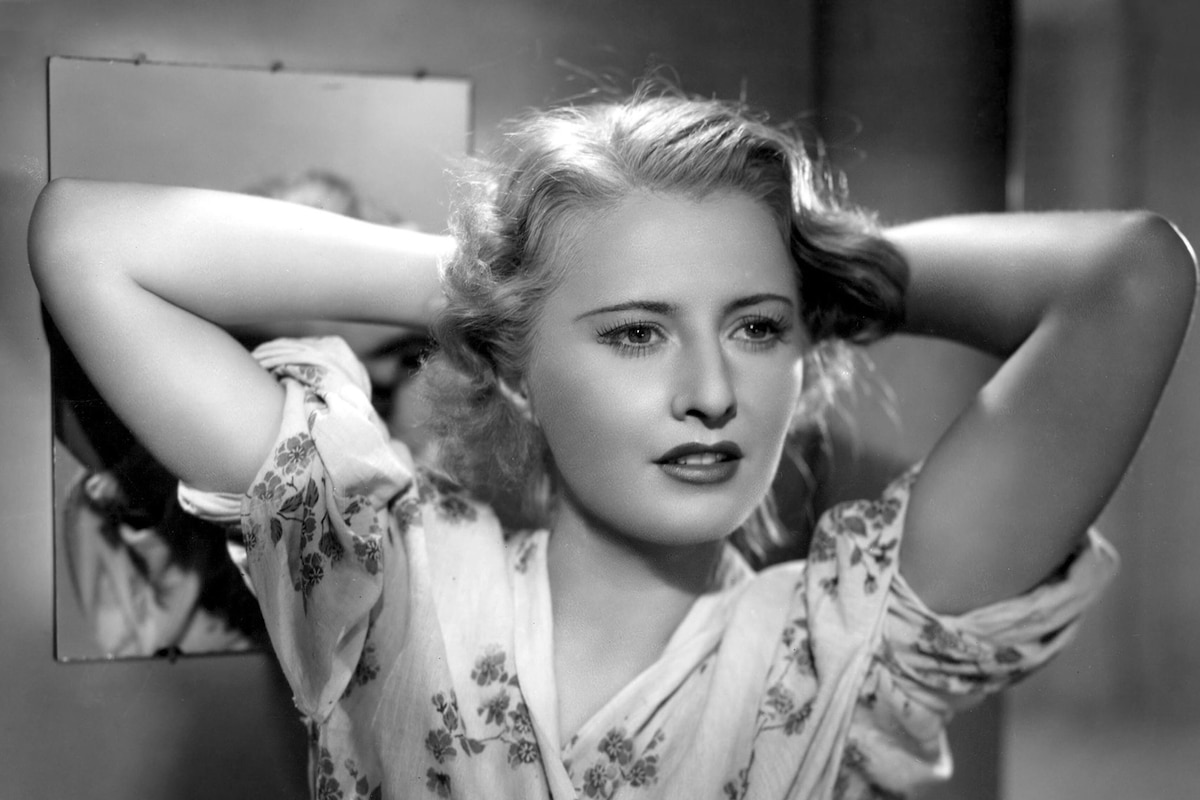
Stanwyck underwent a physical transformation to play her role, in which she ages some 15 or 20 years. For the first and only time in her career, she bleached her hair. In other movies where she appears blonde, she is wearing a wig - and she does don them for certain scenes here. But she wanted to use her own hair whenever possible. Wearing wigs, she said, would mean that "I couldn't do anything with my hands, like running them through my hair. Furthermore, in her home Stella's hair was neglected, unkempt - and that just can't be done realistically except with one's own hair." Goldwyn's head designer, Omar Kiam, outfitted her with some outrageously tacky costumes that reflected her character's lack of taste. Late in the film, he added lumpy padding to her torso and legs. She wore five pairs of hose to make her ankles look thick, and at times her cheeks were stuffed with cotton. "It was a matter of upholstery," Stanwyck later laughed.
Shirley, who had grown up making movies and celebrated her 18th birthday during the filming of Stella Dallas, felt that Vidor was ignoring her and not offering any direction. She finally made an appointment to see Goldwyn and tearfully informed him that she felt unwanted in the role and should be replaced. Goldwyn phoned Vidor to say, "I don't care what you tell the kid. Tell her she's lousy if she's great or great if she's lousy. Tell her any damn thing you please. I just can't cope with hysterical females and I don't want to be bothered again!"
The beginning of filming had been delayed because of a makeup artists' and hairdressers' strike by their unions to win recognition of the studios as a guild shop, and there was only a skeleton crew to groom the actors. O'Neil, who was making her film debut in Stella Dallas after years on the stage, was particularly upset by having to cross picket lines and be made up behind drawn curtains by Bob Stephanoff, head of the United Artists makeup department. Rattled by this experience and uncertain about film acting, O'Neil often arrived on the set for her scenes feeling very unsure of herself. Aware of her discomfort, Stanwyck visited O'Neill in her dressing room to offer encouragement. O'Neill would later recall her as "a marvelous, warm-hearted person. I knew it while working with her, and - recently watching a rerun of Stella Dallas - I understood the depth and strength of her work."
As always on the set, Stanwyck was the ultimate pro, as recalled by Shirley: "She was prepared to the very top of her ability. Dialogue learned perfectly. Hair, clothes, energy ready." Of his working relationship with Stanwyck, Vidor had this to say: "Where sympathy exists and respect exists between director and actress, it cuts out a lot of talk, and certainly no arguments are necessary, and they fulfill their parts... I think it's a question of love. I think if love exists - admiration - love exists between director and actress, which I felt - I felt a deep feeling of love - it's like a family functioning. It's like a husband and wife functioning." Stanwyck's evaluation of their working relationship was more pragmatic: "King did his job, and I did mine."
By Roger Fristoe
Behind the Camera-Stella Dallas
by Roger Fristoe | February 28, 2014
SIGN UP FOR OUR NEWSLETTERS

CONNECT WITH TCM