Stella Dallas, the ultimate story of self-sacrificing mother love, began as a 1923 novel by Olive Higgins Prouty, a novelist/poet from Massachusetts who had written the book in a raw emotional state after suffering the death of two very young daughters within a period of three years. She was inspired to create the plot after overhearing a conversation at a Boston dinner party about a man who had married a woman "beyond the pale socially," had a daughter by her and then separated from his family, taking custody of the girl only one month a year. For Prouty, the novel was never really about "mother love" but rather the plight of a sensitive child with separated parents of contrasting backgrounds, and a woman who refuses to be constrained by society and its ideas of how she should behave.
The novel was serialized in 1922 in The American Magazine before its publication in 1923 by Houghton Mifflin Company. The year after its publication it was adapted into a stage play by Gertrude Purcell and Harry Wagstaff Gribble that was first produced in New Haven, Conn., starring an actress who billed herself as Mrs. Leslie Carter as Stella, with a young Edward G. Robinson in the supporting cast. Prouty did not approve of the "coarse" performance of the 70-year-old Mrs. Carter, and called the play "a mess." The production never made it to Broadway. In 1925 the Samuel Goldwyn Company produced a silent film version of the story from a screenplay by Frances Marion, with Belle Bennett as Stella, burgeoning matinee idol Ronald Colman as her husband Stephen, Lois Moran as their daughter, Jean Hersholt as Stella's uncouth friend Ed Munn and a very young Douglas Fairbanks, Jr. as the daughter's beau.
Before choosing Bennett, Goldwyn claimed to have tested 75 actresses in his search for the perfect Stella, including the legendary Laurette Taylor. A yeoman performer who had acted in some 45 films including two produced by Goldwyn, Bennett had plugged away without ever getting the role she thought could "make" her career. She felt this was it -- "what I have been waiting for all my life," as she wrote to a friend. As it turned out, Stella was for her the role of a lifetime; she died seven years after the film's release, when she was only 41. The film was also important in Colman's rise to prominence, and offered Fairbanks his first adult part.
The silent film created a sensation, being enthusiastically received by both audiences and critics. Mordaunt Hall wrote in The New York Times of the film's "powerful appeal" and the "masterly" direction of Henry King. He had special praise for Bennett, calling hers a "memorable performance, one which is rarely seen on the screen." A Variety reviewer deemed both Bennett and Moran to be "magnificent" in their roles.
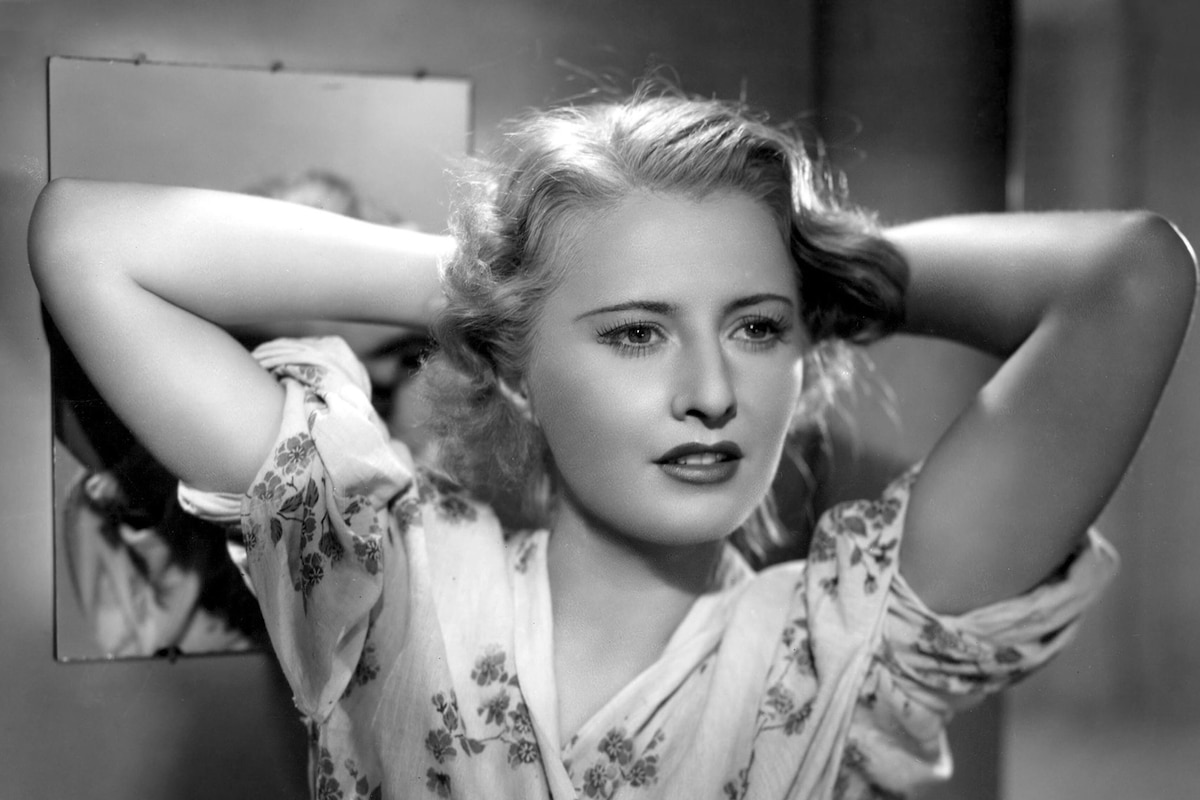
For the 1937 remake, Goldwyn chose the illustrious director King Vidor, who by this time had been Oscar®-nominated three times as Best Director, for The Crowd (1928), Hallelujah! (1929) and The Champ (1931). To find his new Stella, Goldwyn mounted an even bigger talent search than for the silent version, one that Barbara Stanwyck later compared to David O. Selznick's efforts to find his ideal Scarlett O'Hara. Like Selznick, Vidor considered using a complete unknown - but then he narrowed the field to three seasoned actresses: Gladys George, Ruth Chatterton (who actually was offered the role and turned it down) and radio star Bernadine Hayes. Miriam Hopkins also was interested enough to test. But Stanwyck - who had studied the novel and desperately wanted the role of Stella - had a friend in the Goldwyn camp in Joel McCrea, with whom she had already costarred in three movies. McCrea, who had been under contract to Goldwyn for five years, was the producer's golden boy at the time, making successful films for him and also earning a small fortune in loan-outs to other studios.
McCrea made a pitch for Stanwyck with his boss, trying to argue down Goldwyn's complaints that she was too young for the part, lacked sex appeal and had no experience with children. The actor also went to the movie's director, King Vidor, and asked how he felt about Stanwyck being cast. Vidor, who had been impressed by her work in other films, said he wanted her but that Goldwyn would only consider her if she agreed to test for the role. Stanwyck, burned by unpleasant experiences in making screen tests early in her career, wanted no part of that. "Listen, honey," she said to McCrea, "if they want me they know what I can do. If I'm not good enough, to hell with them, let them get who they want!"
At last, however, she relented and did a test with Anne Shirley, who also had yet to be cast as Laurel. The scene was the birthday party where mother and daughter wait forlornly for guests who never show up because everyone has been turned off by Stella's vulgar ways. As it happened, both actresses had colds on the day of the test, with Stanwyck suffering from a runny nose and a temperature of 102 degrees. Vidor worked on the test all day as opposed to the usual few hours, and the results were splendid. After Goldwyn had highlights from 48 different tests edited into one reel, the choice for Stella was obvious. In Vidor's words, "Stanwyck's test was undeniable. She put everyone else to shame." Goldwyn had his Stella.
The movie's screenplay was written by Sarah Y. Mason and Victor Heerman, whose other collaborations included the Katharine Hepburn vehicle Little Women (1933) and the Robert Taylor film Magnificent Obsession (1935). Chosen as cinematographer was Rudolph Maté, who had photographed Stanwyck in A Message to Garcia (1936) and would later direct her in The Violent Men (1955). Along with Stanwyck and Shirley, who was chosen over Bonita Granville and Frances Farmer, the cast would include John Boles, who played Victor Moritz in the original 1931 Frankenstein; Barbara O'Neil, who had won out over Mary Astor, then embroiled in scandals in her personal life; and Alan Hale, whose roles included that of Little John in several Robin Hood films. Marjorie Main, later to win fame as Ma Kettle, was cast as Stella's rough-hewn mother, and future star Laraine Day (then Laraine Johnson) would make her uncredited film debut in a bit part at a soda fountain.
By Roger Fristoe
The Big Idea-Stella Dallas
by Roger Fristoe | February 28, 2014
SIGN UP FOR OUR NEWSLETTERS

CONNECT WITH TCM