SYNOPSIS
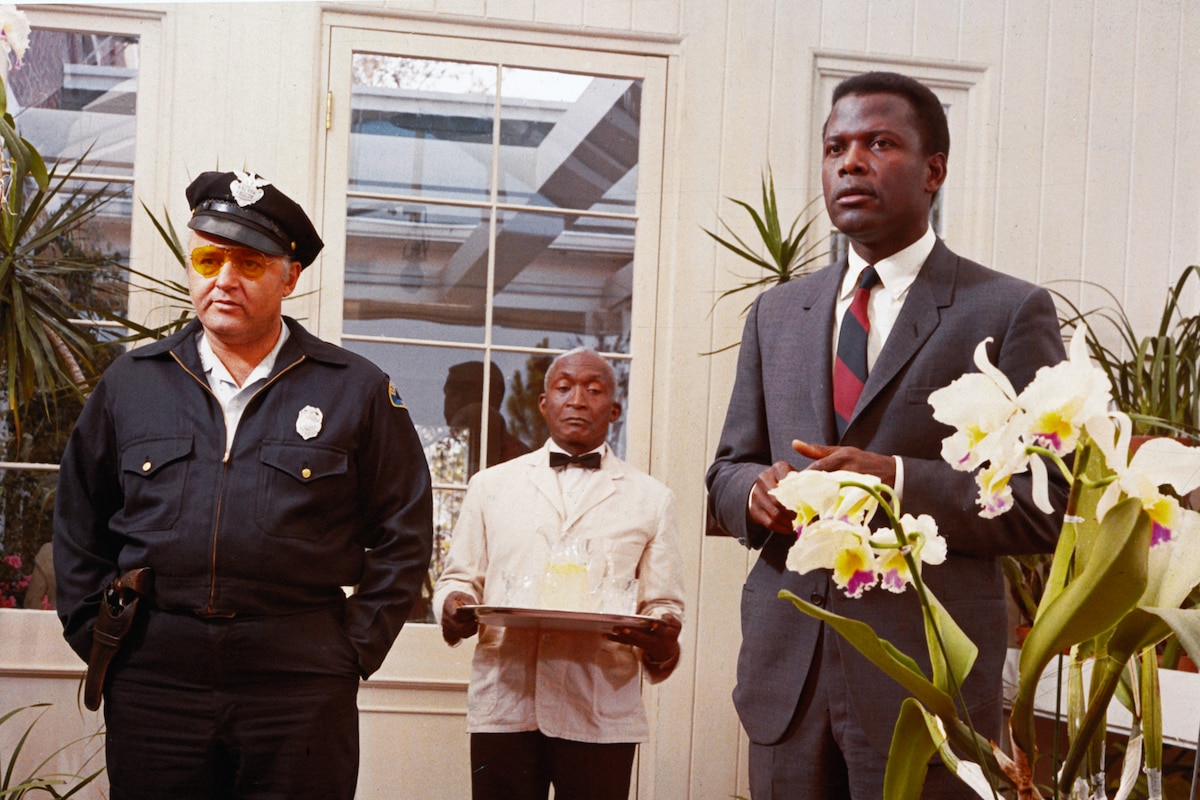
When a Chicago businessman is murdered in sleepy Sparta, MS, local police chief Ben Gillespie is under pressure to solve the case quickly. But his first suspect, a black man caught leaving town at the local train station, turns out to be Virgil Tibbs, a Philadelphia police detective passing through after visiting his mother. Things heat up further for Gillespie when Tibbs's police chief and the victim's widow insist he stay to help with the case. Before long, Tibbs is schooling Gillespie in modern police methods and schooling the town in how to deal with a proud, capable black man who refuses to accept second-class citizen status.
CAST AND CREW
Director: Norman Jewison
Producer: Walter Mirisch
Screenplay: Stirling Silliphant
Based on the novel by John Ball
Cinematography: Haskell Wexler
Editing: Hal Ashby
Art Direction: Paul Groesse
Music: Quincy Jones
Cast: Sidney Poitier (Virgil Tibbs), Rod Steiger (Chief Gillespie), Warren Oates (Sam Wood), Lee Grant (Mrs. Colbert), Larry Gates (Endicott), James Patterson (Mr. Purdy), William Schallert (Mayor Schubert), Beah Richards (Mama Caleba), Scott Wilson (Harvey Oberst)
C-109 m.
OVERVIEW
Released in the summer of 1967, shortly after race riots in Newark, NJ, and Detroit, In the Heat of the Night galvanized racial tensions in the United States as few films had done previously. Not only did the film score at the box office with an African-American actor in the leading role, but also it was one of the first to depict an African-American character who refused to back down in the face of racism. When local business leader Endicott slapped Virgil Tibbs, only for Tibbs to hit him back, progressive audiences around the nation cheered.
The role of Virgil Tibbs helped to crystalize Sidney Poitier's image as a proud, capable black man standing up to racism and outsmarting white society. Released in the same year as his To Sir, with Love and Guess Who's Coming to Dinner it made him the focal point in discussions of Hollywood's treatment of race. In some quarters, he was praised for his integrity in insisting on roles that defied the old stereotypes; in others he was derided for creating a new stereotype, the super-black man.
In the Heat of the Night is Poitier's personal favorite of the 55 films he has made to date.
After a string of comedies (with the exception of 1965's The Cincinnati Kid, on which he was a last minute fill-in for fired director Sam Peckinpah), Norman Jewison moved into the front rank of serious Hollywood directors because of his work on this film.
Haskell Wexler was the first color cinematographer on a major studio release to design his lighting to flatter an African-American. Previous films had used too much light, which creates a glare on black skin, but Wexler kept the light levels down. This helped contribute to Poitier's emergence in the late '60s as a matinee idol.
By Frank Miller
The Essentials-In the Heat of the Night
by Frank Miller | February 28, 2014
SIGN UP FOR OUR NEWSLETTERS

CONNECT WITH TCM