SYNOPSIS
Iowa farmer Ray Kinsella is walking through his cornfields one evening when he hears a voice telling him "If you build it, he will come." Led by this intuition, Ray clears a large portion of his crop to build a baseball field that miraculously brings back the ghosts of the disgraced Chicago "Black" Sox team, accused of having thrown the 1919 World Series. He is most affected by the return of his father's favorite player, the legendary Shoeless Joe Jackson. Finally, the appearance of another unexpected ghostly figure brings closure to a major unresolved issue in Ray's life.
Director: Phil Alden Robinson
Producer: Charles Gordon, Lawrence Gordon
Screenplay: Phil Alden Robinson, based on the book Shoeless Joe by W.P. Kinsella
Cinematography: John Lindley
Editing: Ian Crafford
Production Design: Dennis Gassner
Art Direction: Leslie McDonald
Original Music: James Horner
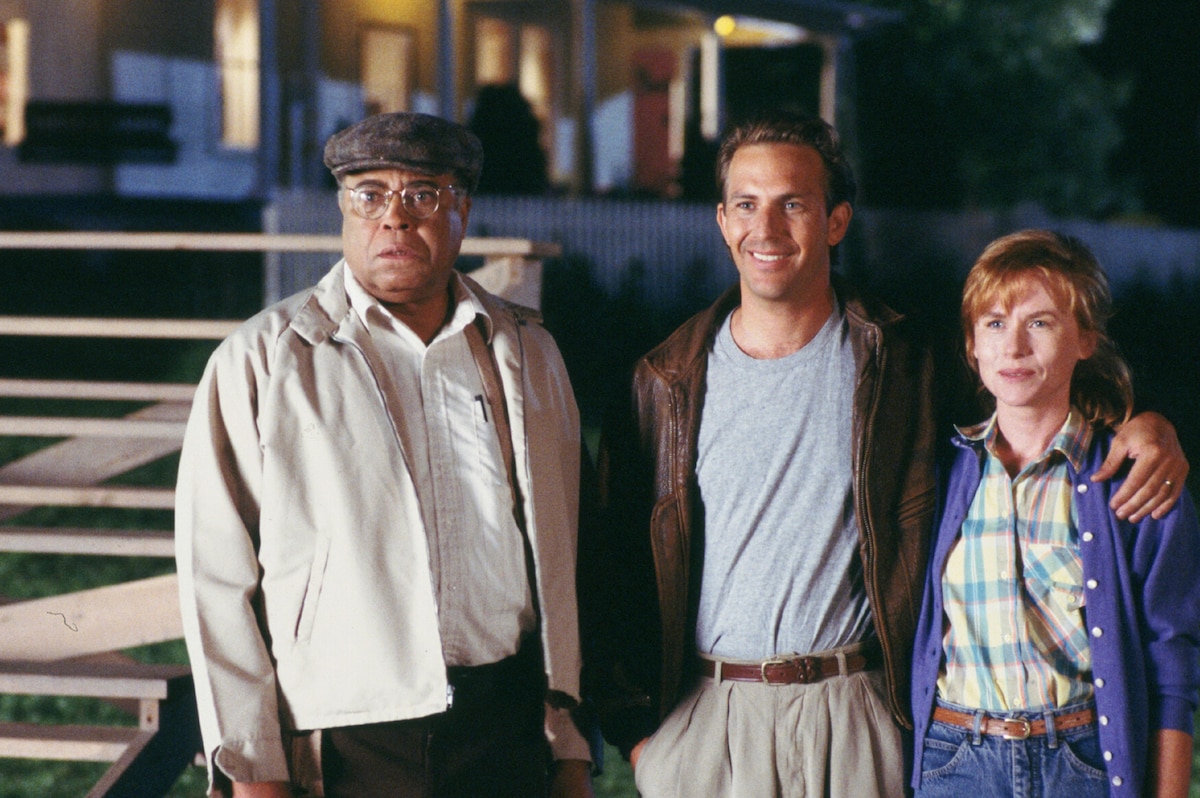
Cast: Kevin Costner (Ray Kinsella), Amy Madigan (Annie Kinsella), Gaby Hoffman (Karin Kinsella), Ray Liotta (Shoeless Joe Jackson), Timothy Busfield (Mark), James Earl Jones (Terence Mann), Burt Lancaster (Dr. Archibald "Moonlight" Graham)
Why FIELD OF DREAMS is Essential
Field of Dreams may not be among the greatest cinematic milestones of all time, but don't suggest that to its diehard fans. This is the rare movie with the capacity to make grown men cry. During its initial run, theaters all across the nation reported that male audience members, many of them rather macho guys who otherwise wouldn't be caught dead weeping in public, were reduced to blubbering into their hankies at the end of the show.
Although its framing story is about baseball, this is really a movie about fathers and sons and the bonds between them. According to the filmmakers--and the considerable myths that have grown up around this mythic movie--the film has caused men to reach out to their fathers and/or sons across miles, years, and various levels of estrangement to connect anew.
Perhaps not to the same extent or for the same reasons, but women are also affected by Field of Dreams's tender story about second chances and the power of dreams. It doesn't hurt that it's wrapped in the warm glow of the simple country-small town way of life (real or not, a powerful symbol) and the most nostalgic and American of all sports. The film and the book from which it was adapted take as their premise the destruction of faith and ideals inherent in the true early twentieth century story of the Chicago "Black" Sox ("Say it ain't so, Joe"), while offering the hope of redemption, the chance to go back and restore the world to a more unspoiled state before the Fall. It was the perfect film to come at the end of the Reagan years, when so much of the country had become caught up in the idea of "morning in America," a new dawn after the bitter experiences of Vietnam, assassinations, and Watergate. At the same time, it exhibited a nostalgia for the 60s, for the kind of passion, idealism, and commitment that was no longer very much alive in the late 1980s.
The story, both in book and movie form, also appealed to something even deeper and older, the hero myth that lies at the base of just about every religion and spiritual belief system. The structure is classical; the hero gets a mysterious message that compels him to leave home, making an often difficult journey filled with doubts and obstacles, until he fulfills his quest and returns home with the gift he needs to restore balance and grace to his world. Of course, so many of these myths involve a reconciliation with the Father, making the resonance here even stronger.
What Field of Dreams does best is couch these deep emotions and mythic structures in a contemporary, relatable, and very entertaining vehicle that proved potent at the box office. Now that it can be seen in the privacy of one's own home, men everywhere and across all generations can watch it and freely cry like babies out of the public eye.
By Rob Nixon
The Essentials-Field of Dreams
by Rob Nixon | February 27, 2014
SIGN UP FOR OUR NEWSLETTERS

CONNECT WITH TCM