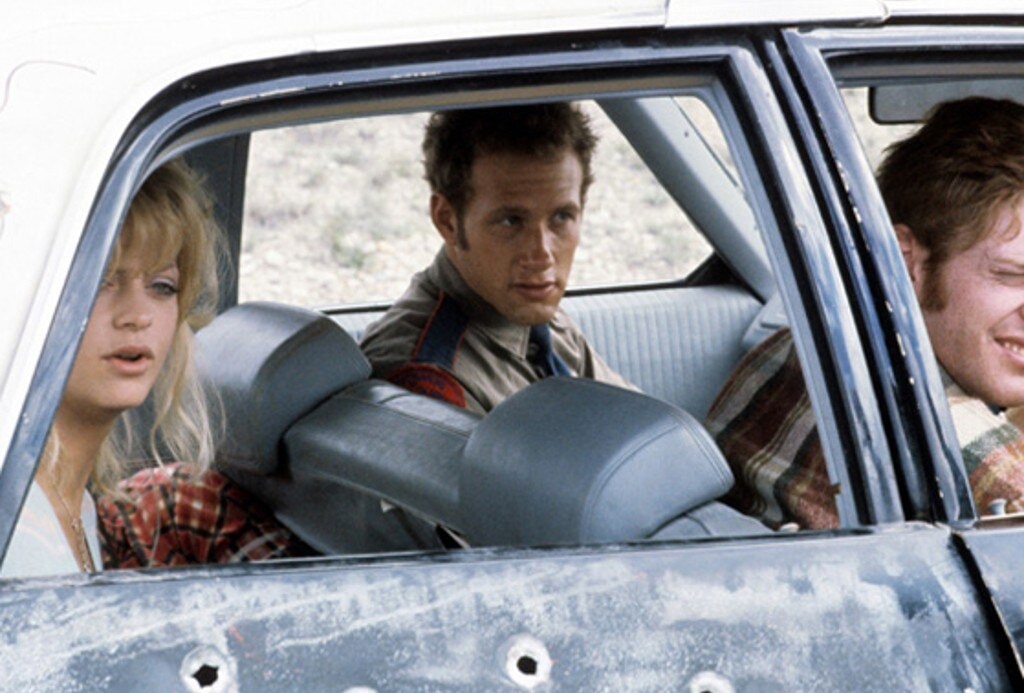
In May 1969, ex-convict Robert Dent and his wife, Ila Faye, kidnapped State Trooper Kenneth Crone and drove from Port Arthur, TX, to Wheelock in his police car, with police pursuing them sometimes at speeds as high as 95 miles per hour. At one point more than 90 police cars and press vehicles were following the stolen car as interested locals lined the highway to watch and, in many cases, cheer the Dents on. All Dent wanted was the chance to see his children, who had been taken from him and his wife and put into foster care. He agreed to release Crone if law officials would bring the children to his father-in-law's house and let him see them for 15 minutes. Instead, he walked into an ambush. When he failed to lower his gun when ordered, the police and FBI shot him dead. The whole event started when police stopped Dent for not dimming his high beams while passing their car, and he and his wife fled into the woods nearby. When Crone answered a call from a rancher who said two people had come to his home claiming to have been robbed by hitchhikers, the victims turned out to be the Dents, who then kidnapped him and stole his vehicle.
Steven Spielberg was drawn to the event by its similarities to the Billy Wilder cult classic Ace in the Hole (1951), about a reporter (Kirk Douglas) who turns a small-town story about a man trapped in a cave into a national sensation that draws tourists and onlookers from around the nation to a small Texas town. As Spielberg would later say, "I liked the idea of people rallying behind a media event, not knowing who the characters are or what they're about but just supporting them...and that sparks a good deal of good old American sentimentality." (Steven Spielberg, Steven Spielberg: Interviews)
Spielberg first brought the story to Universal in 1969, but they turned him down, feeling it was too downbeat. As Spielberg's reputation as a television director grew, particularly with his classic telefeature Duel (1971), he developed a friendship with studio executive Jennings Lang, who assigned him to work on the script that would become The Sugarland Express with young writers Hal Barwood and Matthew Robbins. They developed an outline that Lang agreed to put into development in 1972. After doing some research in Texas, Barwood and Robbins wrote a first draft in 13 days. The studio then decided to back out of the project.
While pitching ideas at 20th Century-Fox, Spielberg had met the studio's then head, Richard D. Zanuck. Shortly after, Zanuck left Fox to pursue independent production with partner David Brown. While they were setting up production, Spielberg's agent sent them the script for what was then called Carte Blanche, which they agreed they wanted to do. A few weeks later, they signed a multi-picture deal with Universal and revived the project there.
On Spielberg's suggestion, Barwood and Robbins made the convict's wife the film's central figure. To add to the drama, they also had her break him out of prison four months before his scheduled release to kidnap their child from his foster family.
Tired of being typecast as a dumb blonde, a type that had launched her career on Rowan & Martin's Laugh-In and brought her an Oscar® for Cactus Flower (1969), Goldie Hawn had been turning down scripts for a year when Spielberg approached her about starring in The Sugarland Express. She was so impressed with the script she agreed to work for a fraction of her usual salary. Signing her was a huge boon to the production, since studio executives had been pressuring Spielberg to sign a major female star as box-office insurance.
In casting Clovis and Slide, Spielberg was looking for two actors who bore some resemblance to each other, both physically and in terms of attitude. He wanted to create the feeling that they were similar characters whose lives had carried them in separate directions. He got that with relative newcomers William Atherton and Michael Sacks.
Knowing he was working with a tight budget, Spielberg left little room for error in his pre-production planning. He hired a graphic artist to sketch out the action on an old map taped to the wall of his hotel room on location. That gave him a birds-eye view of the action as his characters led the police through miles of Texas back roads.
By Frank Miller
The Big Idea-The Sugarland Express
by Frank Miller | February 25, 2014
SIGN UP FOR OUR NEWSLETTERS

CONNECT WITH TCM