Writer Paddy Chayefsky first made his name in television. He began writing for producer Fred Coe and The Philco-Goodyear Television Playhouse in 1949 with an adaptation of Budd Schulbergs Hollywood-set novel What Makes Sammy Run?
His second Philco script, The Reluctant Citizen (1953), was rehearsing in the Abbey Hotels ballroom, where the staff was setting up for a Friday night Friendship Club meeting. When Chayefsky noticed a sign reading Girls, Dance With the Man Who Asks You. Remember, Men Have Feelings, Too, it gave him the idea for a play about a young woman attending a neighborhood dance like that. As he discussed it with Mann, he decided it would be more interesting to focus on a man in that setting. He then pitched it to Coe with the line, I want to do a play about a guy who goes to a ballroom. (Paddy Chayefsky, quoted in Tom Stempel, Storytellers to the Nation: A History of American Television Writing.) He would later say he set out to make Marty the most ordinary love story in the world. (Chayefsky, Two Choices of Material, Television Plays)<
Chayefsky created the leading role for his friend Martin Ritt, who would become a director in later years. He even named the role after Ritt. By the time the script was done, however, Ritt had been blacklisted for alleged Communist sympathies. That opened the door for Rod Steiger to play the part.
Marty aired live May 24, 1953, to glowing reviews. Mann directed a cast that included, along with Steiger, Nancy Marchand, Esther Minciotti, Joe Mantell, Augusta Ciolli, Betsy Palmer, Lee Philips, Nehemiah Persoff and George Maharis.
Chayefsky had attempted writing for Hollywood in the late 40s with little success, though he had become friends with agent Harold Hecht. By the 50s, Hecht had moved into film production teamed with one of his biggest clients, actor Burt Lancaster. Eager to work with Chayefsky and wanting to produce a film that would be distinct from Lancaster's run of action-adventures, he had Norma Productions, a subsidiary of Hecht-Lancaster Productions, pick up the teleplays screen rights. This was one of the first times a television drama had been bought for film adaptation. Rumors persist, despite no supporting evidence, that Hecht and Lancaster set out to make the film expecting it to fail and provide them with a tax write-off against more lucrative projects.
In January 1954, Hecht-Lancaster struck a distribution deal with United Artists, long a haven for independent production. The deal was not without problems. Initially, UA pushed them to cast a major star like Marlon Brando in the lead. To get the picture done their way, Lancaster had to threaten to cancel his deal for other pictures there. At the time, UA was going through a rough patch, with only Samuel Goldwyn producing big box-office pictures for them. Knowing the deal with Hecht-Lancaster was a major feather in their cap, they gave in.
Not trusting the Hollywood system, Chayefsky made unprecedented demands for a first time screenwriter. He wanted exclusive control of the script, casting approval and a directing job for Mann, who had never made a film before. Surprisingly, Hecht and Lancaster acceded to all his demands.
To expand his one-hour teleplay to feature length, Chayefsky added scenes about Martys career and his relationships with his mother and sister. He also made the leading ladys role somewhat larger, though a scene showing Clara with her parents after she first meets Marty was cut from the release print, only to be restored in some home video versions.
There are two different stories explaining why Steiger did not re-create his television role for the big screen. The actor claimed that he decided not to make the movie, because the producers wanted to tie him up with a long-term contract. Hecht and Lancaster always held that they chose not to cast him for box-office reasons. They didnt think people would pay to see him in the role after having seen him for free on television.
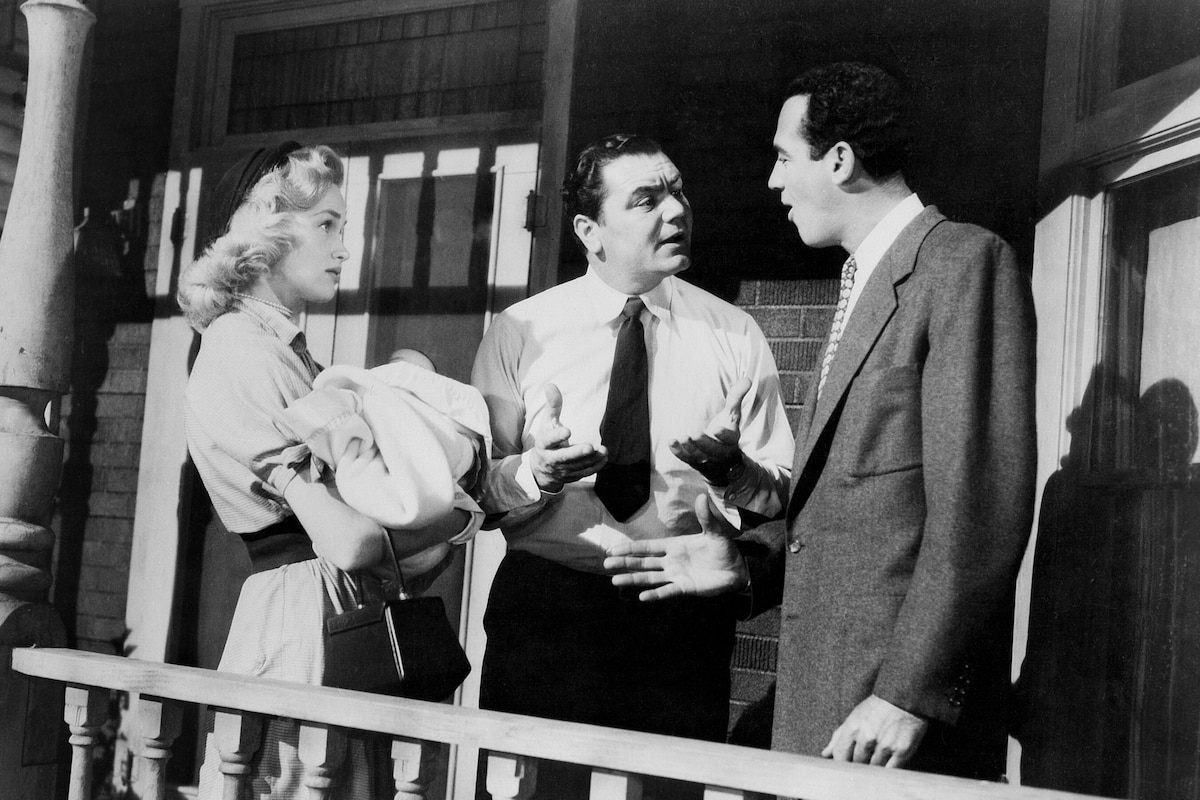
Unsure who to cast in the leading role once Steiger was eliminated, Delbert Mann asked his friend and fellow director Robert Aldrich for advice. Aldrich suggested Ernest Borgnine, though Mann hesitated at first since the actor was primarily known for playing villainous roles like Fatso in From Here to Eternity (1953). When Borgnine read for the part, he moved both Mann and Chayefsky, who was reading the mothers lines, to tears.
In another story about Borgnines casting, Lancaster told the Hollywood Reporter that he had wanted to cast the actor in one of his productions since working with him on From Here to Eternity. When he saw Marty on television, Lancaster knew he had found his friend the perfect part.
Although Steiger was out, Mann was able to cast Minciotti, Ciolli and Mantell, all of whom had appeared in the original television production.
Hecht would later tell the press that he had set up the production planning to cast lesser-known actors in the leading roles. He felt using unfamiliar actors had paid off in recent European films and felt the time was ripe to try it in the U.S.
Initially, Nancy Marchand was to make her big-screen debut reprising her performance as Clara, but Gene Kellys wife, Betsy Blair, campaigned hard for the role. United Artists and producers Hecht and Lancaster initially refused because she was blacklisted for her liberal activism. Then Kelly took up the battle. He swore he would never work for any of them if they didnt give her the role, and then got MGM to help him exert pressure by refusing to make his next film for them. Finally, MGM production chief Dore Schary called the American Legion to personally vouch for Blair, effectively removing her from the blacklist. Ironically, Kelly's next MGM film, Its Always Fair Weather (1955), was a box office disappointment.<
By Frank Miller
