Morris Engel, the director whose landmark film Little Fugitive (1953), was nominated for a Best Screenplay Oscar®, and more notably, inspired an era of independent filmmaking by better-known mavericks such as John Cassavetes and Francois Truffaut, died of cancer on March 5 at his Manhattan apartment. He was 86.
Engel was born on April 8, 1918 in Brooklyn, New York to a family of very modest income. He became fascinated with photography as a child, being enamored by travel pictures he came across in brochures. When still in high school, he signed up for a $6 course at the Photo League and began roaming the streets of New York with his camera. He enlisted in the Navy during World War II and became a combat photographer, where he eventually found himself documenting the historic D-day landing at Normandy, France. After the war, he photographed for magazines such as Collier's and McCall's, and became respected for his work in photojournalism.
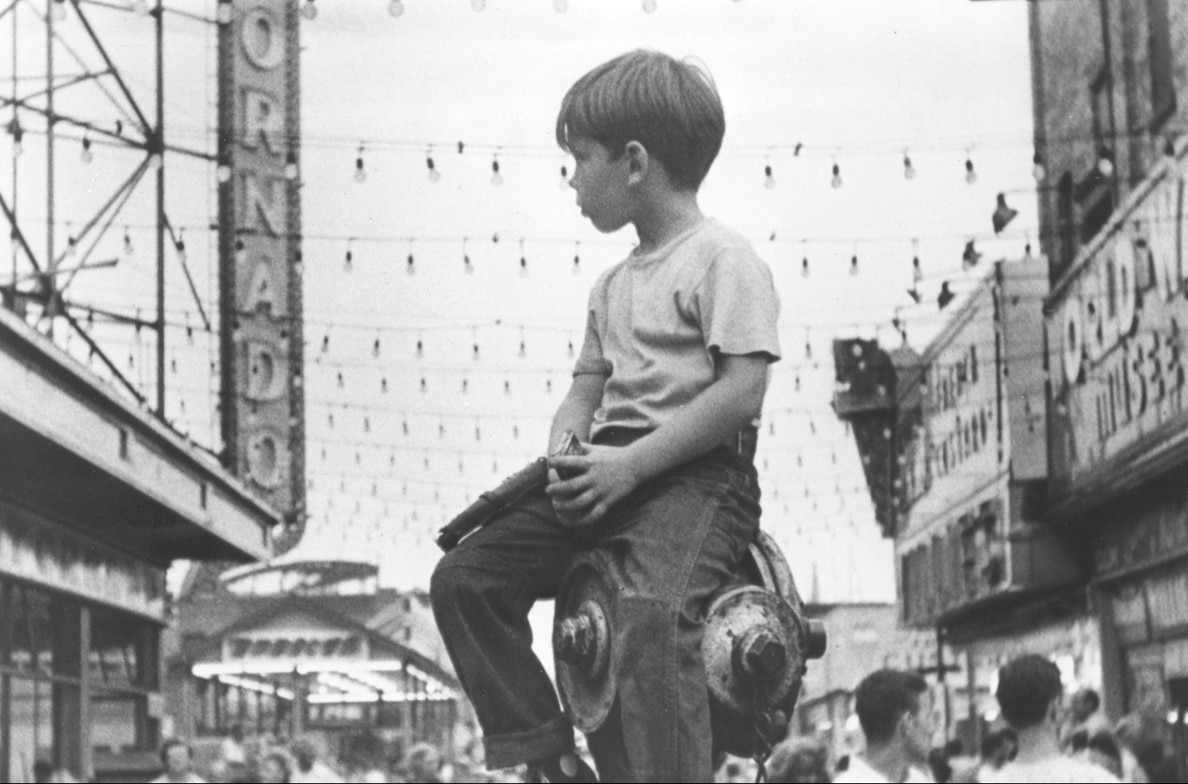
He met his wife, Ruth Orkin, also a noted photographer, in the early '50s. After their marriage in 1952, both Morris and Orkin expressed a desire toward filmmaking. The result was an innovative and daring film they wrote, directed and produced - The Little Fugitive (1953). The story, of a seven-year-old boy from Brooklyn named Joey (the wonderful Richie Andrusco), who believes he fatally shot his 11-year-old brother (Richard Brewster), and escapes to Coney Island to avoid punishment, was certainly modest in budget ($30,000) and execution. Yet for many film scholars, there was simply nothing like it to compare to at the time. Engel's capture of New York locations, fresh use of street sounds, hand held camera technique, and employing real New Yorkers as extras, made for something fresh and new. Indeed, when in 1959, both John Cassavetes and Francois Truffaut came onto the scene with their feature film debuts (Cassavetes for Shadows and Truffaut for The 400 Blows), both were quick to publicly praise Engel for starting an "independent" mind set for film direction.
Although Engel and his wife would create only two more films: the charming Lovers and Lollipops (1956), about a little girl who views the world of her elders with a precocious eye; and the lyrical drama Weddings and Babies (1958), regarding the pre-marital jitters of a professional photographer; their influence on Indie filmmaking cannot be overstated. After his wife's death from cancer in 1985, Engel did make two video documentaries, A Little Bit Pregnant (1993) and Camellia (1998). He is survived by a son, Andy; a daughter, Mary; two sisters, Pearl Russell and Helen Siemianowski; and a grandson.
by Michael T. Toole
Morris Engel (1918-2005)
by Michael T. Toole | March 21, 2005
SIGN UP FOR OUR NEWSLETTERS

CONNECT WITH TCM