Late in the day on November 16, 1933, the last scene of Spitfire (1934) was not yet in the can. RKO producer Pandro Berman, on location in the southern California mountains, was in a tough spot. His star, Katharine Hepburn, was booked on an overnight flight to New York in order to begin work the next day on The Lake, a Broadway play. Under the terms of her contract, Hepburn was actually to have been released from Spitfire one day earlier, on November 15. But the shoot had gone over schedule, and Hepburn had already agreed to stay one extra night because RKO claimed she owed them an extra five hours and 45 minutes of work. It wasn't enough time, and now, on November 16, Hepburn refused to work any further. She told Berman, "You make other people live up to conditions you write into contracts. It's time you learned to do so, too."
"How much do you want to finish the scene?" asked Berman.
"Ten thousand dollars," was Hepburn's reply. Even though she was already being paid $50,000 for the four-week shoot, the studio had little choice but to give in. Hepburn later said of this incident, "I wanted to show them that if I set a definite date, I meant to keep it, but they didn't. Time means a lot to me."
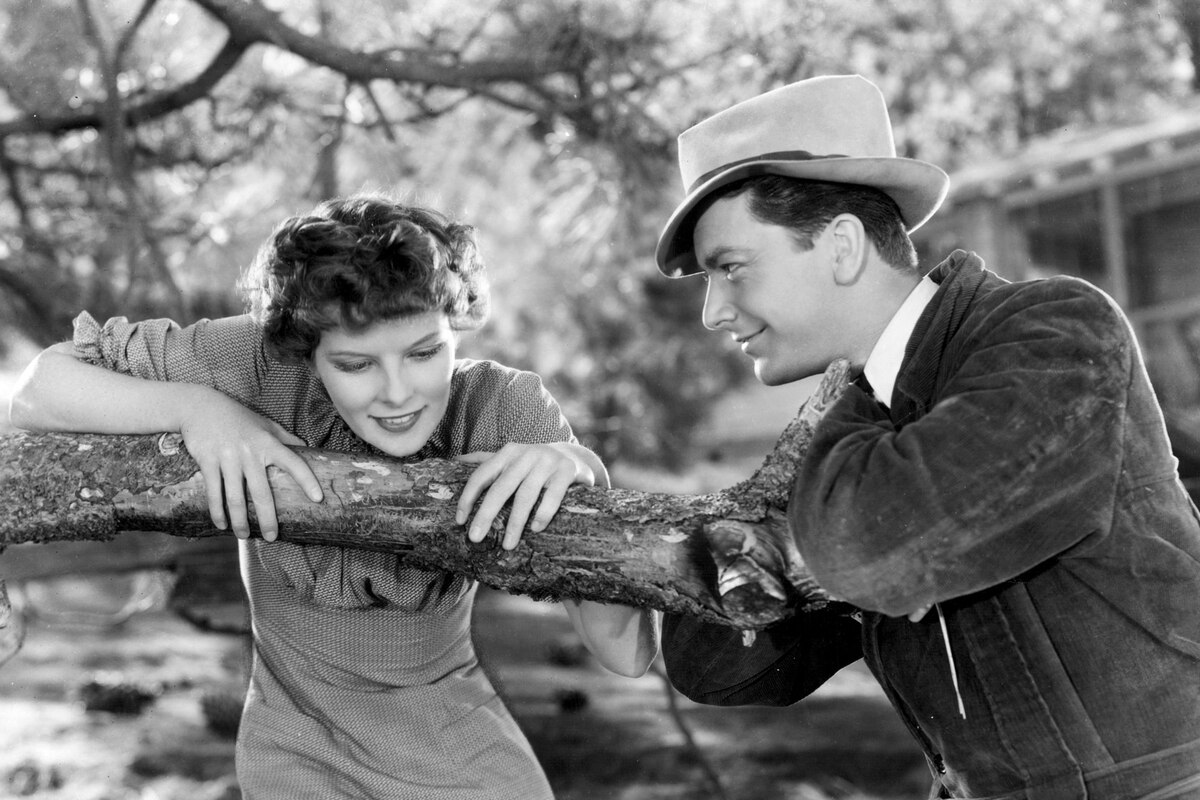
November 16, 1933, was auspicious for Hepburn for another reason, too. It was the release date for her previous film, Little Women, a great critical and commercial success. As a follow-up to the sophisticated Little Women and Morning Glory (1933), the picture for which she would soon receive her first Academy Award, Spitfire was an unusual choice. Hepburn's part was that of a backwoods girl named Trigger Hicks. Barely literate, proud and hot-tempered, Trigger's devout belief in faith healing creates consternation in her fellow villagers, who view her belief as witchcraft.
In fact, the part was originally meant for Dorothy Jordan, but Hepburn wanted to try something against type. She played the role with tomboyish vigor and got mixed reviews, with The New Yorker declaring, "The picture would suggest that Katharine Hepburn is condemned to elegance, doomed to be a lady for the rest of her natural life, and that her artistry does not extend to the interpretation of the primitive or the uncouth." Years later, in her autobiography Me, Hepburn herself was more blunt, devoting just two sentences to Spitfire and Trigger Hicks: "Was a Southern sort of mountain spirit. Shame on you, Kathy."
Spitfire died at box office and marked the beginning of a string of duds which would lead in a few years to Hepburn being labeled "box-office poison." Seen now, it's a fascinating example of a star playing against type because it demonstrates both the strengths and weaknesses of the star's persona. Also in the cast are Robert Young (on loan from MGM), comedian Bob Burns (who had himself billed as "High Ghere") and Ralph Bellamy, who does a little better here than in the countless other films in which he loses the girl to the star. Here, he gets her - in a way!
Producer: Pandro S. Berman, Merian C. Cooper
Director: John Cromwell
Screenplay: Jane Murfin, Lula Vollmer
Cinematography: Edward Cronjager
Film Editing: William Morgan
Art Direction: Carroll Clark, Van Nest Polglase
Music: Bernhard Kaun
Cast: Katharine Hepburn (Trigger Hicks), Robert Young (John Stafford), Ralph Bellamy (George Fleetwood), Martha Sleeper (Eleanor Stafford), Louis Mason (Bill Grayson), Sara Haden (Etta Dawson).
BW-87m. Closed Captioning.
By Jeremy Arnold
Spitfire
by Jeremy Arnold | February 24, 2005
SIGN UP FOR OUR NEWSLETTERS

CONNECT WITH TCM