Behind the Camera on THE AWFUL TRUTH
Ralph Bellamy got a good taste of Leo McCarey's working style shortly after being informed he was to show up on the set the following Monday for filming. Bellamy had no script, no dialogue, or even a hint about his upcoming scene so he went to see the director, but received no help at all from the perpetually upbeat McCarey. "He just joshed and said not to worry, we'd have lots of fun but there wasn't any script," Bellamy wrote years later. The actor showed up on set for the first day of production to find Dunne at a piano. (McCarey almost always kept a piano on his sets, and he would often sit playing while he thought up a new scene or piece of business he wanted his actors to try.) Dunne was pecking away at the melody to "Home on the Range," and McCarey asked Bellamy if he could sing. "Can't get from one note to the other," the actor replied. "Great!" McCarey said and ordered the cameras to roll while Dunne played and Bellamy sang for all he was worth. When they finished the song, they heard no "Cut." Looking over, they found McCarey by the camera, doubled over with laughter. Finally he said, "Print it!" The scene ended up in the finished picture. That was the way McCarey worked, and Bellamy had to get used to it quickly.
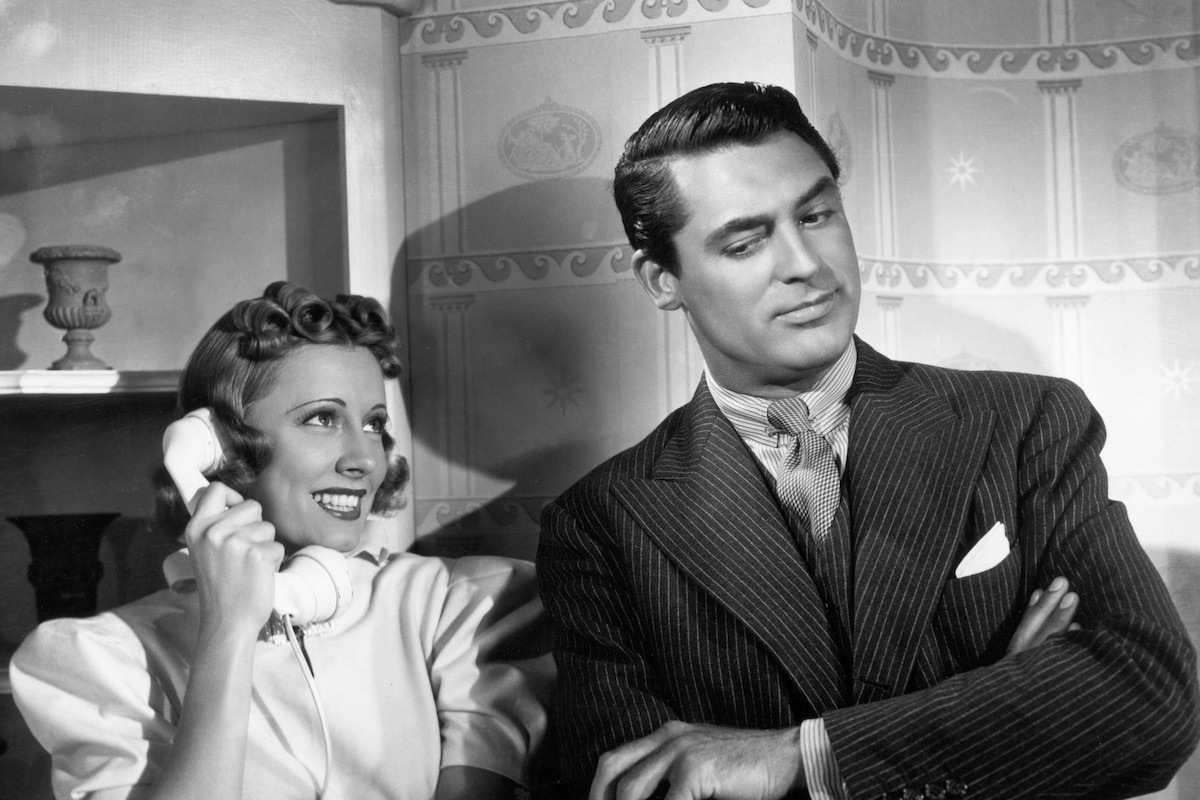
One cast member could not get used to the improvisational process, however. Cary Grant was miserable from the outset and tried to convince the studio he should take the "other man" role as it had been written for Roland Young and let Bellamy play the lead. Grant was not an easy person to work with under the best circumstances, and McCarey's process unnerved him so badly, he went to Columbia head Harry Cohn and begged to be let out of the picture. (According to Bellamy, Dunne also requested to be released from the picture, although McCarey and Dunne later denied that.) Grant even offered to pay the studio $5,000 to cover the expenses incurred so far and let him go. When McCarey heard that, he told Cohn, "Well, if that isn't enough, I'll put in five and make it ten." Cohn refused to replace Grant, and McCarey was so mad, he wouldn't speak to the actor. "He had no sound judgment," McCarey said later, and Irene Dunne bore his assessment out. "Cary used to be very apprehensive about nearly everything in those days," she said. "So apprehensive, in fact, he would almost get physically sick. If the script, the director, an actor or a particular scene displeased him, he would be greatly upset."
What Grant didn't realize was that McCarey was transforming his career by creating a nervous tension in the actor that inspired his performance. And in the process, the director was building scenes from fresh moments between his actors. Giving the barest outlines of a scene, he would have his actors try something on their feet. For instance, in one rehearsal, he told Dunne to simply open the door of her apartment and say, "Well, if it isn't my ex." He told Grant to answer with whatever came into his head. Grant replied, "The judge says this is my day to see the dog." McCarey then built the scene around that moment and shot it while the actors were still fresh. The line stayed in the picture.
Dunne later recalled the scene where she pretends to be Grant's ill-bred nightclub performer sister, which was written over a weekend and handed to her on the morning she was scheduled to film it. She was supposed to do a burlesque bump in the middle of her musical number in that scene, a move she was never able to do. McCarey told her to just say, "Never could do that" when she got to that moment. She did, it stayed in the film, and Dunne found it "a choice comic bit."
Dunne also said McCarey was unsure how to end the picture until a member of the crew came up with the idea of having the male figure on the clock follow the female figure back through her door, a perfect substitute for showing Grant climbing into bed with Dunne.
McCarey's process enabled him to keep control over the tone of the film, throwing his cast off balance so they were not able to arrive on set with memorized lines, psychoanalyzed characterizations, and performances already frozen in their minds.
His other means of maintaining control over the picture was to shoot very little coverage of each scene and basically do all his editing in the camera. That way, there was very little leeway in how the footage could be edited other than the way he intended.
The movie was shot in six weeks, "a record for that kind of picture," according to Bellamy.
by Rob Nixon
Behind the Camera (1/7/2006) - THE AWFUL TRUTH
by Rob Nixon | February 23, 2005
SIGN UP FOR OUR NEWSLETTERS

CONNECT WITH TCM