The Big Idea Behind THE AWFUL TRUTH
Leo McCarey had been working at Paramount for a number of years, turning out comedies for the Marx Brothers (Duck Soup, 1933), W.C. Fields (Six of a Kind, 1934), Mae West (Belle of the Nineties, 1934), and Harold Lloyd (The Milky Way, 1936), when he took an abrupt thematic turn for Make Way for Tomorrow (1937), a tender and heart-wrenching film about old age. The movie performed so poorly studio chief Adolph Zukor dropped McCarey's contract, forcing the director to began negotiations with Columbia. That studio was looking for a follow-up to Theodora Goes Wild (1936), a movie that revealed the until-then undiscovered comic talents of Irene Dunne and earned her a second Oscar® nomination.
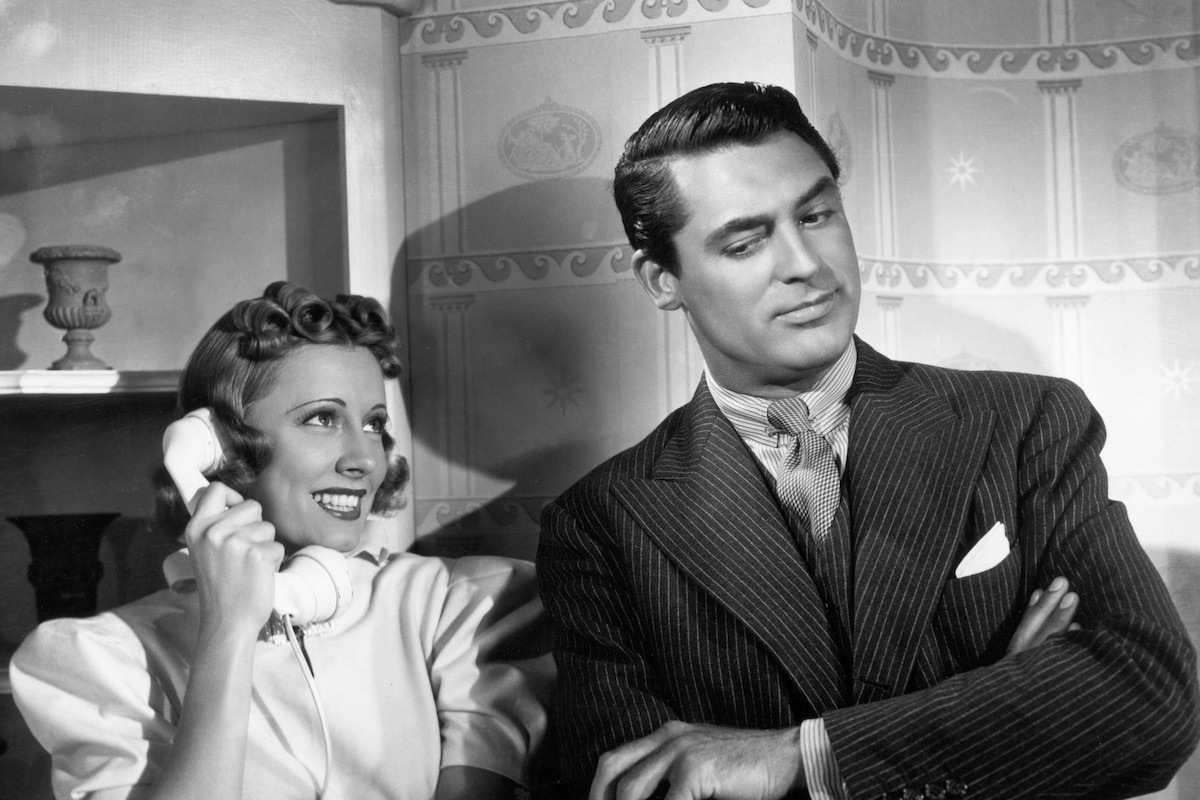
One day, McCarey ran into Cary Grant on the corner of Vine and Melrose in Hollywood and discovered the actor, too, had just been dropped by Paramount. But neither knew the other was in talks with Columbia until the studio signed Grant and decided to pair him with Dunne under McCarey's direction. They handed McCarey a script based on a play about divorce that had been filmed twice before. He found it uninspiring, tore it up, and contacted Vina Delmar, who was credited with writing the script for Make Way for Tomorrow. They began work on a new script, sitting in McCarey's car on Hollywood Boulevard working out ideas.
Ralph Bellamy was cast as the Oklahoma oilman who attempts to woo Dunne after her separation from Grant, a role that was originally written as an Englishman for Roland Young (who McCarey had directed in Ruggles of Red Gap, 1935). According to Bellamy a number of other writers, including Dorothy Parker and Dwight Taylor, took turns at trying to turn the Englishman into a particular type of American dullard.
McCarey told Peter Bogdanovich years later that much of what ended up in the movie was based on his own life, particularly experiences with his wife, although he was quick to point out that the infidelity was imaginary and not autobiographical. One detail from his life that crept into the script: After leaving the law profession (but prior to entering the film industry), McCarey had failed miserably at a mining venture. In The Awful Truth (1937), Cary Grant tries to unload a failed mine on his wife's new suitor.
Rather than starting from solid plot construction, McCarey preferred to build his scripts as a series of occurrences around the slightest of storylines. He called this his theory of the "ineluctability of incidents," the idea that "if something happens, some other thing inevitably flows from it. Like night follows day, events are linked together." His preference to work with a series of incidents that "succeed and provoke each other" opened up his process to valuable improvisation on the set.
The Big Idea: The Awful Truth (1937)
by Rob Nixon | February 23, 2005
SIGN UP FOR OUR NEWSLETTERS

CONNECT WITH TCM