The Big Idea Behind MOGAMBO
Mogambo (1953) was based on Red Dust, a steamy 1928 play by Wilson Collison, best known for such popular farces as Up in Mabel's Room and Getting Gertie's Garter. Although it flopped on Broadway, the story was picked up by MGM as a potential property. But even in the days before strict Hollywood self-censorship, nobody could figure out how to make a film out of its overtly sexual story - a tough plantation boss in Indochina torn between a streetwalker and a married woman. One treatment, prepared as a vehicle for Greta Garbo, turned the leading lady into a kept woman, but it still remained objectionable. After considering Norma Shearer and Joan Crawford, the studio decided to turn it into a vehicle for Jean Harlow, who had just scored a big hit with the sexy comedy-drama Red-Headed Woman (1932). In the 1932 film version of Red Dust the character, Vantine, was clearly a prostitute but with the clichéd heart of gold that made her a perfect wisecracking match for the rough-and-tumble male lead.
MGM production chief Irving G. Thalberg wanted to cast John Gilbert in the male lead, but studio head Louis B. Mayer hated Gilbert and vetoed the idea. Instead, they went with a suggestion from screenwriter John Lee Mahin that they cast his friend Clark Gable, who was just starting to score in supporting roles. Mary Astor joined the cast as the married woman and the threesome created a hit that made Gable a major box-office name and confirmed Harlow's status as a major star.
Gable had reprised his role in Red Dust once before, for a Gulf Screen Guild broadcast in 1940. For that version, Ann Sothern played the role originated by Harlow. Ironically, MGM had signed Sothern to topline the Maisie films after Harlow, for whom they had initially been developed, passed away. The same year as the radio broadcast, Sothern played in an adaptation of the story, Congo Maisie, with John Carroll in Gable's role and Rita Johnson as his married love interest.
With the success of King Solomon's Mines (1950), MGM executives were on the lookout for another property they could shoot on location in Africa. At the same time, Clark Gable was looking for opportunities to work overseas so he could take advantage of U.S. tax laws that allowed people working in other countries for 18 months or longer to write off a large portion of their income. Stewart Granger, one of the stars of King Solomon's Mines, suggested to the film's producer, Sam Zimbalist, remaking Red Dust with an African setting. Granger wanted the leading role for himself, but when Zimbalist proposed the picture, studio executives thought it would be the perfect vehicle for reviving Gable's sagging career. As an excuse for passing Granger over, Zimbalist told him the location shoot would jeopardize the actor's marriage to actress Jean Simmons.
Mahin was still active in Hollywood and had maintained a good relationship with MGM over the years, so he was the logical choice to adapt his own screenplay. In changing the location from Indochina to Kenya, he also transformed Gable's character from a rubber plantation manager to a big game hunter. He also cleaned up the steamy original, dropping most of the sexual banter between the Gable and Harlow characters in favor of witty insults exchanged by the two women contending for his love.
Director John Ford had never seen the original Red Dust, but he liked the script for Mogambo and was intrigued by the opportunity to shoot on location in Africa.
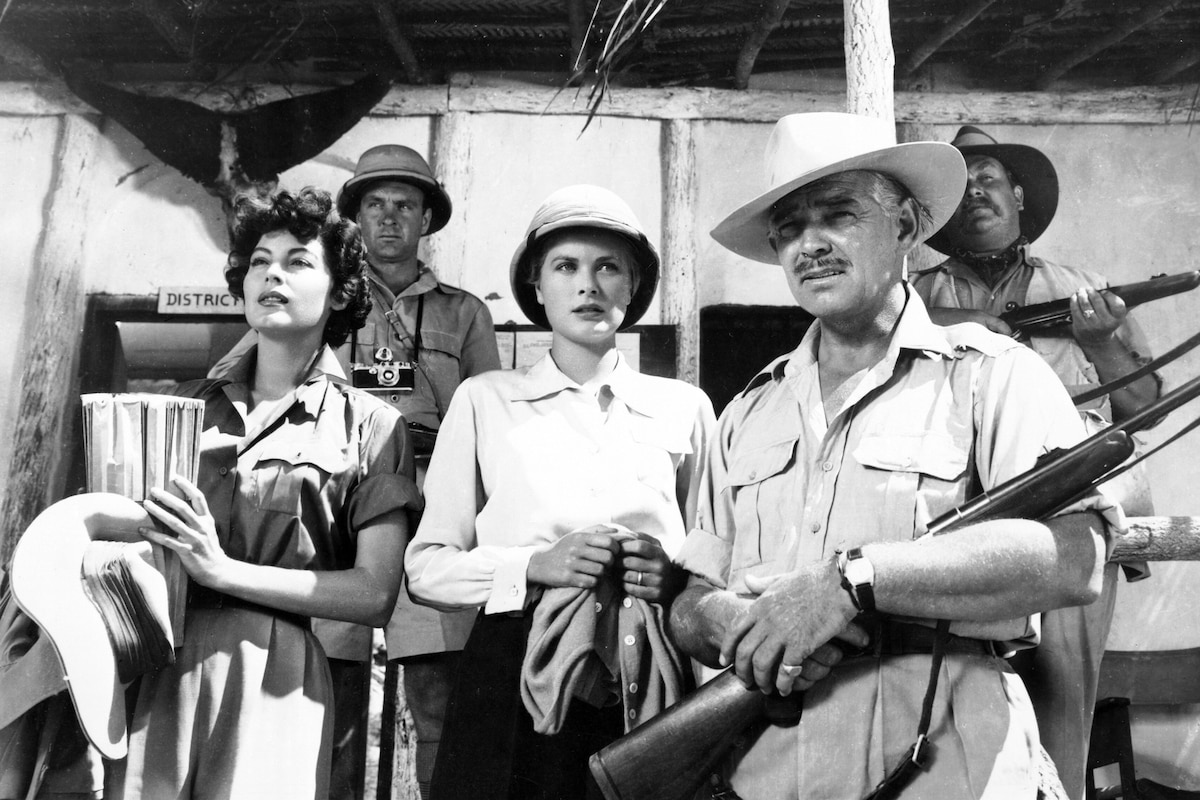
The studio's first choice to co-star as showgirl Eloise "Honey Bear" Kelly was Lana Turner, a frequent Gable co-star. When Turner became ill, some say from a beating at the hands of lover Fernando Lamas, Dore Schary had to replace her with Ava Gardner.
Ford had to fight the MGM hierarchy to cast Grace Kelly. Executives there had been unimpressed with her work in High Noon (1952) and a black and white screen test she had done for 20th Century-Fox. They proposed contract stars Deborah Kerr and Greer Garson instead. Ford insisted that Kelly be tested in Technicolor and predicted that "she'll knock us on our ass" (quoted in Tag Gallagher, John Ford: The Man and His Films). After he saw the test, studio head Dore Schary signed her to a long-term contract.
by Frank Miller
The Big Idea (9/3) - MOGAMBO
by Frank Miller | February 23, 2005
SIGN UP FOR OUR NEWSLETTERS

CONNECT WITH TCM