SYNOPSIS
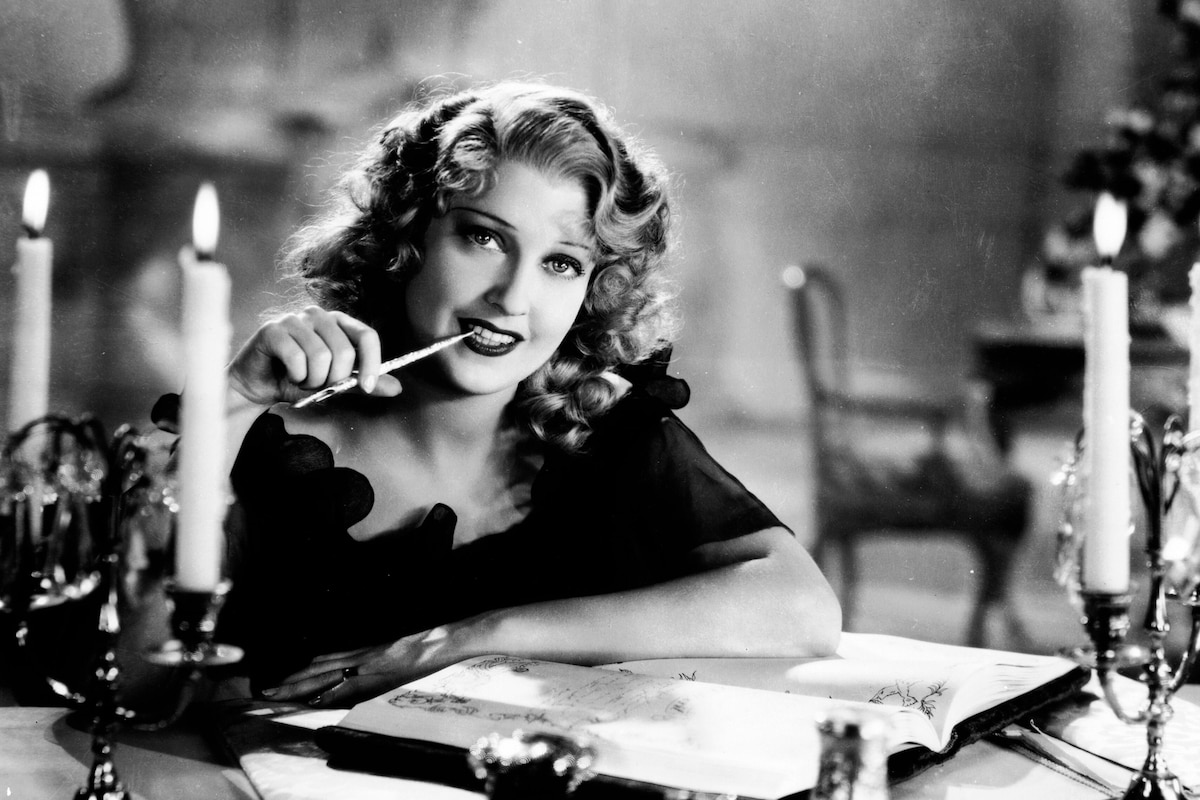
The tiny European country of Marshovia is in a crisis when the richest woman in the land (Jeanette MacDonald), a widow owning 52 percent of their wealth, decides to take her riches to Paris in search of a new husband. The only man who can win the widow and keep the wealth in Marshovia is Count Danilo (Maurice Chevalier), a notorious Casanova whom the king has just discovered in his beautiful young wife's bedchamber. But as the music and the champagne flow, the widow discovers Danilo's plot in the midst of a blossoming love affair with him.
Director: Ernst Lubitsch
Producer: Irving G. Thalberg
Screenplay: Samson Raphaelson, Ernest Vajda
Based on the operetta Die Lustigue Witwe by Franz Lehar, Victor Leon and Leo Stein
Cinematography: Oliver T. Marsh
Editing: Frances March
Art Direction: Cedric Gibbons, Fredric Hope
Music: Franz Lehar, Herbert Stothart
Cast: Maurice Chevalier (Count Danilo), Jeanette MacDonald (Sonia), Edward Everett Horton (Ambassador Popoff), Una Merkel (Queen Dolores), George Barbier (King Achmet), Minna Gombell (Marcelle), Sterling Holloway (Mischka), Henry Armetta (Turk), Donald Meek (Valet), Akim Tamiroff (Maxim's Manager), Herman Bing (Zizipoff), Katherine Burke [Virginia Field] (Prisoner), Leonid Kinskey (Shepherd), Billy Gilbert (Fat Lackey).
C-99m.
Why THE MERRY WIDOW is Essential
The third film version of Franz Lehar's 1907 operetta, The Merry Widow (1934) was the first talking version, and thus the first to take full advantage of Lehar's glorious music. Cedric Gibbons and Fredric Hope won the film's only Oscar® for their sumptuous set design. It was the last great example of the "continental" musical that had made Maurice Chevalier a star. Its combination of European operetta with a witty, sophisticated script hinting at more sexuality than it ever shows was typical of such musicals as The Love Parade (1929) and Love Me Tonight. (1932). Many critics have hailed it as the best of its kind.
Wittily directed by Ernst Lubitsch, The Merry Widow is a rich Viennese pastry of a movie, perfectly cast with a sparkling Jeanette MacDonald as the widow and a roguish Maurice Chevalier as the playboy prince. It was MacDonald and Chevalier's fourth and final film together, and their only one at MGM. Yet as perfect as their romantic pairing seemed, they actually disliked each other intensely. He thought she was a prude, and she called him "the biggest bottom-pincher I have ever come across." They had made three films together at Paramount, with MacDonald taking second billing to Chevalier, who was a much bigger star. Then she went to MGM, and her star was on the rise. MGM Producer Irving Thalberg, trying to entice Chevalier away from Paramount, offered him The Merry Widow. Chevalier was interested, but only if Thalberg would promise that he would not have to co-star with MacDonald. Thalberg agreed, signed Chevalier...then reneged on his promise. To add insult to injury, he gave MacDonald equal billing to Chevalier. Chevalier was furious, and his fury extended to Ernst Lubitsch as well.
Somehow, none of these animosities showed onscreen. The Lubitsch Touch, the delicacy with which director Ernst Lubitsch deflected sentimentality and hinted at sexuality, was in full flower in The Merry Widow. He keeps the film light and lively by filling it with witty and comical supporting characters whose lines and reaction shots provide a sophisticated context for the action. They also offer reactions that suggest what's really going on behind the famous closed bedroom doors in his films.
Because of his ability to alter the meaning of a scene with a single reaction shot or by focusing on one detail, Lubitsch is one of the key directors in the development of the auteur school of film criticism, the theory that the director is the true author of the film who communicates his personality through the way in which he films scenes.
Critics loved The Merry Widow, and predicted a big hit. But the film had cost $1,600,000, and it ended up losing money. By 1934, it must have seemed old-fashioned to audiences dazzled by the art-deco sleekness of RKO's Astaire-Rogers musicals, and Warner Bros.' Busby Berkeley films. Regardless, Jeanette MacDonald's performance convinced MGM that she was more than just a classically trained singing actress. They saw her star potential and started grooming her, which would lead to her pairing with Nelson Eddy for her next film, Naughty Marietta (1935). As for The Merry Widow, it shows remarkable durability. Today, its charm, wit, and style seem not quaint, but ageless.
The Essentials: The Merry Widow (1934)
by Frank Miller & Margarita Landazuri | February 18, 2005
SIGN UP FOR OUR NEWSLETTERS

CONNECT WITH TCM