The Big Idea Behind INVASION OF THE BODY SNATCHERS
Jack Finney was a young writer whose first novel had been turned into the film 5 Against the House (1955). His serialized story The Body Snatchers was released as a paperback in 1955 and became a hit among fans of sci-fi and fantasy literature. Maverick independent producer Walter Wanger first discovered the story in serialization in Colliers Magazine and gave a copy to director Don Siegel, with whom he had recently completed a taut prison drama, Riot in Cell Block 11 (1954). Wanger had already secured the interest of minor studio Allied Artists (formerly known as the Poverty Row studio Monogram).
Initially, Jack Finney had an altogether different idea when he began writing Invasion of the Body Snatchers. He recalled that "my first thought was that a dog would be injured or killed by a car, and it would be discovered that a part of the animal's skeleton was of stainless steel; bone and steel intermingled, that is, a thread of steel running into bone and steel so that it was clear the two had grown together. But this idea led to nothing in my mind." (From the book They're Here...Invasion of the Body Snatchers: A Tribute). Instead, Finney came up with another concept "in which people complained that someone close to them was in actuality an imposter," an idea that took flight and became a metaphorically rich narrative where humans were being replaced by emotionless pod imitations. Finney always maintained that "it was just a story meant to entertain, and with no more meaning than that...The idea of writing a whole book in order to say that it's not really a good thing for us all to be alike, and that individuality is a good thing, makes me laugh."
Siegel liked the story and saw it as a chance to make an important picture. "I think the world is populated by pods and I wanted to show them," he said years later. "I think so many people have no feeling about cultural things, no feeling of pain, of sorrow."
Siegel suggested Daniel Mainwaring for the adaptation. Mainwaring (under the name "Geoffrey Homes") had worked with Siegel on The Big Steal (1949) and An Annapolis Story (1955) and they already had an established work routine; first, they would talk out a sequence, then Mainwaring would write it and show it to Siegel, who would then take it to Wanger. The writer would then make another pass based on Wanger's suggestions.
Siegel and Mainwaring were determined not to make just another special-effects picture. At the same time, even though they were in synch with the idea that the world was turning toward a dehumanized pod existence, they wanted to entertain rather than preach.
Although Siegel resented the studio's insistence on giving the movie a more hopeful ending, the original story by Finney actually had a more upbeat ending than the script Mainwaring and Siegel fashioned.
Siegel also hated the title the studio forced on him, particularly the addition of the rather cheesy "Invasion of" to Finney's original title. The studio, however, did not want any confusion with the earlier grave-robber film The Body Snatcher (1945) and the Robert Louis Stevenson story on which it was based. During production, Kevin McCarthy came up with a title inspired by a line from Hamlet: "Sleep No More." Siegel loved it but was not allowed to use it.
Dana Wynter wasn't crazy about the title, either. She found it embarrassing and told Wanger, "How can I admit to my parents that I'm doing a picture called Invasion of the Body Snatchers, for God's sake? They'll think I'm demented!"
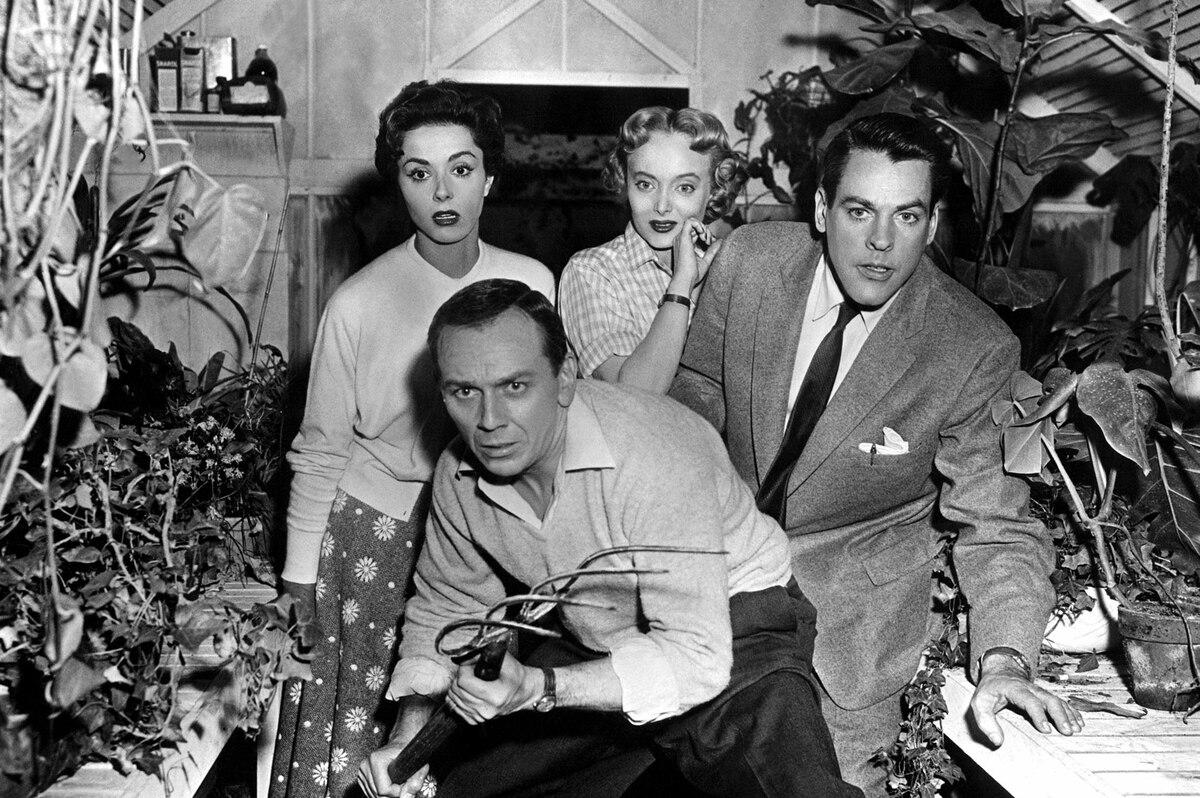
Vera Miles had originally been penciled in by Allied Artists to play the role of Becky, but Wanger insisted on "that new girl, that English one." Wanger had spotted Dana Wynter a short time before in the offices of the William Morris Agency in New York and thought of her immediately for this picture. By the time she was cast, however, Wynter had just been signed by Fox and that studio agreed to shift the date of her contract to allow her to do this project. Wanger called her "a brunette Grace Kelly with the zest of Ava Gardner. My best discovery since Hedy Lamarr."
by Rob Nixon
The Big Idea (7/16 & 12/31) - INVASION OF THE BODY SNATCHERS (1956)
by Rob Nixon | February 18, 2005
SIGN UP FOR OUR NEWSLETTERS

CONNECT WITH TCM