SYNOPSIS
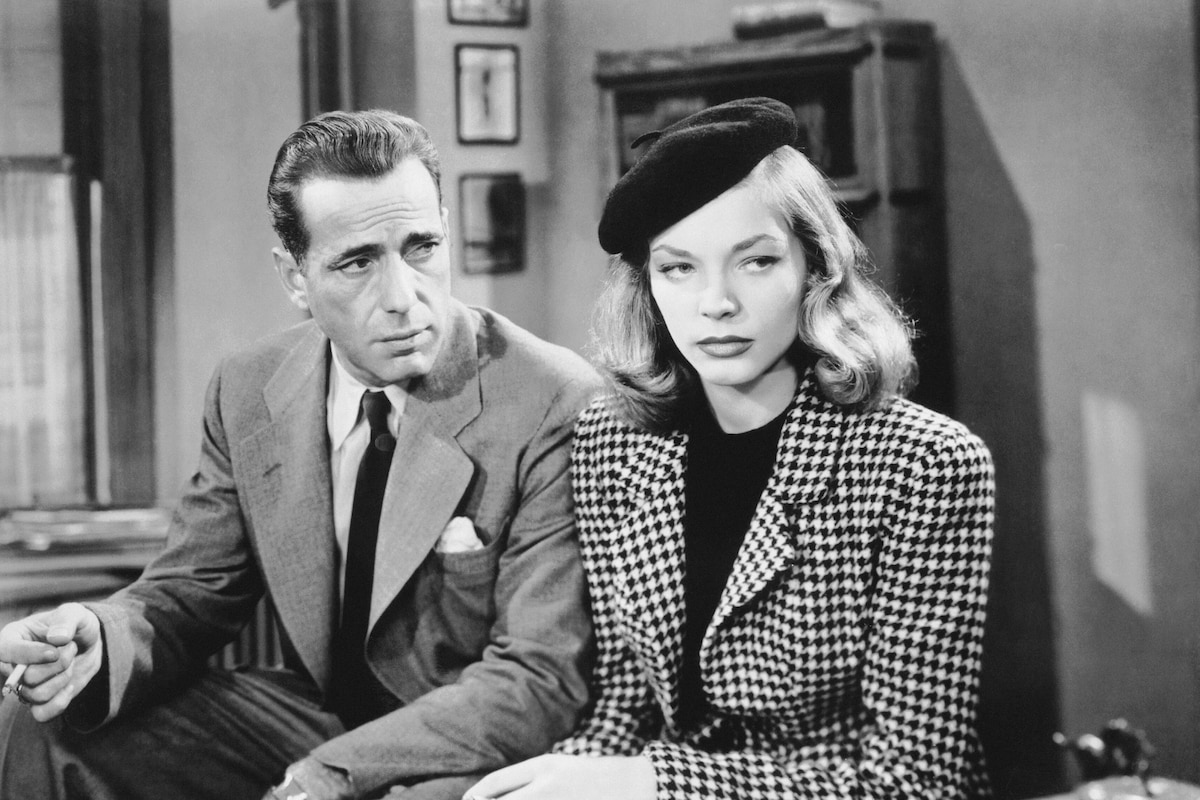
Private Detective Philip Marlowe accepts what appears to be a simple case of tracking down the man who's blackmailing spoiled rich girl Carmen Sternwood. Instead, his investigation leads him down a trail of crime, seduction and murder that exposes the corrupt underbelly of Los Angeles. It also leads to an explosive romance with Vivian Sternwood, who'll do anything to protect her sister, even if it means having to commit murder.
Producer-Director: Howard Hawks
Screenplay: William Faulkner, Jules Furthman, Leigh Brackett
Based on the novel by Raymond Chandler
Cinematography: Sid Hickox
Editing: Christian Nyby
Art Direction: Carl Jules Weyl
Music: Max Steiner
Cast: Humphrey Bogart (Philip Marlowe), Lauren Bacall (Vivian), John Ridgely (Eddie Mars), Louis Jean Heydt (Joe Brody), Elisha Cook, Jr. (Jones), Regis Toomey (Bernie Ohls), Sonia Darrin (Agnes), Bob Steele (Camino), Martha Vickers (Carmen), Dorothy Malone (Girl in Bookshop), Charles Waldron (General Sternwood), Theodore von Eltz (Geiger).
BW -118m.
Why THE BIG SLEEP is Essential
Even before To Have and Have Not was released in 1944, it became clear that Warner Bros. had a huge hit on its hands, a major new star in Lauren Bacall, and a hot romantic team in Bacall and Humphrey Bogart. Naturally, the studio wanted to recapture the magic, so they immediately put The Big Sleep (1946) into production, with Howard Hawks once again directing.
With its interlocking murder investigations that reveal a world of decadence and corruption and its world-weary private eye hero, The Big Sleep is considered one of the screen's greatest films noirs. Based on a private-eye novel by Raymond Chandler, the film has a convoluted plot. Bogart is detective Philip Marlowe, hired by a dying rich man to get rid of a blackmailer. The rich man's two beautiful daughters, Bacall and Martha Vickers, are constantly getting into trouble...and getting Marlowe into trouble as well. Even such distinguished writers as William Faulkner, Leigh Brackett, and Jules Furthman couldn't make sense of the story. Chandler claimed that Hawks even sent him a telegram, wanting to know who had committed one of the murders. Chandler had no idea. But it didn't really matter. It's not the plot that makes The Big Sleep crackle, it's the witty dialogue, and the potent chemistry between Bacall and Bogart.
The Big Sleep was finished in early 1945, near the end of World War II. The studio wanted to get its war-themed films in theaters as soon as possible, so The Big Sleep sat on the shelf while those films were released. Meanwhile, Bacall's third film, Confidential Agent (1945), had been released, and she'd gotten terrible reviews. Even the fact that Bogart had finally divorced his wife and married Bacall couldn't take the sting out of those bad notices.
Bacall's agent saw The Big Sleep, and urged studio chief Jack Warner to make changes that would exploit the Bogart-Bacall chemistry, and add more of the "insolence" that had made her a star. Warner and Hawks agreed, and brought in Julius Epstein to write new scenes. Most notable was a sexy double-entendre conversation about horse racing. Among the scenes that were dropped was one that clarified plot points. Released in 1946, the new version was as big a hit as To Have and Have Not. The original 1945 version of The Big Sleep was only available in rare 16mm prints until 1996, when it was restored by Bob Gift of the UCLA Film & Television Archives. The new print premiered in Los Angeles in July 1996 and has aired on Turner Classic Movies (TCM).
Most critics consider Humphrey Bogart's interpretation of private eye Philip Marlowe the best in film history, ahead of such contenders as Dick Powell in Murder, My Sweet (1944), George Montgomery in The Brasher Doubloon (1947) and Elliott Gould in Robert Altman's revisionist The Long Goodbye (1973).
The Big Sleep marked the start of a long association between Hawks and screenwriter Leigh Brackett. She would also work on his Rio Bravo (1959), Hatari! (1962), Man's Favorite Sport? (1964, uncredited), El Dorado (1966) and Rio Lobo (1970).
by Margarita Landazuri & Frank Miller
The Essentials (6/11) - THE BIG SLEEP
by Margarita Landazuri & Frank Miller | February 17, 2005
SIGN UP FOR OUR NEWSLETTERS

CONNECT WITH TCM