SYNOPSIS
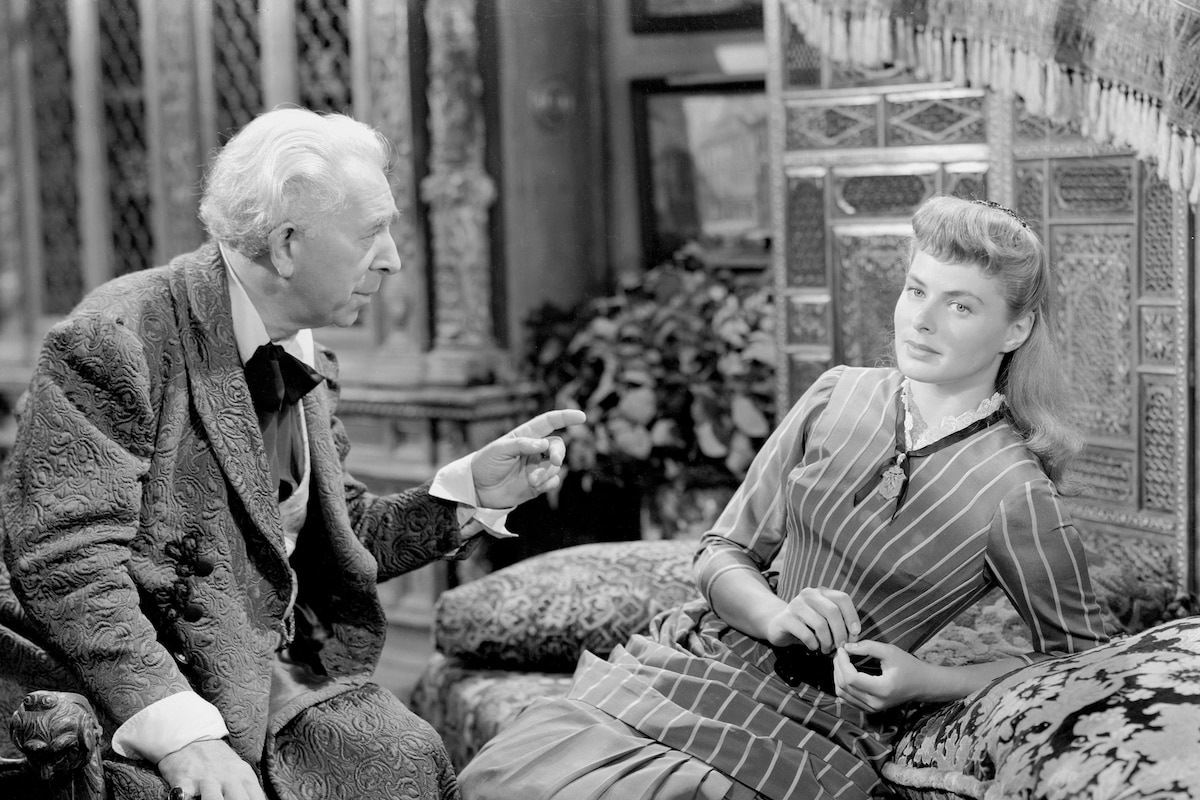
Paula Alquist, a wealthy socialite, falls in love with the
dashing Gregory Anton. The two marry, and after their return from
a romantic Italian honeymoon, Anton insists they live in Paula's
childhood home, the place where her aunt, a famous opera star,
was murdered. Unknown to Paula, the murderer is still on the
loose. In fact, it's her husband and he's currently devising a
diabolical trap for her. Anton slowly begins to drive Paula
insane in order to commit her to an asylum, leaving him in
possession of her family home where her aunt's cache of priceless
jewels are hidden. He moves objects in the house, convincing
Paula she's misplaced them, and then plants his own possessions
in hiding places in order to accuse her of stealing them. Late at
night, while pretending to go out for a walk, Anton actually
sneaks back into the sealed-off upper floor, sending his wife
into hysterics by dimming the gas lights in the home and
terrorizing her with ghostly footsteps. Yet, despite Paula's
isolated existence, she manages to find an unexpected ally in
Brian Cameron, a suspicious Scotland Yard detective.
Director: George Cukor
Producer: Arthur Hornblow, Jr.
Screenwriter: John L. Balderston, Walter Reisch, John Van
Druten
Cinematographer: Joseph Ruttenberg
Composer: Bronislau Kaper
Editor: Arthur Williams, Ralph E. Winters
Art Director: William Ferrari, Cedric Gibbons
Costume Designer: Marion Herwood Keyes, Irene
Cast: Charles Boyer (Gregory Anton), Ingrid Bergman (Paula
Alquist), Joseph Cotten (Brian Cameron), Dame May Whitty (Miss
Thwaites), Angela Lansbury (Nancy Oliver).
BW-114m. Closed captioning. Descriptive video.
Why GASLIGHT is Essential
Romantic young heroines who are threatened and terrorized (or
imagine themselves to be) by the man they love were a staple of
films in the forties. Joan Fontaine was put through that wringer
twice by Alfred Hitchcock, in Rebecca (1940) and
Suspicion (1942). The treatment was also doled out to
Katharine Hepburn in Undercurrent (1946), Elizabeth Taylor
in Conspirator (1949), and to an overwrought, bed-ridden
Barbara Stanwyck in Sorry, Wrong Number (1948). While the
above films have their merits, Gaslight is easily the most
effective entry in the young-wife-in-distress category.
Hitchcock's Suspicion, in fact, is a bit of a cheat since
the husband turns out to be completely innocent of his suspected
crimes.
Based on a hit London stage melodrama, Gaslight was first
put on film in 1939 with Anton Walbrook and Diana Wynyard in the
leads. Some critics today prefer this nearly forgotten British
version, partially because it played so effectively on the subtle
cruelties of the English class system. But the 1944 MGM release
remains popular and acclaimed for its mounting sense of terror,
aided in no small part by the strong, moody direction of George
Cukor, known for coaxing superlative performances from his
actors, particularly the female cast members.
Ingrid Bergman, who had long coveted the role of the tormented
wife being driven insane by her husband in Gaslight, went
after the role at MGM after resident star Hedy Lamarr turned it
down. Bergman almost missed her chance when Selznick initially
refused to loan her to MGM unless she was given first billing
over costar Charles Boyer. When Boyer refused to budge on the
matter, Bergman went to Selznick in tears begging him to
reconsider - which he finally did.
Gaslight won an Oscar® for Best Interior Decoration
and was nominated in the categories of Best Picture, Actor
(Boyer), Supporting Actress (Angela Lansbury), Screenplay and
Black and White Cinematography. The film marked the movie and
acting debut of Lansbury, who had been working in a Los Angeles
department store before being cast as Nancy, the maid. Director
George Cukor was instantly impressed by the fledgling actress's
talent and professionalism, and prevailed when the studio
resisted hiring her because she wasn't "sexy enough."
By Rob Nixon & Frank Miller
The Essentials (5/21) - GASLIGHT
by Rob Nixon & Frank Miller | February 17, 2005
SIGN UP FOR OUR NEWSLETTERS

CONNECT WITH TCM