Pop Culture 101 - NORTH BY NORTHWEST
Hitchcock received a great deal of attention for filming in and around famous places, like the United Nations and Mt. Rushmore. But anyone familiar with Hitchcock's work at the time would have pointed out that he was simply following tradition. For his first sound feature, Blackmail (1929), Hitchcock had his principal characters climbing all over the British Museum, while later on in The Man Who Knew Too Much (1956), Albert Hall in Great Britain was the setting for the hair-raising denouement. In Saboteur (1942), the hero ends up hanging off the Statue of Liberty.
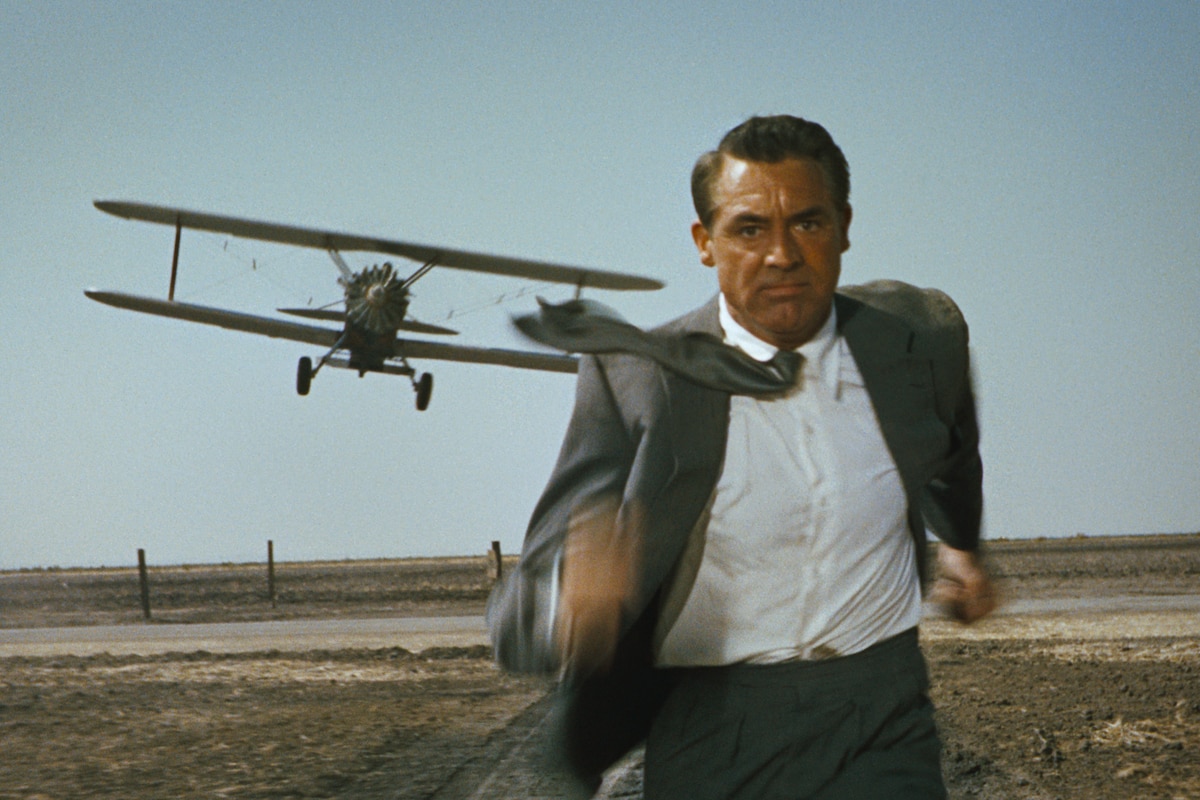
North By Northwest has been hugely influential in popular culture since its release in 1959. The international espionage coupled with exciting set pieces, widescreen color photography, and on-location shooting helped inspire the look of the James Bond series, starting with Dr. No in 1962. More recently, overt hints of the famed crop duster sequence was seen in The X-Files: Fight the Future (1998), when FBI agents Mulder and Scully are chased through a cornfield by two menacing helicopters. Robert Towne's screenplay for director John Woo's Mission: Impossible II (2000) borrowed heavily from both North By Northwest and Hitchcock's Notorious (1946).
Over dinner one night, Hitchcock related to Ernest Lehman his giddy enthusiasm for what North By Northwest is really about. He said, "Ernie, do you realize what we're doing in this picture? The audience is like a giant organ that you and I are playing. At one moment we play this note on them and get this reaction, and then we play that chord and they react that way. And someday we won't even have to make a movie---there'll be electrodes implanted in their brains, and we'll just press different buttons and they'll go 'ooooh' and 'aaaah'' and we'll frighten them, and make them laugh. Won't that be wonderful?"
by Scott McGee
Pop Culture (4/2 & 9/17) - NORTH BY NORTHWEST
by Scott McGee | February 16, 2005
SIGN UP FOR OUR NEWSLETTERS

CONNECT WITH TCM