Pop Culture 101 - THE LADY FROM SHANGHAI
In opting for a semi-documentary structure with narration, Welles was emulating the type of films then being made by Louis de Rochemont, producer of The March of Time newsreels, who used the style in the fiction film The House on 92nd Street (1945). According to Charles Higham in
For the Central Park sequence, Welles planned the longest dolly shot ever filmed. A close runner-up was George and Lucy's carriage ride in The Magnificent Ambersons (1942). But his most famous dolly shot was the lengthy opening to Touch of Evil (1958), which was referenced by Robert Altman at the beginning of The Player (1992).
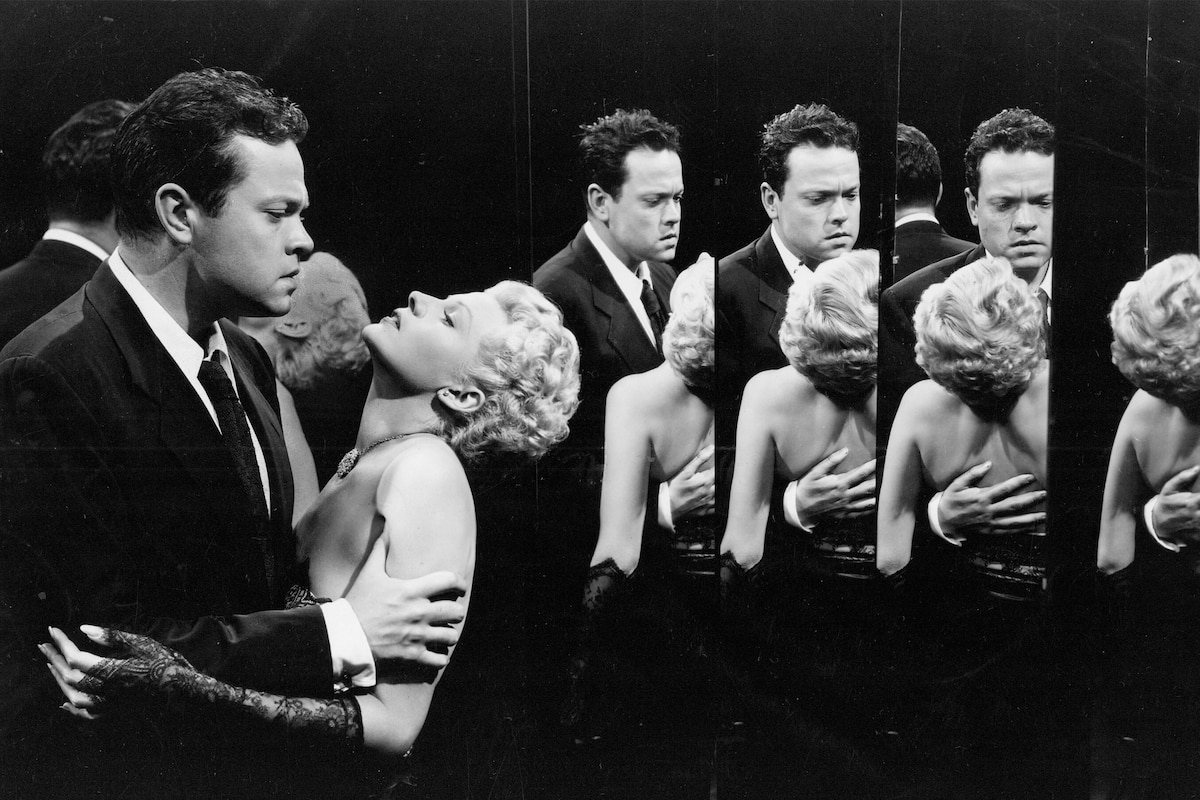
Woody Allen paid homage to the famous Hall of Mirrors scene in his film Manhattan Murder Mystery (1993).
One production account revealed that the Hall of Mirrors sequence was not originally devised for The Lady from Shanghai but was to have been used in an aborted project, "Don't Catch Me," in which a newlywed couple fleeing the Nazis leads their pursuers into an amusement park.
The martial arts classic Enter the Dragon (1973) also concludes with a climactic fight in a hall of mirrors.
The character of Elsa Bannister figures in the novel Suspects by film critic-historian David Thompson, who imagines links between a range of movie characters, many of them from film noir, outside the stories they're associated with. In Elsa's section, Thompson proposes her as the illegitimate daughter of Noah Cross, the wicked financier played by John Huston in Chinatown (1974) and Eurasian Shanghai prostitute Poppy, played by Gene Tierney in Josef von Sternberg's The Shanghai Gesture (1941). Von Sternberg also made the film Shanghai Express (1932) in which Marlene Dietrich, as a legendary prostitute, utters the line, "It took more than one man to change my name to Shanghai Lily." Thomson references that line in his introduction to the Elsa character in his book.
The song from this movie, "Please Don't Kiss Me," was also heard in the crime thriller Between Midnight and Dawn (1950).
The award-winning Brazilian film, A Dama do Cine Shanghai/The Lady from the Shanghai Cinema (1987), is a parody/homage to the great Hollywood films noirs of the 1940s, partially inspired by The Lady from Shanghai. The lead character, an ex-boxer, meets a beautiful and mysterious woman in a movie theater who bears a resemblance to Rita Hayworth (as she looked in Gilda (1946), not The Lady from Shanghai). But like Elsa, she gets him involved in a web of intrigue that leads to murder.
Some writers noted that this film shared with Welles's later film noir Touch of Evil a plot so complex that several viewings are required to sort it out.
Although their marriage was on the rocks during the filming of The Lady from Shanghai, Welles and his colleagues were also reportedly at work on versions of the Carmen and Salome stories for Rita Hayworth. Those stories were the basis for future Hayworth pictures made by other directors in, respectively, 1948 (The Loves of Carmen for Charles Vidor) and 1953 (Salome for William Dieterle).
Elsa's line in the film, "Those who follow their nature keep their original nature in the end" was actually taken from a popular bestseller, The Wisdom of China by Lin Yutang.
Welles had George, the slimy lawyer character, call everybody "fella," in imitation of Nelson Rockefeller, a man Welles despised.
by Rob Nixon
Pop Culture (3/12) - THE LADY FROM SHANGHAI
by Rob Nixon | February 16, 2005
SIGN UP FOR OUR NEWSLETTERS

CONNECT WITH TCM