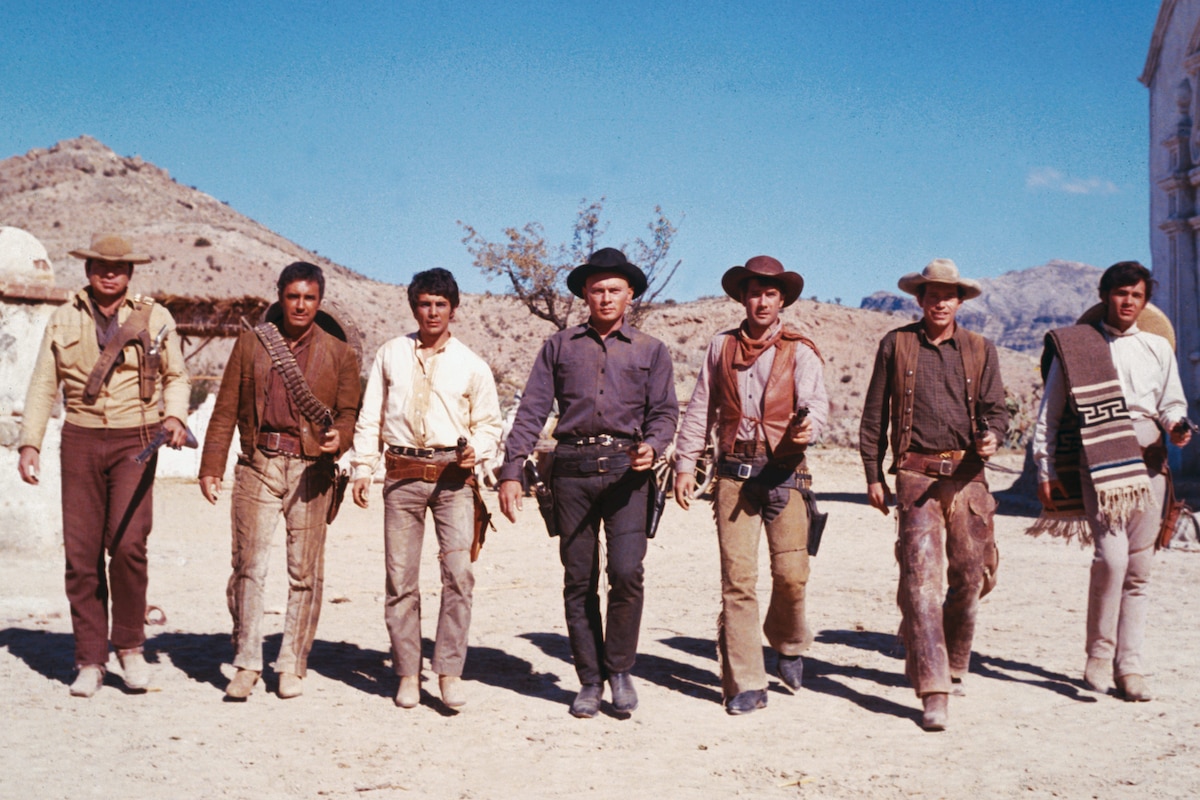
To be absolutely technical, it's the return of the one, since Yul Brynner was the only member of the original, The Magnificent Seven (1960), to come back for the first sequel. And even he did not return for the remaining two, Guns of the Magnificent Seven (1969) and The Magnificent Seven Ride (1972). Luckily Return of the Magnificent Seven (1966), which is also known as Return of the Seven, could also boast the return of another vital element from the original composer Elmer Bernstein, whose score for the classic western is built around one of the most famous and recognizable musical themes in movie history. Bernstein's work covered about every genre and style of Hollywood film, from romances to stark dramas to comedies, including his Academy Award-winning score for Thoroughly Modern Millie (1967). He also had a particular affinity for action movies and Westerns, scoring a number of late John Wayne features, as well as The Great Escape (1963), From Noon Till Three (1976) and John Ford's final film, Seven Women (1966).
As in the first film of this series, Brynner leads a group of mercenaries hired to save a poor Mexican village. In this edition, an army of bandits has rounded up all the males in the village for use as slave labor. And once again, Brynner and the boys beat seemingly insurmountable odds to rout the 100-strong enemy and restore peace and happiness to the village. The original film was based on Akira Kurosawa's The Seven Samurai (1954), not surprising, since the Japanese director had acknowledged his debt to the Hollywood western. The Magnificent Seven, however, left out the social background Kurosawa gave his characters in favor of fore fronting the action sequences. In this sequel, screenwriter Larry Cohen works to restore that human dimension by weaving into the story the characters' own accounts of their lives.
Cohen's work here is rather different than that for which he would become better known in later years. Coming off a stint as writer for the TV series The Fugitive, this was his first feature film script. He followed it up with several action stories for both film and TV before he hit cult movie success as writer and director of the horror flick It's Alive! (1974). That film, and the sequels that followed, established Cohen as auteur of over-the-top, often blackly humorous fright fests, including Q, the Winged Serpent (1982), The Stuff (1985) and Bette Davis' final film, Wicked Stepmother (1989).
Director Burt Kennedy has much more solid Western credentials. He broke into film work in the 1950s as a screenwriter for Budd Boetticher and other directors in this genre and made his directing debut in the early 60s. Among his best-known Westerns are The Rounders (1965) and The War Wagon (1967). In later years, he veered away a bit from tough action toward more relaxed, humorous near-parodies such as Support Your Local Sheriff (1969) and the Frank Sinatra gunslinger spoof Dirty Dingus McGee (1970).
Producer: Robert Goodstein (associate producer), Ted Richmond
Director: Burt Kennedy
Screenplay: Larry Cohen
Cinematography: Paul Vogel
Film Editing: Bert Bates
Original Music: Elmer Bernstein
Cast: Yul Brynner (Chris Adams), Robert Fuller (Vin), Julián Mateos (Chico), Warren Oates (Colbee), Claude Akins (Frank), Fernando Rey (Priest), Jordan Christopher (Manuel).
C-95m.
by Rob Nixon
