Even before Metro Pictures merged with Louis B. Mayer Productions and
Goldwyn Pictures to become MGM in 1924, it was building a reputation for
classy, lavish productions. The MGM tradition was firmly in place by the
time the studio was born, thanks to films like The Prisoner of Zenda (1922), the third of
seven adaptations of Anthony Hope's popular adventure novel.
Hope's book had created a whole sub-genre when it became a best seller in
1894 -- the Ruritanian Romance. Named after the novel's setting the Ruritanian Romance combines the glamour of the European aristocracy with swashbuckling adventure and tales of doomed love between royalty and commoners. In this perennial favorite, the look-alike cousin of
a kidnapped king takes his place to thwart the plans of the evil Black
Michael who wants to steal the throne and the king's beautiful fiancée.
Metro entrusted the production to Rex Ingram, an Irish-born
actor-turned-director who had scored a huge hit the year before with The
Four Horsemen of the Apocalypse (1921). Ingram was as noted for his ability
to keep large-scale productions moving as for his genius at creating stars.
For Horsemen, he had discovered Rudolph Valentino. Prior to that,
he had turned Alice Taaffe, a perky redhead usually cast in supporting
roles, into Alice Terry, the icy blonde star of his greatest pictures (and
his wife). Although Terry and Lewis Stone (as the identical cousins) were
slated for the film's starring roles, Ingram realized that much of the
picture's success would depend on the proper casting of Rupert of Hentzau,
the henchman who does all of Black Michael's dirty work. He set out to
find a tall, Germanic blond in his mid-thirties, and wound up with a short
Mexican actor of only 23. But once he saw the devilish humor in Ramon
Samaniego's eyes, he knew he'd found his man, though the actor would soon change his
screen name to Ramon Novarro. It's fair to say that Novarro pretty much stole the film with his
tongue-in-cheek playing, making him one of the first in a long line of charismatic movie villains who would make evil dangerously seductive. (Other successors who come to mind are Basil Rathbone, James Mason and Alan Rickman). Although originally billed fourth, Novarro would rise to top billing for later reissues of the movie.
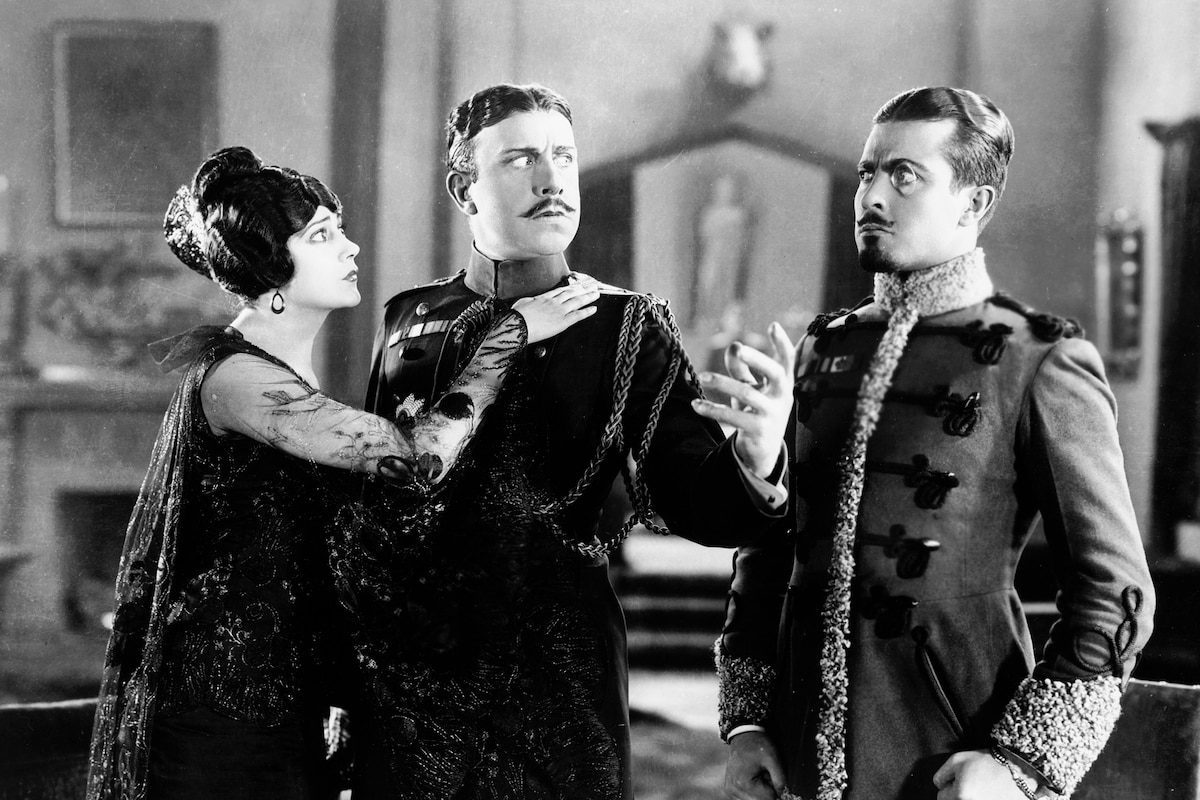
Novarro wasn't the only star created by the success of The Prisoner of Zenda. Almost
as adept at scene stealing was Barbara La Marr, cast as Black Michael's
devoted mistress. Her dark looks and large, brooding eyes provided a
perfect contrast to Terry and made her more than a match for the exotic
Novarro, with whom she would share a wicked seduction scene. La Marr had
actually been discovered by Douglas Fairbanks, Sr., who had cast her as
Milady de Winter in his 1921 version of The Three Musketeers.
The Prisoner of Zenda would make her a star, nicknamed "The Girl Too
Beautiful." She was too beautiful to survive, as it turned out, dying a
few years later from a combination of tuberculosis and drug abuse. Her
name would live on when Louis B. Mayer transformed an Austrian actress named Hedy
Kiesler into Hedy Lamarr.
Ingram filled The Prisoner of Zenda with memorable moments,
thrilling battles and stunning visuals, courtesy of his favorite cameraman,
John F. Seitz. He also paid tribute to one of his favorite fellow
directors, Erich von Stroheim, by costuming and making up one of Black
Michael's unbilled henchmen to look like the director, whose moniker was "the man you love to hate."
The Prisoner of Zenda was a big hit for Metro Pictures, and the
studio filmed Hope's sequel Rupert of Hentzau, the following year.
With none of the original personnel involved, however, the sequel was a
disappointment. But the original continues as a popular favorite, with
Rupert a star-making role for Douglas Fairbanks, Jr. in the 1937 version
(Ronald Colman and Madeleine Carroll played the leads) and James Mason in the 1952
remake (which starred Stewart Granger and Deborah Kerr). The latter also featured
the 1922 film's leading man, Lewis Stone, in a supporting role.
Director: Rex Ingram
Cinematography: John F. Seitz
Screenplay: Mary O'Hara, based on the novel by Anthony Hope
Film Editing: Grant Whytock
Cast: Ramon Novarro (Rupert of Hentzau), Lewis Stone (Rudolf
Rassendyll/King Rudolf), Alice Terry (Princess Flavia), Robert Edeson
(Colonel Sapt), Stuart Holmes (Grand Duke "Black" Michael), Malcolm
McGregor (Capt. Fritz von Tarlenheim), Barbara La Marr (Antoinette de
Mauban).
BW-114m.
by Frank Miller
The Prisoner of Zenda (1922)
by Frank Miller | December 20, 2005
SIGN UP FOR OUR NEWSLETTERS

CONNECT WITH TCM