Rome, Open City (1945) is considered by many the first, and an essential, film in the post-WWII genre known as Italian neorealism. It brought together some of the most important talents in Italian film culture including future film director Federico Fellini, who contributed to the screenplay; director Roberto Rossellini; and Anna Magnani, an actress who rose to international prominence playing the
flawed but soulful Pina, who embarks on a new life with her
fiance beneath the looming specter of Nazi forces occupying Rome.
Shot in the actual apartments and streets of a recently liberated Rome,
Rome, Open City, like other neorealist films, was distinguished by an
almost documentarian quality, an immediacy and sense of truth that made the
film a box-office success in Italy, Europe and the United States.
Rossellini's innovative film style was so new and naturalistic that
some believed the events were filmed as they actually happened.
Rome, Open City centers on the efforts of the Nazi occupiers to capture a
partisan leader, Giorgio Manfredi (Marcello Pagliero), who is assisted by a
noble local priest, Don Pietro Pellegrini (Aldo Fabrizi). The efforts of the
Resistance are set against the ordinary, daily struggles of the Italian
people who storm a bakery to give bread to their starving children, or
struggle with the moral uncertainties of wartime. Pina is one of those
people, engaged to be married to the kind Francesco (Francesco
Grandjacquet), a friend of Resistance fighter Manfredi. Pina is already
pregnant with Francesco's child, and thus embodies some of the moral
ambiguities of wartime as characters struggle to live a decent life despite
enormous incentives to do otherwise. One of the characters who succumbs to
the temptations offered during wartime is Manfredi's mistress Marina (Maria
Michi), a beautiful but essentially shallow girl who ends up being led by
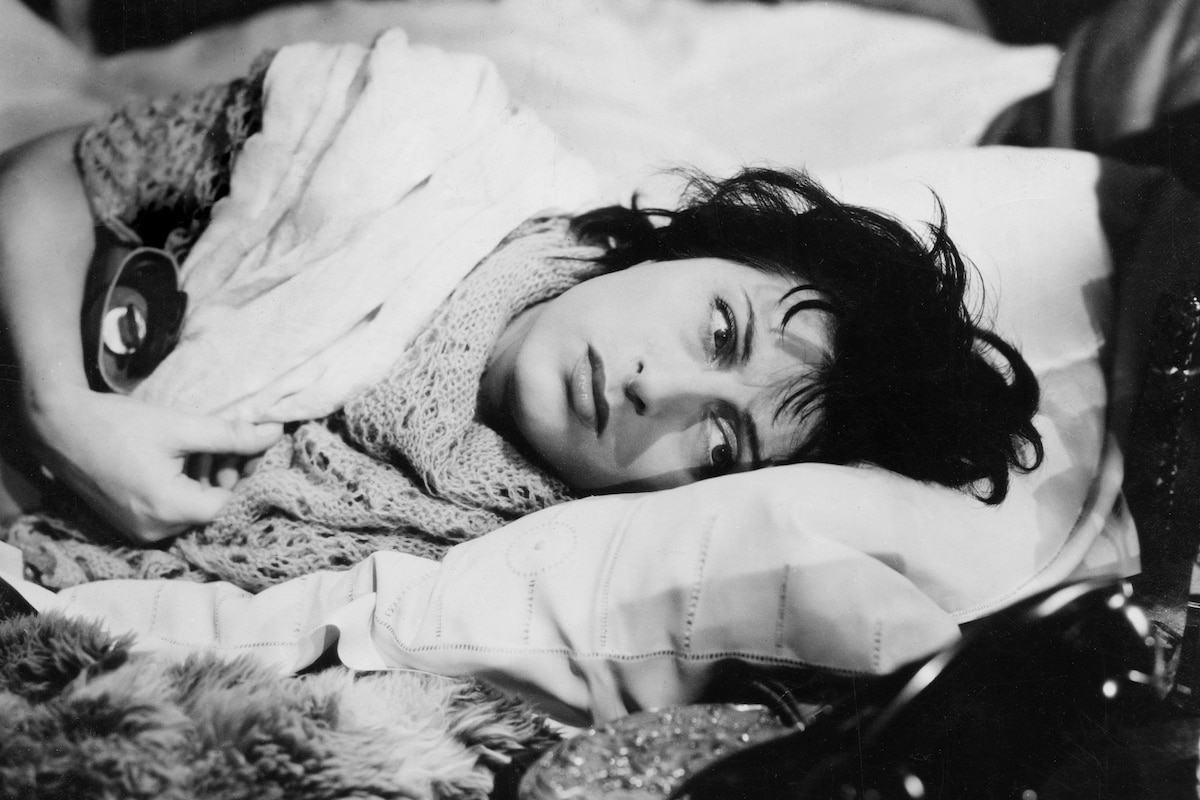
Nazi agent Ingrid (Giovanna Galletti) to betray Manfredi.
Though noted for its exceptionally strong performances, especially by
Magnani and Fabrizi, Rome, Open City has also been criticized for its
blend of tragedy and comedy as well as for its melodramatic elements which
some have considered out of character with the true essence of neorealism
as later practiced by Luchino Visconti and Vittorio De Sica. Rossellini's
use of emotionally manipulative dramatic effects was most obvious in his
opposition of noble, morally upright Italians against often cartoonish Nazi
villains, including the absurdly effete Major Bergmann (Harry Feist), who
directs the torture of Resistance leaders while casually smoking a
cigarette, and an outrageous, glamorous lesbian who uses drugs and fur
coats to compel Marina to betray Manfredi.
Though the film received positive notice in a 1946 Variety review,
the article did speculate, in an outlandish aside, about some of the
potentially objectionable material for American audiences, including a
premaritally pregnant Pina, references to cocaine, and the aforementioned
"lesbo German spy." Though nothing is explicitly shown, Rossellini also so
effectively evokes the horrors of Manfredi's torture by the Nazis, that the
scene becomes one of the most sickening, disturbing moments in film history.
Neorealist films like Rome, Open City were important not only as a means
of commemorating Italian struggle and sacrifice during the war -- they
served an important function in resuscitating an Italian film industry
suddenly threatened with the new dominion of Hollywood and other national
cinemas in the postwar era.
It was not only Rossellini's real locations and the grainy texture of his
film that imparted realism to the project. Many of the events depicted in
the film, from priest Don Pietro's execution by firing squad to
pregnant Pina being gunned down by a Nazi soldier, were based on actual events
various collaborators on the project witnessed or heard about during wartime. The terror of wartime was still so fresh on Italian minds, it invested their work on Open City with a raw, often painful
intensity, as in the scene where Pina is murdered in front of her fiance
and small son. As Magnani recalled, extras on the scene "actually turned
white telling each other how much they resented the Nazis! This made me
feel the anxiety I showed on the screen."
Producer/Director: Roberto Rossellini
Screenplay: Sergio Amidei, Federico Fellini and Roberto Rossellini (based on a story by Amidei and Alberto Consiglio)
Cinematography: Ubaldo Arata
Production Design: Rosario Megna
Music: Renzo Rossellini
Principal Cast: Anna Magnani (Pina), Aldo Fabrizi (Don Pietro Pellegrini), Marcello Pagliero (Giorgio Manfredi), Maria Michi (Marina), Harry Feist (Maj. Bergmann), Francesco Grandjacquet (Francesco), Giovanna Galletti (Ingrid).
BW-103m.
by Felicia Feaster
Rome, Open City - Open City
by Felicia Feaster | December 17, 2010
SIGN UP FOR OUR NEWSLETTERS

CONNECT WITH TCM