By 1928, Greta Garbo was one of the biggest stars in Hollywood. Her mentor, Swedish director Mauritz Stiller, had returned to Sweden, and Garbo was on her own, working with MGM's leading directors and stars. Her supposed offscreen "torrid affair" with John Gilbert, her co-star in Flesh and the Devil (1926) and Love (1927), was the hottest topic in the fan magazines. And critics and audiences alike were clamoring for more Garbo pictures. Nineteen twenty-eight was one of her busiest years, with the release of three films: The Divine Woman, A Woman of Affairs, and The Mysterious Lady.
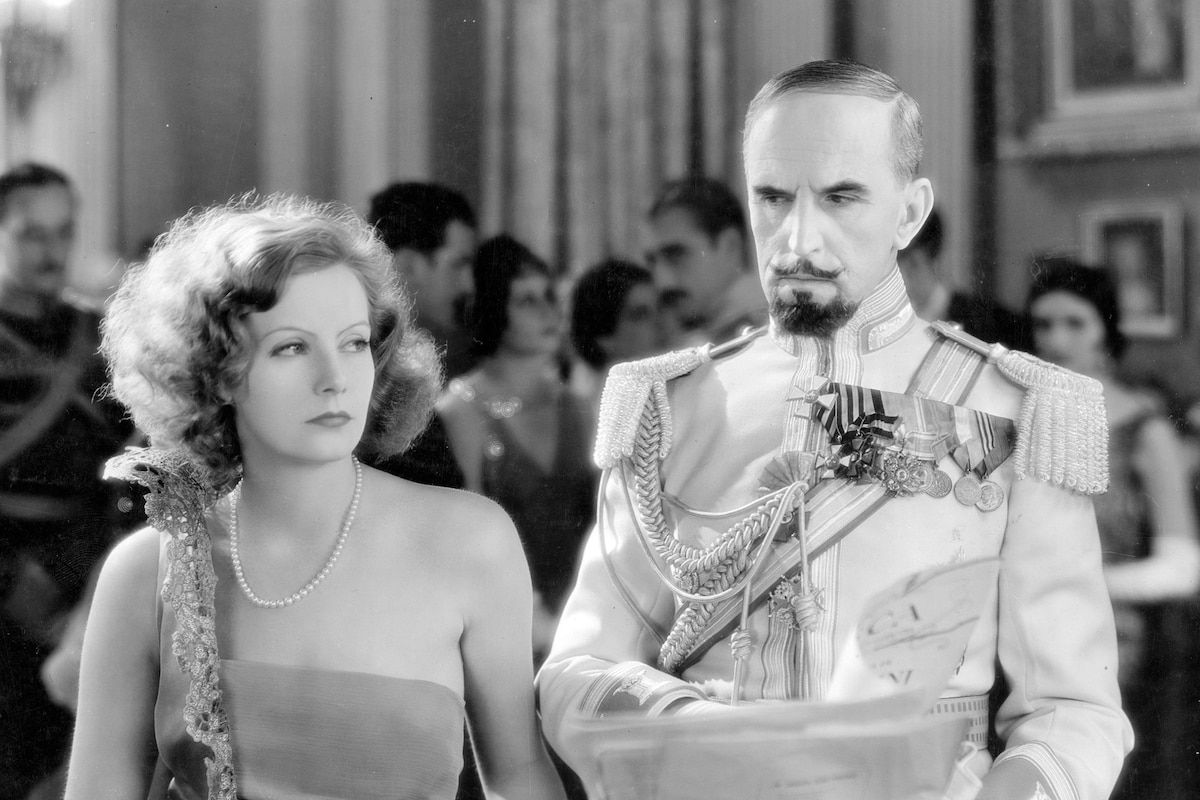
In The Mysterious Lady, Garbo plays a World War I Russian spy who falls in love with the object of her espionage, Austrian officer Conrad Nagel. Complicating matters is Gustav von Seyffertitz, as her spy boss. According to Antoni Gronowicz's biography of Garbo, which the author claims is actually an autobiography based on his conversations with the star, Garbo told him that Gilbert was supposed to play the Nagel part. But their romance had cooled, and she asked the studio for a different leading man.
The director of The Mysterious Lady was Fred Niblo, who had a reputation for being able to handle complicated and expensive projects, like The Mark of Zorro (1920), Blood and Sand (1922), and Ben-Hur (1926). He had also tackled another difficult task - taking over the direction of Garbo's The Temptress (1926) after MGM fired Mauritz Stiller. Garbo had threatened to quit the film, but Niblo's patience and solicitude had won her over. When that film ended, she gave him a photo inscribed, "to Fred Niblo, with a piece of my heart."
According to Gronowicz, Garbo's relationship with her co-stars on The Mysterious Lady was equally cordial...maybe too much so. Supposedly, Nagel made advances, she rebuffed them and spent time with von Seyffertitz, who had no such romantic inclinations. Nagel confronted von Seyffertitz, a fistfight ensued, and they challenged each other to a duel. Garbo told them she wasn't romantically interested in either of them, and all she wanted was to finish the film. The duel never happened...and maybe this story didn't either, but it adds to the mystique of Garbo as irresistible siren.
In spite of all the acclaim and attention, or maybe because of them, Garbo was moody and tense during the making of The Mysterious Lady. Stiller had dominated her life for years, and even though there was some relief at being free of him, there was also sadness. She was bored with Gilbert, and annoyed at the public's fascination with their relationship. Worn out physically and emotionally, she suffered from various aches and pains that may have been psychosomatic. Yet, according to critic and biographer Alexander Walker, William Daniels' cinematography and Garbo's skill managed to make her exhaustion look like "romantic agony." Walker adds, "no film so clearly shows that, for Garbo, passion was a form of tragic depression." The Garbo legend of aloofness and solitude had taken root and would grow to mythic proportions over the next decade.
Director: Fred Niblo
Screenplay: Adaptation by Bess Meredyth, based on the novel War in the Dark by Ludwig Wolff; titles by Marian Ainslee and Ruth Cummings
Editor: Margaret Booth
Cinematography: William H. Daniels
Costume Design: Gilbert Clark
Art Direction: Cedric Gibbons
Music: Vivek Maddala
Cast: Greta Garbo (Tania), Conrad Nagel (Karl von Heinersdorff), Gustav von Seyffertitz (General Alexandroff), Edward Connelly (Colonel von Raden), Albert Pollet (Max), Richard Alexander (General's Aide).
BW-90m.
by Margarita Landazuri
The Mysterious Lady
by Margarita Landazuri | August 17, 2005
SIGN UP FOR OUR NEWSLETTERS

CONNECT WITH TCM