An immensely talented playwright, screenwriter, and satirist, George Axelrod has rarely received the recognition he deserves within the Hollywood industry yet he was the man behind some of the wittiest screenplays of the fifties and early sixties. Foremost among them are two of Marilyn Monroe's best films (The Seven Year Itch (1955) and Bus Stop, 1956), Breakfast at Tiffany's (1961) starring Audrey Hepburn in her signature role, and The Manchurian Candidate (1962), a highly paranoid thriller about a political conspiracy which prefigured President Kennedy's assassination by a year. Less well known but equally audacious is his go-for-broke directorial debut, Lord Love a Duck (1966), a poisonous love letter to the movie business that nourished him and a satire of Southern California culture with its drive-in chapels, fast food restaurants, and self-improvement seminars.
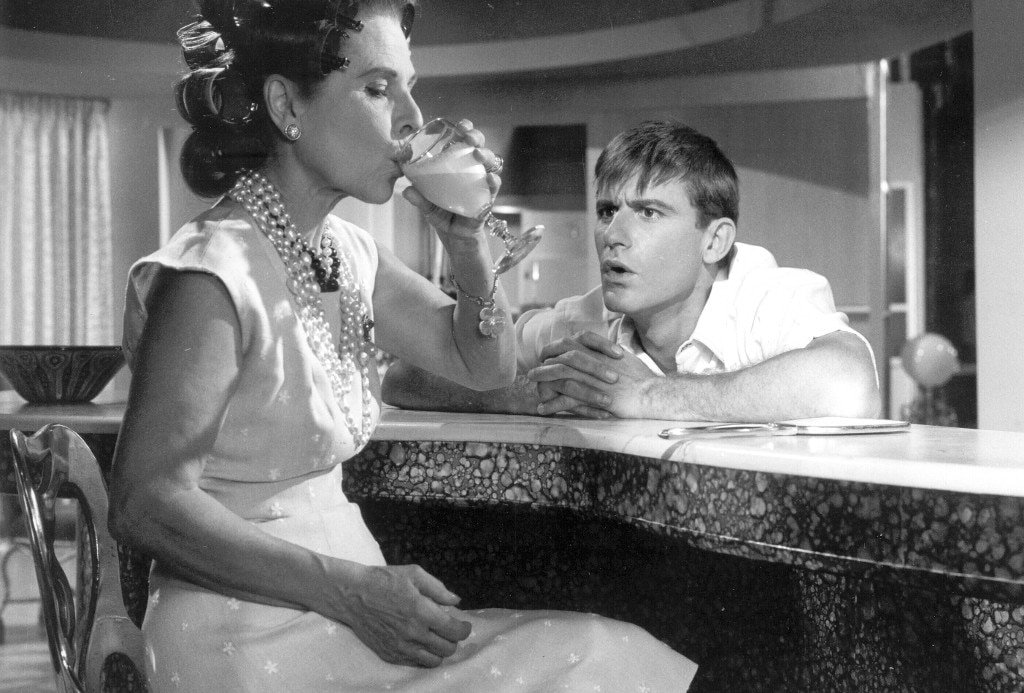
In the opening moments of Lord Love a Duck, we are introduced to Allan Mollymauk Musgrave (Roddy McDowall), a possibly deranged high school student who relates, in flashback, his infatuation with Barbara Ann Greene (Tuesday Weld), a beautiful but blank blonde teenager who became a movie star. Barbara Anne's rise to fame is soon revealed to be the result of Mollymauk's Svengali-like influence over her. Whenever he jingles a set of keys in her face, Barbara reveals her deepest fantasies and desires; an obvious movie homage to the hypnotism scene in Fellini's Nights of Cabiria (1957). With Mollymauk's guidance, Barbara Anne climbs the ladder to Hollywood fame via sexual manipulation, deception, and premeditated murder, all set to a catchy pop tune that parodies the types of songs featured in Beach Party movies.
Critics were divided over Lord Love a Duck when it was released due to its eclectic mixture of black comedy and social comment but it still stands as one of the more original and offbeat comedies of the sixties, even if it does unravel completely in the second half. Typical of the reviews at the time is this one from The New York Herald Tribune: "The targets are obvious and unlimited, ranging from teenage mores to modern educational jabberwocky...from momism to psychiatry to mayhem...subtle characterizations are mixed in with blatant caricature; wonderfully underplayed moments yield to screaming vulgarities, and one becomes aware of the movie-maker's devotion to subliminal smut. The best thing about the movie is its display of Tuesday Weld not only as a teen-age Lolita of unsurpassed loveliness but also as an actress of unexpected range...Lola Albright is also extraordinary in turning the cocktail waitress (Barbara Ann's mother) into a figure of tragedy, rather than pathos."
It's true that the women come off better than the men in Lord Love a Duck, even though they are mostly depicted as scheming, self-destructive, or just plain loony. That's still better than the writer/director's view of the American male who is represented here by a debt-ridden and incompetent father, a slick and pandering "new age" minister, a mama's boy, an effeminate high school principal, and the hero of the film - Mollymauk - who appears to be asexual. It's not a pretty picture but it's George Axelrod's world and welcome to it!
Producer/Director: George Axelrod
Screenplay: George Axelrod, Leonardo Benvenuti (novel) (as Al Hine), Larry H. Johnson
Cinematography: Daniel L. Fapp
Costume Design: Paula Giokaris
Film Editing: William A. Lyon
Original Music: Neal Hefti, Ernie Sheldon
Cast: Roddy McDowall (Alan "Mollymauk" Musgrave), Tuesday Weld (Barbara Ann Greene), Lola Albright (Marie Greene), Martin West (Bob Bernard), Ruth Gordon (Stella Bernard).
BW-106m.
by Jeff Stafford
Lord Love a Duck
by Jeff Stafford | March 01, 2007
SIGN UP FOR OUR NEWSLETTERS

CONNECT WITH TCM