In England during the late fifties a group of young filmmakers and playwrights began to focus on the negative aspects of the postwar culture in a remarkable creative movement often referred to as the "Kitchen Sink" School of Drama because of its emphasis on the grim realities of working-class people. Among the critically acclaimed works that emerged from this period were Look Back in Anger (1959), written by playwright John Osborne and directed by Tony Richardson; Saturday Night and Sunday Morning (1960), based on the Alan Sillitoe novel and brought to the screen by Karel Reisz; A Kind of Loving (1962), directed by John Schlesinger; and This Sporting Life (1963), from director Lindsay Anderson. In addition to focusing on the economic struggles and lack of career opportunities for the lower class in Britain, these dramas usually featured a male protagonist, someone who was frustrated and fed up with the system, which earned these movies the added moniker of "Angry Young Man" films.
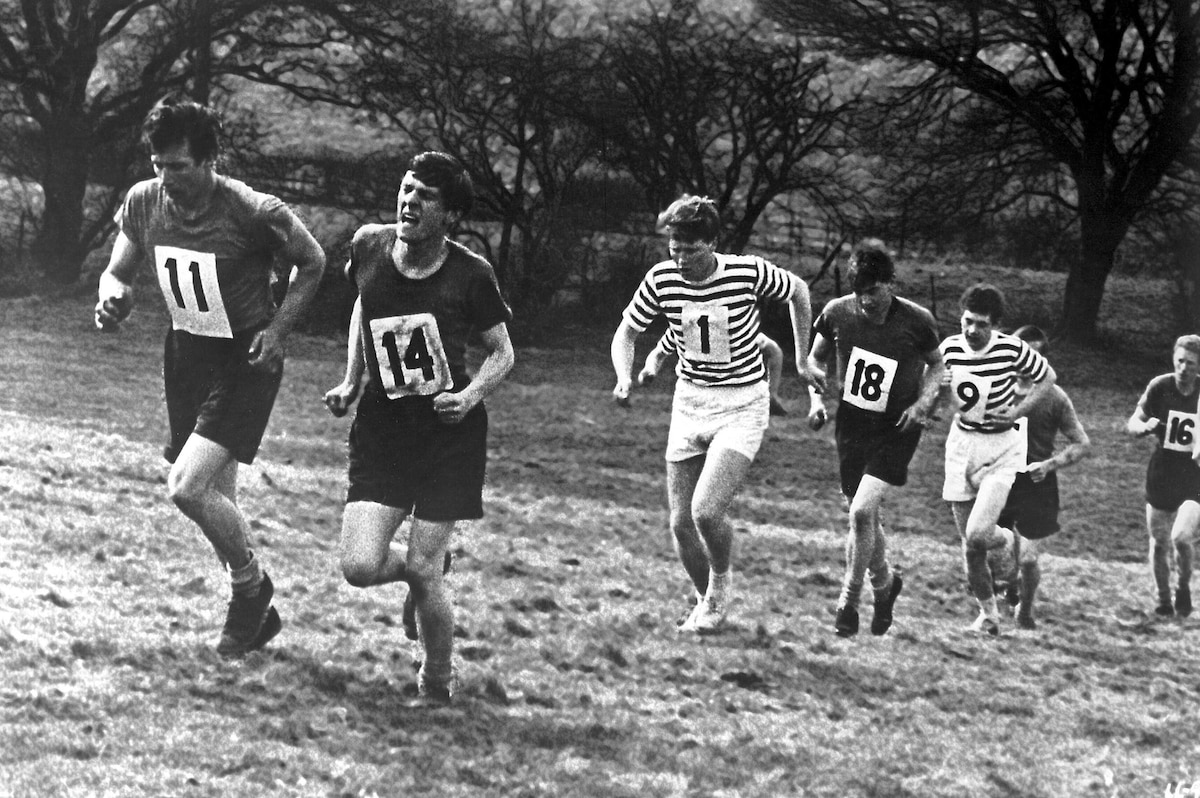
Jimmy Porter (played by Richard Burton), the embittered graduate student who railed against society in Look Back in Anger (1958), was really the first of these angry young British men. But director Richardson would explore an equally rebellious character three years later in The Loneliness of the Long Distance Runner (1962), which was told through the viewpoint of Colin Smith (Tom Courtenay), an uneducated youth who is currently serving time in a reformatory for a robbery. When the film begins, Colin is training for an important cross-country race and we see the events that brought him to this point in his life through flashbacks. The reformatory's director (Michael Redgrave), addressed as "The Governor," believes in the rehabilitative power of sports and promises to reward Colin if he wins the race against the competing public school runners. Colin, on the other hand, views all authority figures with hatred and mistrust. During the final seconds of the cross-country race, when he is clearly in the lead, Colin acts out his contempt for the social order in a public display which humiliates the Governor and destroys his own chances for a better life.
The Loneliness of the Long Distance Runner was adapted for the screen by Alan Sillitoe from his short story and was a departure in style from previous films of this ilk in the way that it combined the starkness of the "Kitchen Sink" dramaswith the open-air, freewheeling approach of the French New Wave filmmakers. Some British critics raised objections to Richardson's technique, citing his use of montage, music and camera tricks as showy and somewhat irritating distractions. Others felt that Colin's character - so hostile and nihilistic in the short story - was softened for the film version. But overall, The Loneliness of the Long Distance Runner was mostly praised for its authentic settings, emotional honesty and Tom Courtenay's intense performance as Colin. It was the actor's screen debut and won him the British Academy's Most Promising Newcomer award.
In a 1991 interview in the Sunday Times, Courtenay recalled how he came to be cast in the lead role. "I was recommended to him [Richardson] by John Osborne and Penelope Gilliatt who had seen me in The Seagull. I had a 10-minute interview, and 18 months later we made the film." In his autobiography, Long Distance Runner, Richardson would later admit "I love making all films, but Loneliness, like A Taste of Honey, was one of the great pleasures to make."
Producer/Director: Tony Richardson
Screenplay: Alan Sillitoe
Production Design: Ralph W. Brinton
Cinematography: Walter Lassally
Costume Design: Sophie Harris
Film Editing: Antony Gibbs
Original Music: John Addison
Cast: Michael Redgrave (Ruxton Towers Reformatory Governor), Tom Courtenay (Colin Smith), Avis Bunnage (Mrs. Smith), Alec McCowen (Brown), James Bolam (Mike), Joe Robinson (Roach), Julia Foster (Gladys), Frank Finlay (Booking Office Clerk), James Fox (Gunthorpe).
BW-104m.
by Jeff Stafford
The Loneliness of the Long Distance Runner
by Jeff Stafford | March 15, 2007
SIGN UP FOR OUR NEWSLETTERS

CONNECT WITH TCM