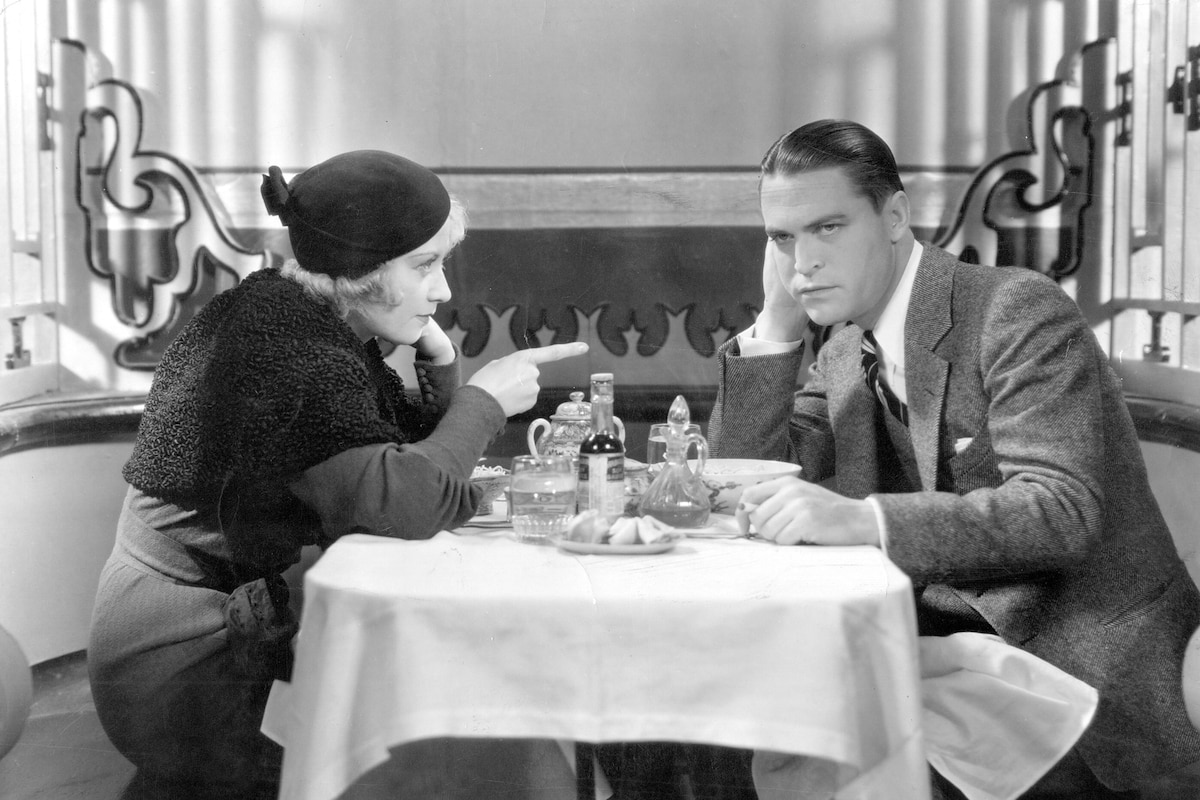
Blondie Johnson (1933) was one of eight movies in which Ray Enright directed Joan Blondell at Warner Bros. during the period 1933-37. In the title role, Blondell plays a basically honest woman who becomes a gun-moll during hard times in the Depression. There's an early feminist slant to the story as Blondie aspires to become a crime boss herself but refuses to use sex to get ahead in the mob world. "Crime Doesn't Pay" is the story's theme, and Blondell is on her way to prison by film's end. But she and co-star Chester Morris enliven the moral lesson with a stream of deftly delivered wisecracks.
Blondie Johnson marked Blondell's first solo starring part at Warners, where she had signed on in 1930. The role of Blondie was created with her in mind by screenwriter Earl Baldwin. The film was later seen as an important milepost in its depiction of a tough, independent woman who doesn't depend on men to make her way in the world. "I play a feminine Little Caesar," Blondell remarked at the time.
Director Enright understood how to make the most of the new star's appeal, summed up by film historian David Shipman as the combination of "reliability and versatility with an overall attractive personality: to anyone believing that professionalism is the greatest of show business virtues it is difficult to over praise her." Blondell sustained that professionalism through more than 90 movies, evolving from a favorite in madcap Busby Berkeley musicals to an Oscar-nominated character actress.
Director: Ray Enright
Screenplay: Earl Baldwin
Art Direction: Esdras Hartley
Cinematography: Tony Gaudio
Costume Design: Orry-Kelly
Editing: George Marks
Principal Cast: Joan Blondell (Blondie Johnson), Chester Morris (Danny), Allen Jenkins (Louis), Earle Foxe (Scannel), Claire Dodd (Gladys), Mae Busch (Mae), Sterling Holloway (Red).
BW-68m.
by Roger Fristoe
Blondie Johnson - Blonde Johnson
by Roger Fristoe | July 12, 2007
SIGN UP FOR OUR NEWSLETTERS

CONNECT WITH TCM