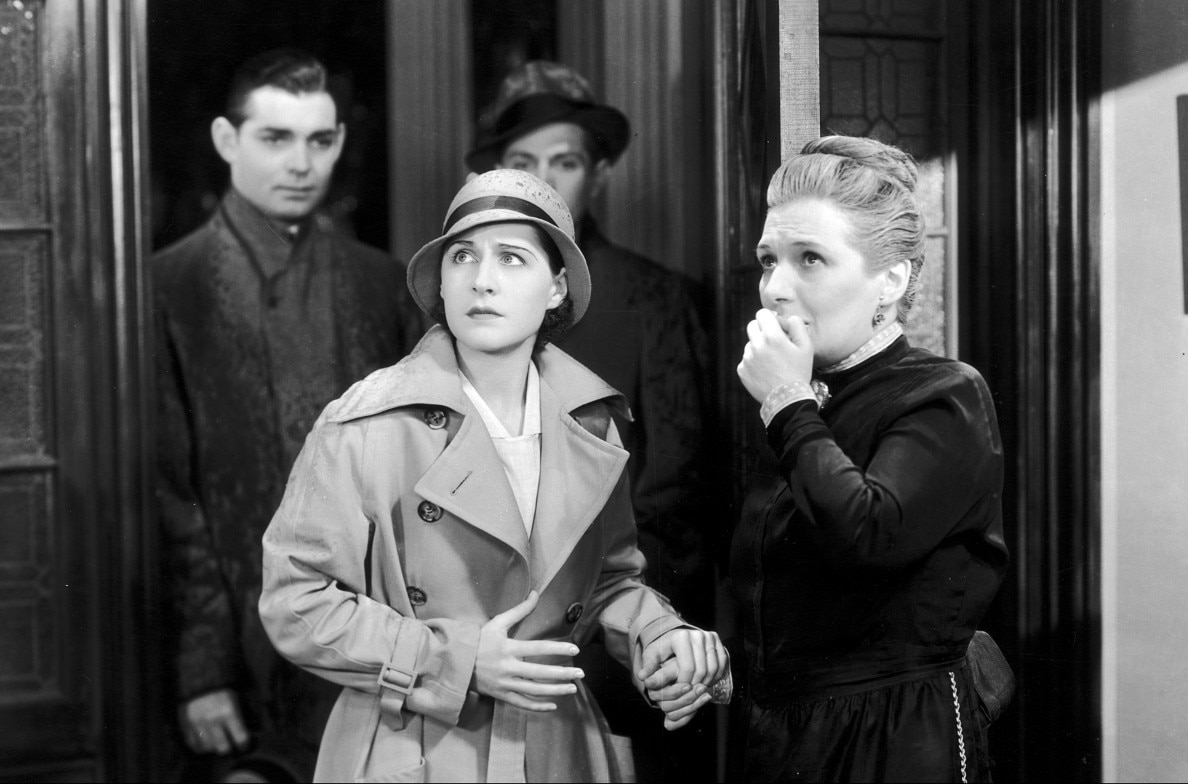
By the early 30's, Norma Shearer was the Queen of MGM, due in part to her marriage to the studio's powerful head of production, Irving Thalberg, but also because of her own talent and drive. The couple was always looking for another prestige vehicle for Norma. In 1928, they had seen the New York production of Eugene O'Neill's play, Strange Interlude, but Thalberg realized it could never be done as a silent film. But before long, talkies had arrived, and the play had won a Pulitzer Prize. Meanwhile, Norma had triumphed in other films based on stage successes, and had won an Academy Award® for her performance in The Divorcee (1930), directed by Robert Z. Leonard. Thalberg bought the rights to Strange Interlude for Norma, and again assigned Leonard to direct.
Strange Interlude (1932) was a commercially risky venture, the story of neurotic Nina Leeds, whose first love is killed in World War I. She copes with her grief by marrying, but her husband's impotence drives her into the arms of a doctor, and she bears his child. The play ran nearly five hours on the stage, following the life of Nina from age 18 into her sixties. The screenwriters were forced to compress the mammoth work into a 110-minute film. O'Neill used an unusual device to express the characters' inner thoughts - he had them pause mid-scene, and speak their thoughts in asides to the audience. It may have worked onstage, but it would never work onscreen. In the film version, the characters' thoughts were spoken in voiceover, and the actors' faces were supposed to telegraph their thoughts. However, the film was made only a few years after the end of the silent era, and many of the actors used silent film acting techniques to telegraph emotions - a method that was already looking dated then, and even more so today.
Still, there are compensations - and surprises. Shearer threw herself into the role, working intensely to catch every nuance of her character's feelings. For one simple scene where she greets her lover in front of her husband, director Leonard was satisfied after the second take. Not Norma - she asked for twenty additional takes before she felt she'd gotten it. The reviews she received were among her best.
To attract mass audiences, the cast for Strange Interlude included not only Shearer, an audience favorite, but handsome newcomer Clark Gable as Doctor Ned Darrell. Gable gave a subdued, but surprisingly effective performance, and working in the film proved to be a big boost for his career. It also provided a look that would become his trademark. As the older Ned, Gable sported a mustache for the first time on film. He liked it, and so did his fans.
Although clumsy at times, Strange Interlude was rightly praised for being Hollywood's first attempt to deal with Freudian material. "For once Hollywood has dared to produce a picture that deals with life in terms of adult intelligence," wrote Alexander Bakshy in The Nation.
Director: Robert Z. Leonard
Producer: Irving Thalberg (uncredited)
Screenplay: Bess Meredyth, C. Gardner Sullivan, based on the play by Eugene O'Neill
Editor: Margaret Booth
Cinematography: Lee Garmes
Art Direction: Cedric Gibbons
Costumes: Adrian
Cast: Norma Shearer (Nina Leeds), Clark Gable (Ned Darrell), Alexander Kirkland (Sam Evans), Ralph Morgan (Charlie Marsden), Robert Young (Gordon), May Robson (Mrs. Evans), Maureen O'Sullivan (Madeleine), Henry B. Walthall (Professor Leeds).
BW-110m. Closed captioning.
by Margarita Landazuri
