The Treasure of Pancho Villa
"Kill you for a woman, gringo? Never! But for the Gold..."
Tagline for The Treasure of Pancho Villa
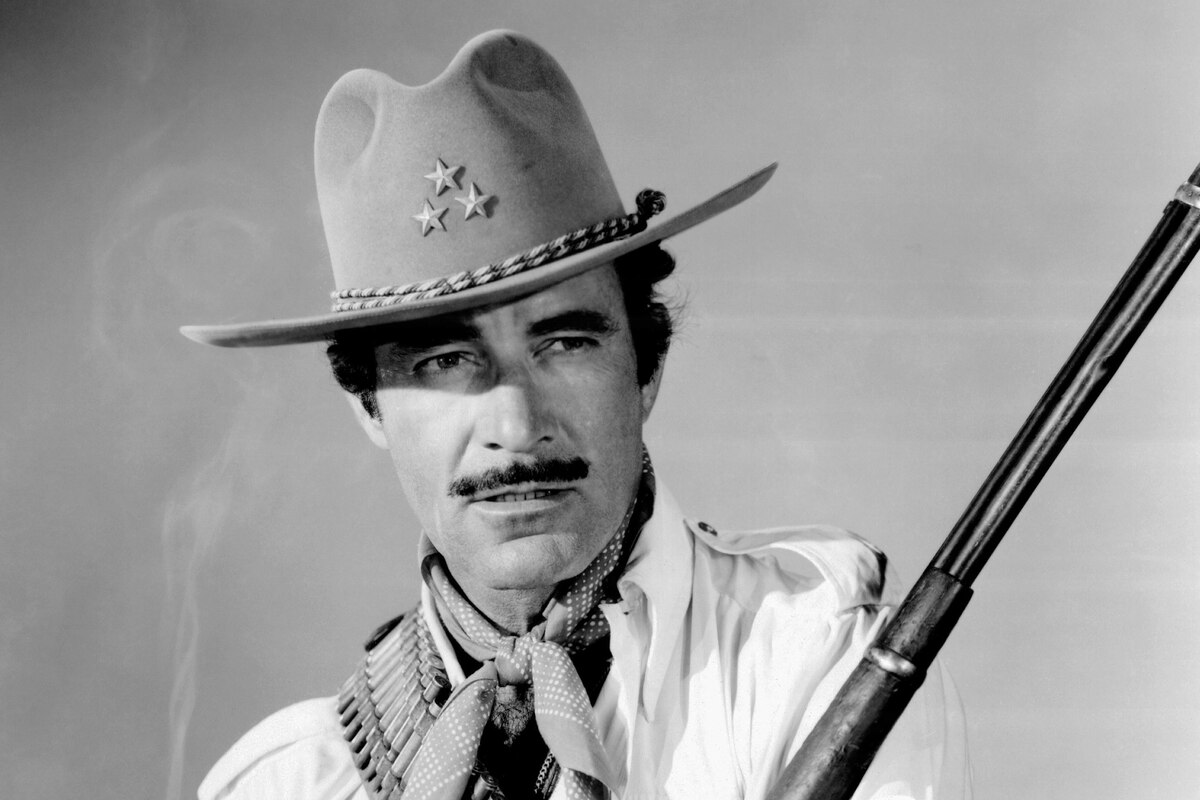
Romance took a back seat to lust for gold in the 1955 Western, The Treasure
of Pancho Villa, one of the last gasps of RKO Studios under the leadership
of eccentric tycoon Howard Hughes. The story focused on two adventurers, mercenary
Rory Calhoun and revolutionary Gilbert Roland, as they battle over a golden treasure
earmarked for bandit chief Pancho Villa. Hughes did it up in grand style, authorizing
a location shoot in Mexico and having the picture filmed in Technicolor and SuperScope,
RKO's version of Cinemascope. But it was in the romance department that Hughes
exerted his greatest influence over the work of independent producer Edmund Grainger,
casting one of his many obsessions, Shelley Winters, in the female lead. And though
the role was distinctly secondary to the film's embattled action stars, the picture
helped pave the way for better dramatic roles for Winters.
The Treasure of Pancho Villa was assembled by some of the top
Western talents in the business. Director George Sherman had started out making
B-Westerns at Republic Pictures with a pre-stardom John Wayne. He would continue
in the genre through his final big-screen credit, the Duke's Big Jake
in 1971. Grainger had cut his teeth on George O'Brien's low-budget Westerns at
Fox in the early '30s. Calhoun had been discovered riding a horse, had just co-starred
as one of the villains in Fox's big-budget River of No Return
(1954), with Robert Mitchum and Marilyn Monroe, and would go on to star in the TV
oater The Texan (1958-60). Even Winters had done her fair share
of sagebrush sagas, including director Anthony Mann's pioneering Winchester
'73 (1950) and the Destry Rides Again (1939) sequel
Frenchie (1951), in which she had played the Marlene Dietrich
role.
The most impressive Western pedigree on the film, however, belonged to screenwriter
Niven Busch. In addition to scripting such critical favorites as The Westerner
(1940), with Gary Cooper and Walter Brennan, and the film noir Western Pursued (1947), with Robert Mitchum, he had penned the novels on which Duel in the Sun (1946) and The Furies (1950) had been based.
Busch's writing had an intellectual bent, often mixing a bit of Freud in with the
sawdust. What this meant to The Treasure of Pancho Villa was
a decidedly verbose script that Sherman and company decided to film as if it were
holy writ. Fortunately, the picture possessed enough action to balance the talky
script.
For Winters, The Treasure of Pancho Villa opened the door to
a new career. She was just coming off another Western, the Alan Ladd Canadian Mounty
tale Saskatchewan (1954), when her agent called to relay Hughes'
job offer. At the time, she was frustrated with her continued typecasting as a
blonde bombshell, even after her shocking dramatic turn as Montgomery Clift's pregnant
girlfriend in A Place in the Sun (1951). Moreover, her marriage
to Italian star Vittorio Gassman was on the rocks, giving her more reason to make
some changes in her life. Her dream was to be accepted as a serious dramatic actress,
and she felt the best route to this would be to re-locate to New York and study
with Lee Strasberg at the Actor's Studio. So she called Hughes and made him an
offer: instead of the $50,000 he wanted to pay her, she would take $48,000, paid
out in monthly installments of $1,000 over the next four years. This would allow
her to take some time away from the screen while working on her craft and crafting
a new image. The move was a wise one. Soon after she returned to New York she
landed the role of a drug addict's pregnant wife in the stage production of A
Hatful of Rain. She didn't return to Hollywood until 1959, when she played
an Oscar®-winning supporting role in The Diary of Anne Frank,
launching her new screen career as a serious dramatic actress.
Producer: Edmund Grainger
Director: George Sherman
Screenplay: Niven Busch, based on a Story by J. Robert Bren and Gladys Atwater
Cinematography: William E. Snyder
Music: Leith Stevens
Cast: Rory Calhoun (Tom Bryan), Shelley Winters (Ruth Harris), Gilbert Roland (Juan
Castro), Joseph Calleia (Pablo Morales), Carlos Mosquiz (Commandant), Fanny Schiller
(Laria Morales).
C-96m. Letterboxed.
by Frank Miller
The Treasure of Pancho Villa
by Frank Miller | August 25, 2004
SIGN UP FOR OUR NEWSLETTERS

CONNECT WITH TCM