In 1972, the divorce rate was climbing, the women's liberation movement had seeped
into the consciousness of most of the country, and women were examining their lives
and their choices. It would seem to have been the ideal time for a serious, heartfelt
film about a young woman rebuilding her life after a divorce. One Is a
Lonely Number (1972) was just such a film, yet it failed to find an audience,
due to bad luck, bad marketing, and, as it turned out, bad timing.
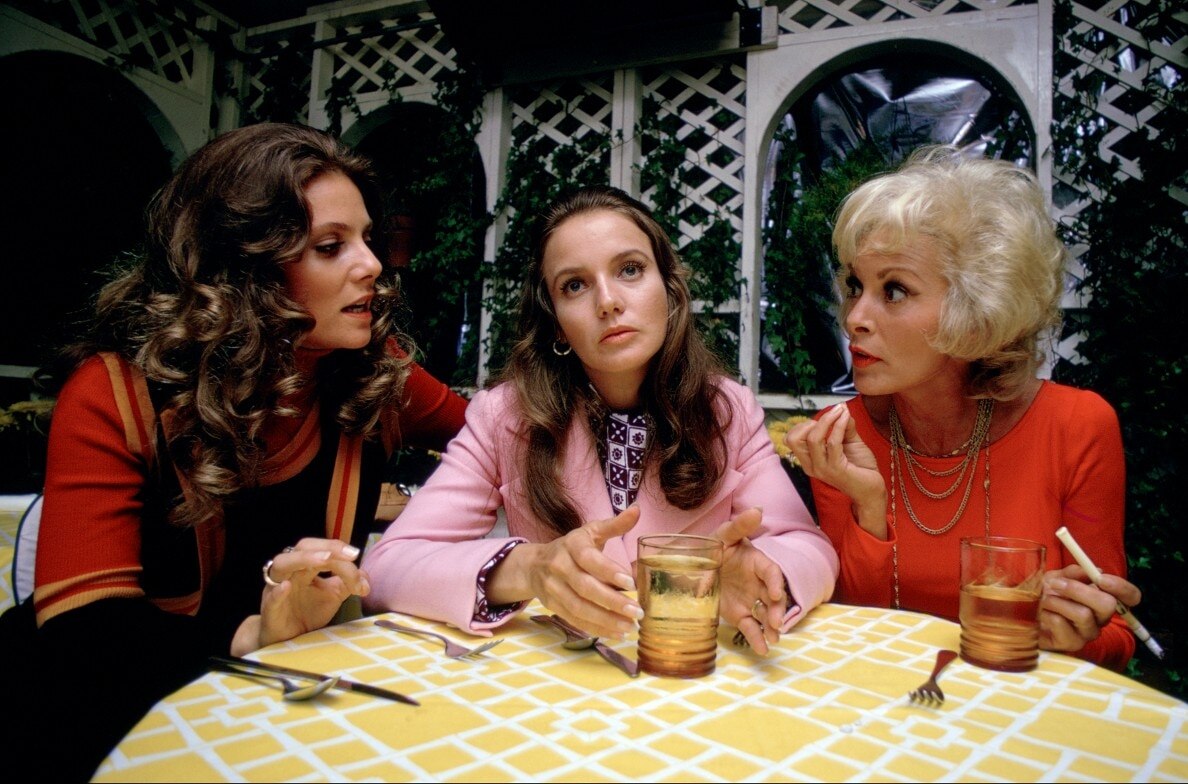
Trish Van Devere plays Aimee Brower, who thinks she's happily married until her
husband walks out on her. Aimee has never been on her own, and the film traces
her somewhat bumpy path to independence and self-confidence. Along the way, she
is befriended by a tough, man-hating divorcee (played by a cast-against-type Janet
Leigh), and a kindly widower (Melvyn Douglas). She also embarks on her first post-marital affair with a man who is not what he seems (Monte Markham).
The 27-year-old Van Devere was, in fact, newly married to actor George C. Scott,
whom she had met when she appeared with him in The Last Run (1971).
Van Devere had begun her career in New York, working in alternative theater, joining
the Actors Studio, and becoming involved in activist causes like the civil rights
and women's movements. She supported her alternative lifestyle by acting in soap
operas, until she auditioned for and won an important role in the film Where's
Poppa? (1970). One Is a Lonely Number was expected
to be the role that made her a star.
It was also supposed to be the next hit for director Mel Stuart, fresh off his triumph
with Willie Wonka and the Chocolate Factory (1971) and two previous
successful comedies. One Is a Lonely Number received excellent
reviews for both director and star. "This picture should propel Miss Van Devere
toward stardom," Variety predicted. And "for those
who may have missed something in Stuart's earlier comedies, this film will be a
turning point." But perhaps because of the downbeat nature of the story, the
film did not do well at the box office. MGM tried changing the title to Two
is a Happy Number. It didn't help. Instead of waiting for the good reviews
and the word of mouth to build an audience, the studio yanked the film, and it disappeared. However, Van Devere received a Golden Globe nomination for her performance.
Trish Van Devere's film career never fulfilled its early promise. During the 1970's,
she placed her husband's career before her own, and appeared mostly in films with
him. Her later film output has been sparse and undistinguished, though she has
continued to do good work in theater. Mel Stuart's film directing career also experienced
a lull in the mid-seventies and he began to focus more on television projects.
In 1975, Martin Scorsese's Alice Doesn't Live Here Anymore (1974), the
story of a single mother rebuilding her life, won an Oscar® for Ellen Burstyn.
A few years later, Paul Mazursky's An Unmarried Woman (1978),
also a feminist tale of a woman rebounding from divorce, was a major hit. Yet both
of those excellent films had happily-ever-after endings, and were less realistic
and straightforward than One Is a Lonely Number. From the perspective
of thirty-plus years later, the latter looks more and more like a film ahead of
its time.
Director: Mel Stuart
Producer: Stan Margulies
Screenplay: David Seltzer, based on the short story, "The Good Humor Man,"
by Rebecca Morris
Cinematography: Michel Hugo
Editor: David Saxon
Art Direction: Walter M. Simonds
Music: Michel Legrand
Principal Cast: Trish Van Devere (Aimee Brower), Monte Markham (Howard Carpenter),
Janet Leigh (Gert Meredith), Melvyn Douglas (Joseph Provo), Jane Elliot (Madge Frazier), Jonathan Lippe (Sherman Cooke), Paul Jenkins (James Brower), Scott Beach (Frawley King).
C-98m. Letterboxed.
by Margarita Landazuri
One Is a Lonely Number
by Margarita Landazuri | August 24, 2004
SIGN UP FOR OUR NEWSLETTERS

CONNECT WITH TCM