As World War II ended, movie director Carl Theodor Dreyer had reason to give thanks.
He had survived and his homeland Denmark had been restored after suffering under
Nazi occupation for years. His financial outlook, however, was bleak. His previous
films had been hailed as masterpieces: The Passion of Joan of Arc
(1928), considered the definitive film on the Catholic saint, and Vampyr
(1932), his highly influential horror tale turned art-house classic. The critical
praise did nothing to help the movies at the box office, unfortunately, and further
funding for a new Dreyer film was nowhere to be found.
Then in 1952 the Danish Government placed Dreyer in charge of the Dagmar, a state-run
movie house in Copenhagen. Now with a steady income, Dreyer began saving for his
next movie and since he did not have much to spend, the movie would have to be inexpensive yet powerful. Dreyer fulfilled both requirements by turning to a play by the Danish hero Kaj Munk.
Munk hardly set out to be a hero. A Lutheran pastor, Munk took a parish on the bleak,
harsh island of Jutland where some remote Danes were members of a very strict Lutheran
sect called The Inner Mission. In his spare time, Munk became a poet and dramatist,
turning the events he witnessed in Jutland into plays that became popular hits in
Denmark during the 1930's. During the Nazi occupation, Munk moved from playwright
to patriot. Appearing at pulpits all over the country, Munk called on Danes to remember
that their duty was to God and not their Nazi overlords. In 1994 Munk paid for his
defiance. Three plainclothes Gestapo officers took him from his house, led him to
a ditch and shot him in the back of the head. His death became a rallying point
for the Danish Resistance and his works gained a new popularity.
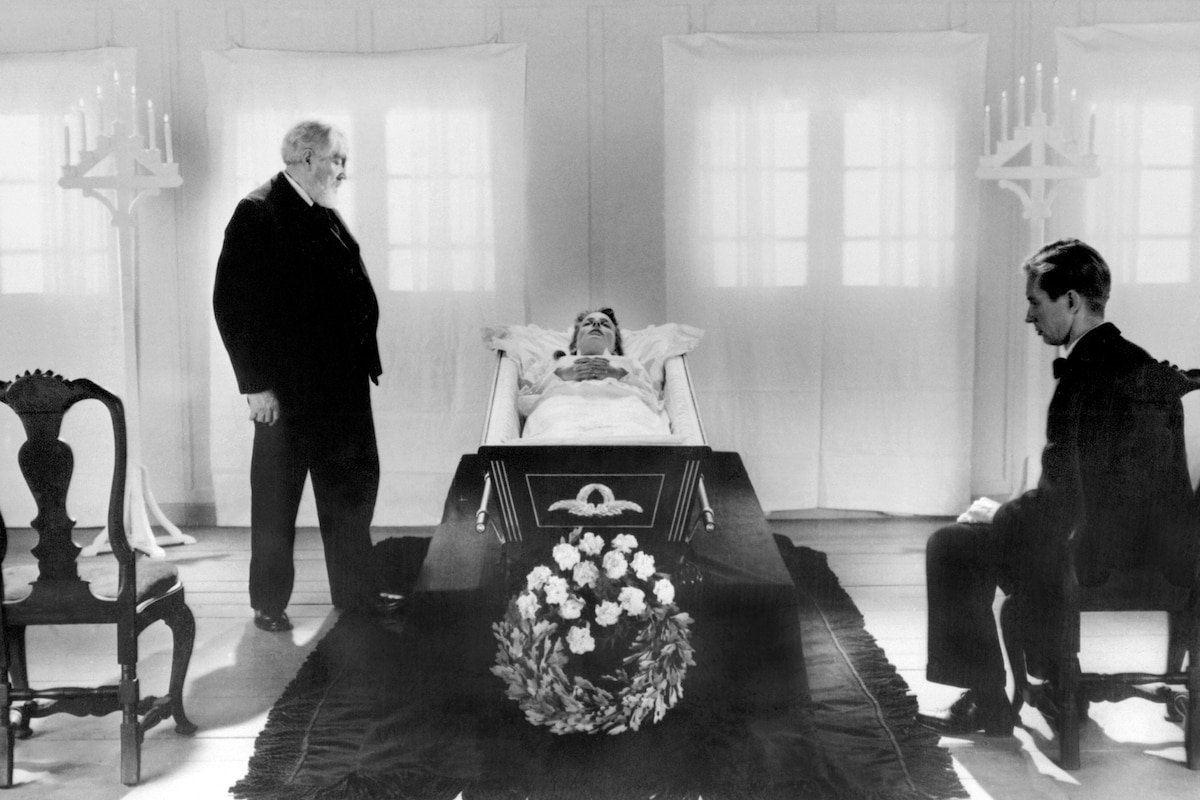
It was one of his biggest hits, Ordet (1955), that Dreyer chose for
his next film. Ordet, meaning the word, concerns two families
brought together by two children in love. But as in Romeo and Juliet, the families
do not get along because the boy's family believes in the modern Lutheran church
while the girl's family follows The Inner Mission. Religion rather than romance becomes the theme of the story as part of the focus is on the boy's brother, a theology student
driven mad by reading too many philosophy books by Kierkagaard; he develops the
delusion that he is Jesus Christ. This all leads to a highly controversial ending,
the meaning of which is debated by filmgoers to this day.
After enduring storms while filming on location in Jutland, Dreyer finished his
movie and premiered it at the Dagmar Theatre in January 1955. The result was a hit
in Denmark and garnered universal critical acclaim, winning both the Golden Lion
and the Special Critics Prize at the Venice Film Festival, a Golden Globe and a
nomination for an Academy Award for Best Foreign Film. Despite all this, Dreyer
still found difficulty raising money for movies and managed to direct only one more
feature, Gertrud (1964), before his death.
Director: Carl Theodor Dreyer
Producers: Carl Theodor Dreyer, Erik Nielsen, Tage Nielsen
Writer: Carl Theodor Dreyer, based on the play by Kaj Munk
Cinematographer: Hennig Bendtsen
Music: Poul Schierbeck
Editor: Edith Schlussel
Cast: Preben Lerdorff Rye (Johannes Borgen), Birgitte Federspiel (Inger), Henrik
Malberg (Morten Borgen), Emil Hass Christensen (Mikkel Borgen), Ejner Federspiel
(Peter Skraedder), Cay Kristiansen (Anders Borgen)
BW-126m.
by Brian Cady
Ordet
by Brian Cady | August 27, 2004
SIGN UP FOR OUR NEWSLETTERS

CONNECT WITH TCM